Detroit neighborhoods revival is reshaping the city’s identity as once-declining areas experience new investment, restored housing, and renewed community life.
After decades of population loss, foreclosures, and industrial decline, several Detroit neighborhoods are showing signs of durable recovery. New housing developments, local business growth, and public infrastructure projects are contributing to visible change in places that once symbolized urban decay.
This revival is not uniform across the city, but in areas like Corktown, Midtown, Brush Park, Islandview, and Southwest Detroit, long-term planning and community engagement are beginning to deliver tangible improvements for residents.
The State of Detroit Neighborhood Revitalization
The Detroit neighborhoods revival has been fueled by a combination of private development, public investment, and grassroots community efforts. Since 2018, Detroit has seen steady population stabilization in several districts, marking the first period of sustained growth in more than 60 years.
According to data from the U.S. Census Bureau, pockets of population growth and housing reinvestment have been recorded in Midtown, Greater Downtown, and Southwest Detroit, suggesting a shift in urban dynamics after years of decline.
While the challenges of vacancy and blight remain in many parts of the city, the pace of transformation in select neighborhoods has drawn national attention.
How Corktown Became a Model for Urban Revival
Corktown, Detroit’s oldest neighborhood, has become a symbol of the modern Detroit neighborhoods revival.
Details
The redevelopment of Michigan Central Station by Ford Motor Company transformed a long-vacant rail terminal into an innovation campus focused on mobility and technology. This project triggered new residential, retail, and commercial investments throughout Corktown.
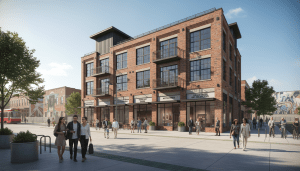
New apartment buildings, historic home renovations, and local businesses such as restaurants and coffee shops have helped attract young professionals, families, and entrepreneurs to the area.
However, housing advocates emphasize the importance of maintaining affordability to prevent displacement of long-term residents.
Related coverage:
Spotlight on Corktown: Detroit’s Real Estate Revival in a Historic District
Midtown and Brush Park: Growth Through Culture and Housing
Midtown and Brush Park are two additional examples of the Detroit neighborhoods revival driven by cultural institutions and residential development.
Details
Midtown, anchored by Wayne State University, the Detroit Institute of Arts, and the Detroit Medical Center, has experienced consistent growth in student housing, commercial space, and new residential developments.
Brush Park, once known for its vacant mansions and neglected properties, is now home to restored historic buildings and high-end townhomes. Developers have focused on preserving architectural heritage while introducing modern housing options close to downtown.
Urban planners credit mixed-use zoning and institutional investment as key drivers of stability and long-term growth in both neighborhoods.
Southwest Detroit and Community-Led Renewal
Not all progress in the Detroit neighborhoods revival has been driven by large developers. In Southwest Detroit, much of the transformation has been rooted in community-led initiatives.
Details
Local nonprofit groups, neighborhood associations, and small business owners have worked to restore housing, create commercial corridors, and improve public spaces.
The revitalization of West Vernor Highway, for example, has helped strengthen local retail and dining options, while new park spaces and community centers have enhanced quality of life.
According to the City of Detroit’s Planning and Development Department, targeted reinvestment districts are helping channel funding into historically disinvested areas while involving residents in planning decisions.
Learn more about local initiatives here:
Detroit City Services 101: A Resident’s Guide to Public Resources
Impact on Detroit Residents
For many long-term residents, the Detroit neighborhoods revival represents both opportunity and concern.
Details
Residents benefit from improved infrastructure, safer streets, better access to services, and rising property values. However, higher property taxes, increasing rents, and fears of displacement remain pressing concerns.
Housing advocates and local nonprofits are pushing for expanded affordable housing programs and property tax relief initiatives to ensure that revitalization does not come at the cost of community stability.
City officials have cited programs like the Detroit Affordable Housing Leverage Fund as examples of steps being taken to support inclusive growth.
Infrastructure Projects Accelerating Neighborhood Change
Large-scale infrastructure projects are playing a central role in the Detroit neighborhoods revival.
Details
- The I-375 Reconnecting Communities Project
- The Joe Louis Greenway urban trail network
- Detroit RiverWalk expansions and park developments
- Neighborhood street redesigns and bridge upgrades
City planners say these projects are designed to reconnect historically divided communities, improve mobility, and unlock new development potential.
More information on Detroit’s infrastructure planning can be found via the official City of Detroit website:
City of Detroit Planning Department
Challenges Still Facing the Revival
While progress is visible, the Detroit neighborhoods revival is still uneven.
Details
Some east and west side neighborhoods continue to struggle with vacancy, limited access to grocery stores, underfunded schools, and aging infrastructure.
Urban planners, policymakers, and community activists agree that sustained investment across all districts — not just downtown-adjacent areas — will be critical for long-term citywide transformation.
What Comes Next for Detroit Neighborhoods
Experts project that the next phase of the Detroit neighborhoods revival will focus on infill development, affordable housing preservation, and neighborhood-based entrepreneurship.
Details
Programs encouraging local ownership, home renovation grants, and community land trusts are expected to expand in the coming years as Detroit seeks to balance growth with equity.
If implemented carefully, these efforts could ensure that Detroit’s revival benefits not just new arrivals, but also the residents who kept communities alive during the city’s most difficult decades.
Conclusion
The Detroit neighborhoods revival represents one of the most significant urban comeback stories in modern America.
While challenges remain, the collaborative efforts of residents, developers, and city leaders are reshaping the future of Detroit’s communities — block by block.