By Sarah Jenkins
Published: October 26, 2023
Location: Detroit, Michigan
Detroit’s Transformation: The Rise of Autonomous Vehicles in Detroit
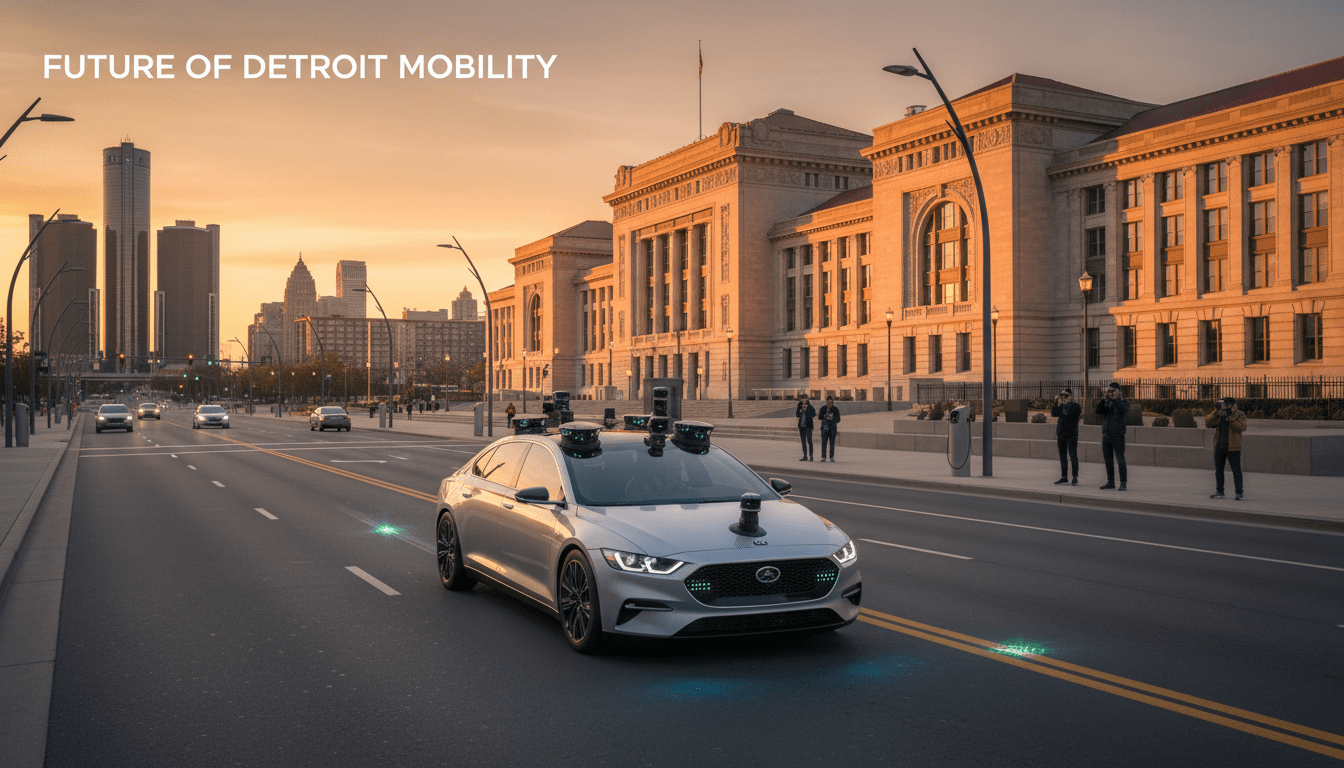
For decades, Detroit has been defined by the internal combustion engine. Today, the hum of V8s is increasingly being joined by the quiet whir of electric motors and the spinning LIDAR sensors of self-driving test fleets. The push to integrate autonomous vehicles in Detroit is not just a technological experiment; it is a fundamental shift in the city’s economic identity, positioning the Motor City as the global capital of future mobility.
From the streets of Corktown to the revitalized Michigan Central district, Detroit is serving as a living laboratory for Level 4 and Level 5 autonomy. While the technology promises to revolutionize safety and transit, it brings with it a complex set of challenges regarding regulation, public trust, and infrastructure readiness.
The New Hub of Mobility Innovation
Detroit’s unique advantage lies in its ability to merge legacy manufacturing with cutting-edge software development. The focal point of this convergence is undoubtedly the Michigan Central innovation district. Anchored by Ford Motor Company’s restoration of the historic train station, this area has become a magnet for startups and tech giants focused on autonomy.
According to the Michigan Economic Development Corporation (MEDC), Michigan leads the nation in connected and automated vehicle (CAV) projects. The state has invested heavily in creating infrastructure that “talks” to cars, a critical component for the safe deployment of autonomous vehicles in Detroit.
“We are no longer just building cars; we are building the ecosystem that allows cars to think,” said a representative from the Detroit Smart Parking Lab, a collaborative test site in the city. “Detroit offers a four-season environment and a complex urban grid that provides data you simply cannot get in Silicon Valley or Arizona.”
Safety Concerns and Regulatory Hurdles
Despite the optimism, the road has not been entirely smooth. The deployment of robotaxis and autonomous shuttles faces scrutiny following high-profile incidents involving operators like Cruise in other cities. While Detroit remains open to testing, local officials are prioritizing safety over speed.
The City of Detroit’s Office of Mobility Innovation has emphasized that any deployment of autonomous vehicles in Detroit must adhere to strict safety protocols. This caution is reflected in the controlled nature of current testing. Unlike the widespread, sometimes chaotic rollouts seen in San Francisco, Detroit’s approach involves geofenced areas and rigorous partnership agreements between automakers and city planners.
In our coverage of the local automotive industry, experts have noted that public trust remains the biggest barrier. A recent survey suggests that while residents are proud of the technology being developed locally, many remain hesitant to ride in a driverless vehicle without a safety operator present.
Impact on Detroit Residents
For the average Detroiter, the rise of autonomous tech brings practical questions: Will this create jobs, and will it improve daily transit?
Job Creation vs. Displacement
The shift requires a new workforce. Traditional assembly jobs are being supplemented—and in some cases replaced—by roles in software engineering, sensor maintenance, and fleet management. The Detroit at Work program has been pivoting to offer training in these high-tech sectors, aiming to ensure that the economic benefits of autonomous vehicles in Detroit reach local neighborhoods, not just imported talent.
Transit Equity
One of the most promising aspects is the potential for autonomous shuttles to bridge gaps in public transportation. The Detroit Department of Transportation (DDOT) has explored how autonomous shuttles could serve as “first-mile/last-mile” solutions, connecting residents in underserved neighborhoods to main bus lines.
Background & Data
The commitment to this technology is backed by significant financial data. Reports indicate that billions are being poured into the Southeast Michigan region specifically for mobility R&D. Furthermore, the emerging technology sector in Detroit has seen a 15% growth in mobility-related startups over the last three years.
Infrastructure updates are also visible. Intelligent traffic signals that can broadcast timing data to vehicles are being installed along major corridors like Michigan Avenue. This vehicle-to-infrastructure (V2I) communication is essential for the safe operation of autonomous vehicles in Detroit, allowing them to anticipate red lights and traffic flow changes better than human drivers.
What Happens Next
As 2024 approaches, residents can expect to see more branded test vehicles on the roads. The focus is shifting from pure R&D to pilot programs involving actual passengers. However, full commercial deployment where a user can hail a driverless car anywhere in the city is likely still several years away, pending federal regulatory updates.
Detroit is betting its future on maintaining its title as the world’s automotive leader. By embracing the complexity of autonomous vehicles, the city is ensuring that the next generation of transportation is not just driven in Detroit, but designed and engineered here as well.