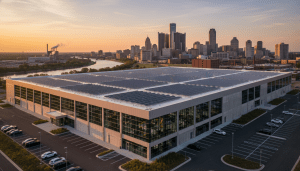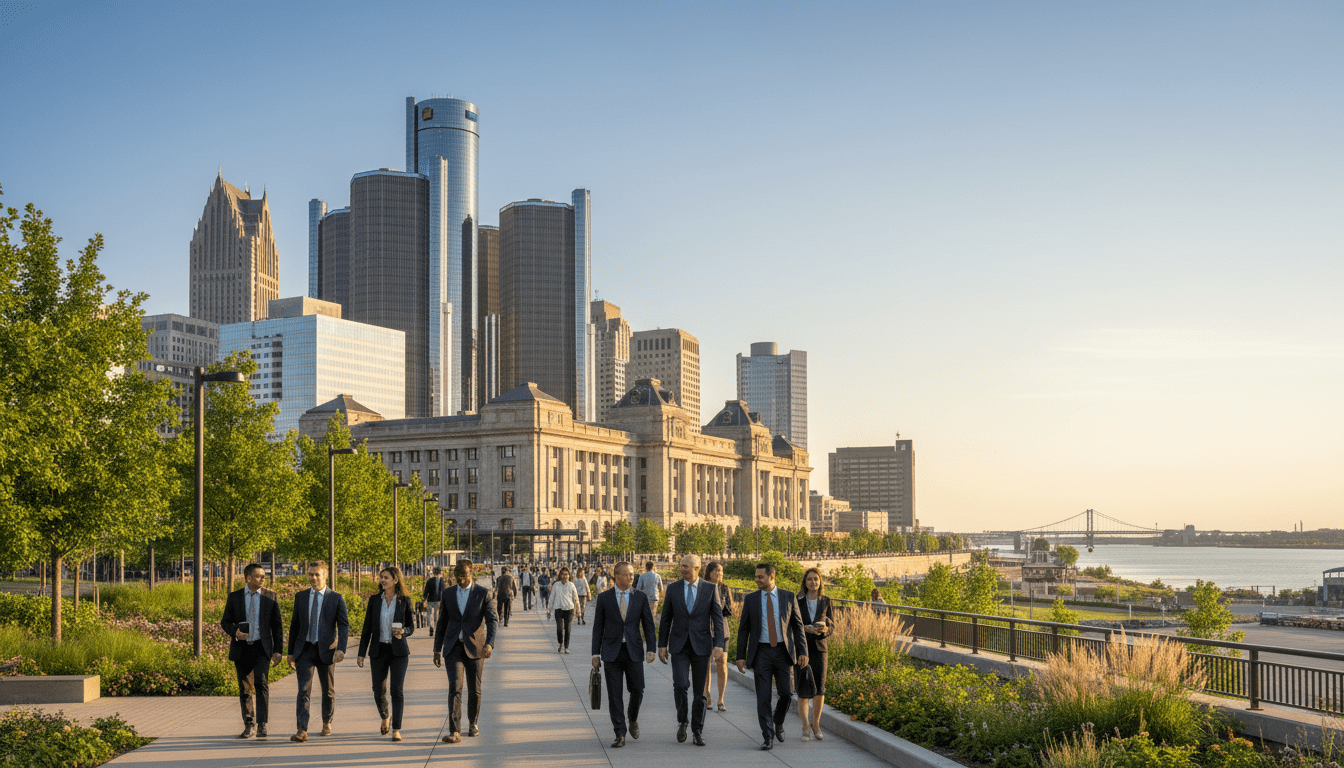
As the morning sun reflects off the glass facade of the newly completed Hudson’s site tower, it illuminates a city in the midst of a profound transformation. For decades, Detroit was synonymous with a single industry, its economic fortunes rising and falling with the production cycles of the automotive giants. However, as we move further into 2025, the narrative of Detroit economic development has shifted significantly. Driven by strategic investments in innovation districts, a surge in small business support, and adaptive reuse of historic architecture, the city is carving out a new identity as a diversified hub for technology, mobility, and entrepreneurship.
The momentum is palpable not just in the bustling corridors of Downtown and Midtown, but increasingly in neighborhoods that have long awaited systemic investment. According to recent data released by the Detroit Economic Growth Corporation (DEGC), commercial investment in the city has seen a steady year-over-year increase, with a notable pivot toward mixed-use developments that prioritize walkability and community integration. This shift is not accidental; it is the result of a coordinated effort between city government, private philanthropy, and corporate partners to build a resilient economy capable of withstanding future market shifts.
The Anchor Strategy: Innovation Districts Leading the Way
The crown jewel of this new economic era is undoubtedly the activation of the Michigan Central innovation district in Corktown. Following Ford Motor Company’s massive restoration of the historic train station, the area has morphed into a magnet for mobility startups and tech firms. This isn’t merely about office space; it is about creating a density of talent.
“What we are seeing in Corktown is the realization of a strategy to bring the jobs of the future to Detroit,” said a spokesperson for the city’s planning department in a recent press briefing. “The goal has always been to ensure that as the automotive industry transitions to electrification and autonomy, Detroit remains the global capital of that movement. Michigan Central is the physical manifestation of that ambition.”
This anchor strategy is replicated elsewhere. The University of Michigan Center for Innovation is currently accelerating development near District Detroit, aiming to provide a pipeline of high-tech talent directly to local employers. These large-scale projects serve as gravitational centers, attracting suppliers, service providers, and retail businesses that feed off the activity generated by the anchors.
Small Business: The Engine of Local Growth
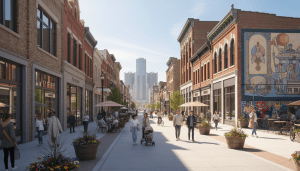
While mega-projects capture headlines, the backbone of Detroit economic development remains its small business ecosystem. The city’s nationally recognized Motor City Match program continues to churn out success stories, filling vacant storefronts with bakeries, boutiques, and professional service firms. According to the City of Detroit, the program has facilitated the opening of over 150 businesses since its inception, with a heavy focus on minority-owned and woman-owned enterprises.
Local entrepreneurs report that the landscape for funding has improved, though challenges remain. “Five years ago, getting capital to open a brick-and-mortar shop in a neighborhood outside of downtown was incredibly difficult,” explained a local coffee shop owner in the Livernois corridor. “Now, between Community Development Financial Institutions (CDFIs) and city grants, there is a clearer path. The challenge now is sustainability—keeping costs down while the neighborhood density catches up.”
This sentiment highlights a critical component of the current economic strategy: neighborhood commercial corridors. The city’s Strategic Neighborhood Fund has been instrumental in revitalizing streetscapes in areas like Jefferson Chalmers and Southwest Detroit, proving that economic vitality is not restricted to the 7.2 square miles of the city center.
Real Estate and Infrastructure Investment
Underpinning business growth is a robust Detroit real estate market that has begun to stabilize after years of volatility. Commercial vacancy rates in Class A office spaces have leveled off, buoyed by the return-to-office mandates of major regional employers and the influx of tech tenants seeking collaborative spaces.
Furthermore, infrastructure improvements are playing a pivotal role. The expansion of the Joe Louis Greenway is more than a recreational project; it is an economic connector. By linking neighborhoods to commercial hubs, the Greenway increases property values and foot traffic for businesses along its route. Reports from the Urban Land Institute suggest that linear parks like the Greenway often spur significant adjacent real estate development, a trend already visible in parts of the city where the path is complete.
Impact on Detroit Residents
For the average Detroiter, these high-level economic shifts translate into tangible changes, though the impact is varied. On one hand, the unemployment rate has reached historic lows, and the demand for skilled tradespeople is skyrocketing. Construction projects across the city require labor, and local workforce development programs, such as Detroit at Work, are aggressively training residents to fill these roles.
However, the influx of investment brings valid concerns regarding affordability. As property values rise, long-term residents fear the pressure of increased property taxes and rents. To combat this, the city has implemented strict requirements for affordable housing in any development receiving tax incentives. “Development without displacement is the guiding principle,” noted a representative from a local housing advocacy group. “We are seeing progress, but we must remain vigilant to ensure that the economic rising tide actually lifts all boats.”
Residents are also benefiting from improved amenities. The saturation of new restaurants and retail means locals no longer have to drive to the suburbs for basic goods and services, keeping tax dollars circulating within the municipal economy. This local spending power is crucial for the long-term solvency of the city’s budget and public services.
Challenges and Future Outlook
Despite the optimism, headwinds remain. National economic trends, such as lingering inflation and interest rate fluctuations, pose risks to the pace of Detroit economic development. High interest rates, in particular, can dampen the appetite for the speculative real estate lending that fuels new construction. Additionally, while the tech sector is growing, Detroit still lags behind coastal hubs in venture capital availability.
Looking ahead to the remainder of 2025, experts predict a continued focus on “in-fill” development—constructing buildings on vacant lots within established neighborhoods—and a doubling down on the green economy. With federal incentives for clean energy manufacturing, Detroit is well-positioned to attract factories producing EV components and renewable energy technology.
As the city prepares to host another round of major industry conferences later this year, the message to the world is clear: Detroit is open for business, but on its own terms. The era of desperation deals is over, replaced by a strategic, data-driven approach to growth that values the existing community as much as the incoming capital.
For more updates on local business openings and neighborhood news, visit our section on Detroit Local Living & Info to stay connected with your community.
Data and statistics referenced in this article were sourced from reports by the Detroit Economic Growth Corporation and public records from the City of Detroit.