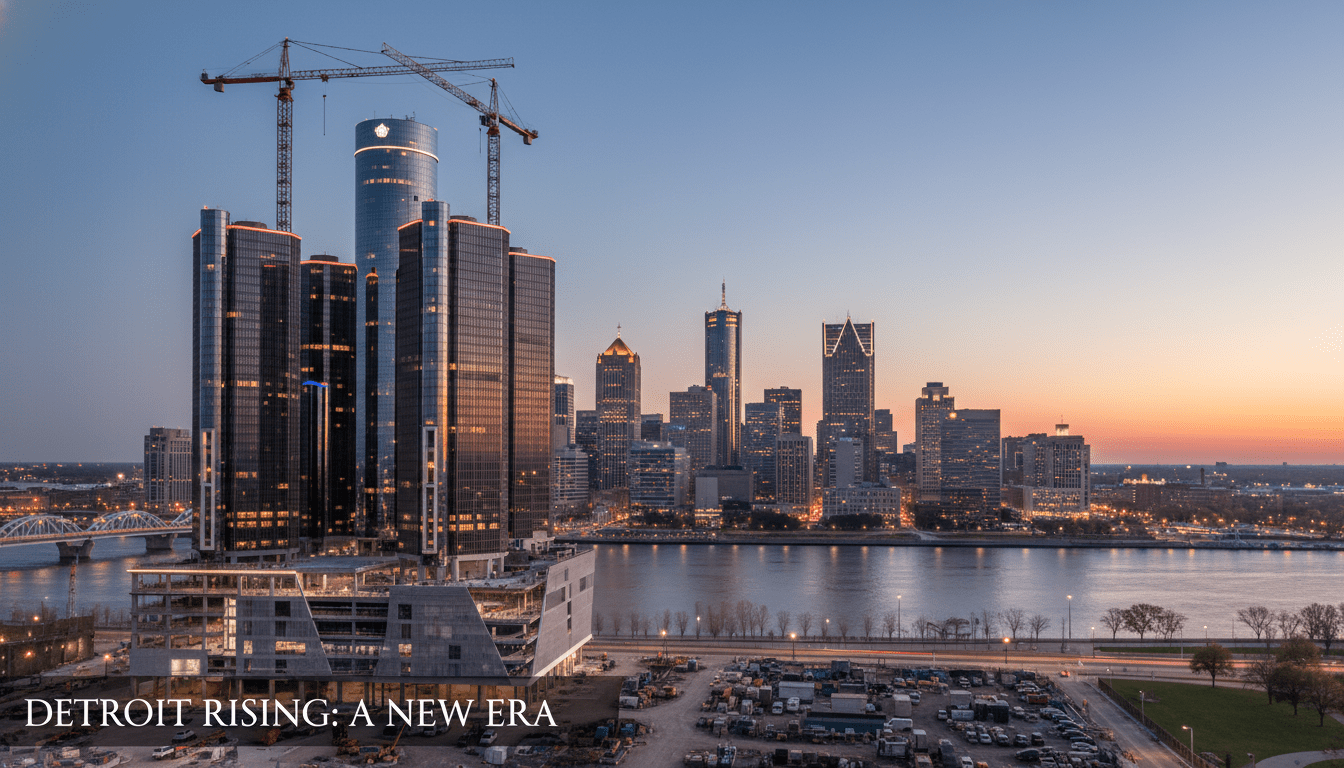
Detroit is no longer simply a city on the rebound; for a growing number of national and international enterprises, it has become a destination of choice. Over the past twenty-four months, a discernible shift in business sentiment has transformed the Motor City into a competitive hub for industries ranging from fintech to green energy. Driven by a combination of aggressive state incentives, a burgeoning talent pool, and a cost of living significantly lower than coastal tech hubs, the trend of Detroit corporate relocation is reshaping the city’s economic landscape.
While the automotive industry remains the bedrock of the regional economy, the current wave of business migration is notably diverse. Startups priced out of Silicon Valley and established logistics firms seeking central supply chain nodes are increasingly eyeing downtown Detroit and its surrounding neighborhoods. According to recent data from the Detroit Economic Growth Corporation (DEGC), inquiries regarding commercial office space and industrial sites have ticked upward, signaling a sustained interest that extends beyond mere speculation.
The Economic Drivers Behind the Move
The primary catalyst for this influx is the comparative cost advantage. As inflation and operational costs squeeze margins for companies in New York, San Francisco, and Chicago, Detroit offers a compelling alternative. Commercial lease rates in Detroit’s Central Business District remain attractive compared to other major metropolitan areas, allowing businesses to secure Class-A office space at a fraction of the cost.
Furthermore, the Michigan Economic Development Corporation (MEDC) has been pivotal in curating incentive packages designed to sweeten the deal for prospective movers. These incentives often include tax abatements, workforce development grants, and infrastructure support.
“We are seeing a pragmatic shift in how C-suite executives view the Midwest,” said a commercial real estate analyst familiar with the Detroit market. “It is not just about cheap rent. It is about the ability to scale operations sustainably. Detroit offers the physical space and the logistical infrastructure that is becoming increasingly scarce in denser urban centers.”
The Talent Pipeline: A Major Draw
Beyond bricks and mortar, the decision for Detroit corporate relocation hinges on human capital. The region boasts one of the highest concentrations of engineers in the country, fed by a robust pipeline from the University of Michigan, Michigan State University, and Wayne State University. As the automotive industry pivots toward electrification and autonomous driving, the skill sets nurtured in Detroit have become universally valuable to tech firms and advanced manufacturers.
For tech companies specifically, the saturation of talent markets on the West Coast has made recruitment a costly endeavor. In contrast, Detroit offers access to a skilled workforce that is deeply rooted in problem-solving and engineering. This “brain gain” is reversing decades of talent exodus, with young professionals increasingly choosing to stay in or return to Southeast Michigan.
Recent reports indicate that the revitalization of districts like Corktown—anchored by Ford’s Michigan Central innovation hub—has created a gravity well for smaller tech startups and service providers looking to be near major industry players. This clustering effect is essential for fostering an ecosystem where innovation thrives.
Impact on Detroit Residents and Housing
While the arrival of new corporate entities signals economic health, the impact on local residents is multifaceted. On one hand, the influx of businesses creates direct employment opportunities. These range from high-level executive positions to administrative, service, and maintenance roles. The expansion of the tax base also theoretically allows the city to invest more heavily in public services, schools, and infrastructure.
However, the arrival of higher-paid workforces inevitably exerts pressure on the housing market. As noted in our recent coverage of Detroit’s evolving real estate trends, neighborhoods adjacent to business districts are seeing rising rent prices and property values. For long-time residents, this raises valid concerns regarding gentrification and displacement.
Local community organizations are actively monitoring these developments. “Development must be inclusive,” says a representative from a local housing advocacy group. “If big business moves in, there needs to be a clear pathway for native Detroiters to access those jobs and afford to stay in their neighborhoods. The benefits of corporate relocation cannot stop at the office door.”
To mitigate these risks, the City of Detroit has implemented strict requirements for developers receiving tax breaks, often mandating that a percentage of new residential units be reserved for affordable housing and that companies commit to local hiring quotas.
Infrastructure and Connectivity
A critical component supporting Detroit corporate relocation is the city’s improving infrastructure. The expansion of high-speed internet access and ongoing road improvements are vital for modern enterprises. Additionally, Detroit’s proximity to the Canadian border and its international airport makes it a strategic logistical hub for companies with cross-border operations.
Investments in public transportation, such as the QLine and potential future transit expansions, are also under the microscope. For a city to attract top-tier companies, it must offer the transit amenities that younger workforces expect. As discussed in our analysis of Detroit’s transportation future, bridging the gap between residential neighborhoods and new corporate centers remains a priority for city planners.
What Happens Next?
Looking ahead to the remainder of 2025, experts predict the trend of corporate migration to the Midwest will stabilize but continue. The focus is likely to shift from massive headquarters relocations to the establishment of significant satellite offices and regional hubs.
For Detroit, the challenge will be managing this growth responsibly. The city must balance the needs of incoming corporations with the welfare of its existing citizens. If successful, Detroit could serve as a national model for how post-industrial cities can reinvent themselves without losing their soul.
As the skyline continues to change and new logos appear on downtown high-rises, the message is clear: Detroit is open for business, and the world is taking notice.