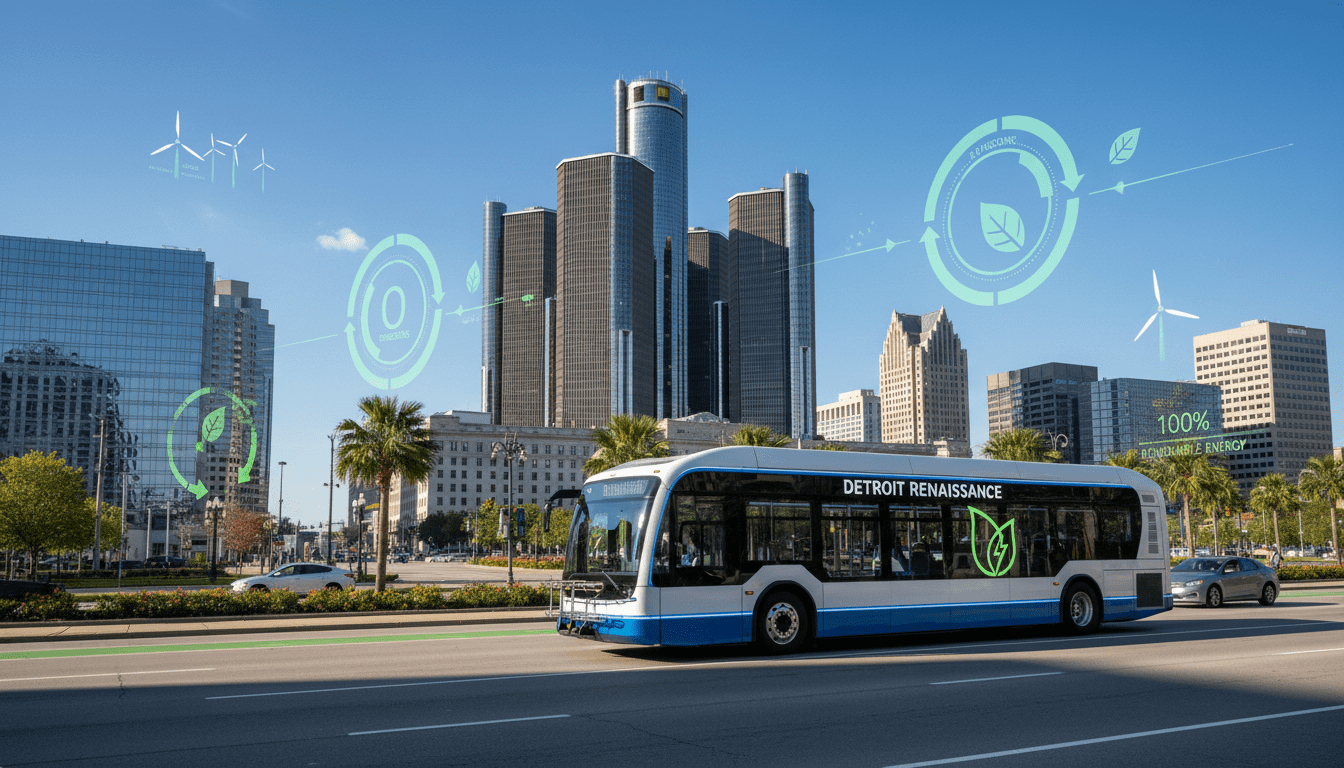
Detroit, long known globally as the Motor City and the birthplace of the automotive assembly line, is actively redefining its identity through a series of ambitious green transportation initiatives. As the automotive industry pivots toward electrification, the City of Detroit is working in tandem with state agencies and private partners to overhaul local infrastructure, reduce carbon emissions, and expand mobility options for residents.
Recent announcements from the Mayor’s Office and the Detroit Department of Transportation (DDOT) highlight a strategic shift toward sustainability. This transformation is not merely about electric vehicles (EVs); it encompasses a holistic approach involving public transit, non-motorized pathways, and extensive charging infrastructure designed to support a cleaner future for Detroiters.
Electrifying the Public Transit Fleet
One of the most significant components of the Detroit green transportation strategy is the overhaul of the public transit system. According to the City of Detroit’s Climate Strategy, the administration has set aggressive goals to transition municipal fleets away from fossil fuels.
DDOT has begun the integration of electric buses into its active fleet. These zero-emission vehicles are quieter, cleaner, and cheaper to maintain than their diesel counterparts. The move is supported by millions in federal grants from the Federal Transit Administration (FTA), aimed at modernizing bus facilities and purchasing low-no emission vehicles.
“This is a critical step for Detroit,” said a spokesperson for the Detroit Department of Transportation. “By introducing electric buses, we are directly improving the air quality in our neighborhoods and providing a more comfortable ride for our passengers. It is about modernization and equity as much as it is about the environment.”
The transition also involves upgrading the terminals. The Gilbert Terminal, for instance, is undergoing retrofitting to support heavy-duty charging stations required for the new electric fleet. This infrastructure investment ensures that the switch to green transit is sustainable for the long haul.
Expansion of EV Charging Infrastructure
While public transit is a priority, personal vehicle ownership remains high in the region. To support the shift within Detroit’s automotive sector toward EV production, the city is rapidly expanding its public charging network. The goal is to combat “range anxiety” and make EV ownership viable for residents who may not have private garages or driveways.
DTE Energy and local developers are collaborating to install charging stations in strategic locations, including municipal parking lots, public parks, and high-density residential areas. Data from the Southeast Michigan Council of Governments (SEMCOG) indicates that access to reliable charging infrastructure is the single biggest factor influencing EV adoption in urban environments.
Furthermore, the state of Michigan has designated key corridors, including I-75 and I-94 running through Detroit, as alternative fuel corridors, unlocking federal funding to build fast-charging hubs. This places Detroit at the center of a developing statewide green transportation network.
Micromobility and the Joe Louis Greenway
Detroit green transportation initiatives extend beyond four-wheeled vehicles. The city is currently constructing one of the most ambitious non-motorized transit projects in the country: the Joe Louis Greenway.
Once completed, this 27.5-mile loop will connect 23 different neighborhoods, offering a safe, continuous path for cyclists and pedestrians. It serves as both a recreational asset and a legitimate transit corridor, allowing residents to commute to work or school without relying on a car.
Complementing this infrastructure is the expansion of the MoGo bike-share program. MoGo has increased its footprint in neighborhoods outside the greater downtown area, ensuring that more Detroiters have access to affordable, short-term bike rentals for last-mile connectivity.
Impact on Detroit Residents
For the average resident, these initiatives promise tangible improvements to daily life. The primary benefit is public health. According to reports from the City of Detroit Office of Sustainability, transportation accounts for a significant portion of local greenhouse gas emissions. Reducing diesel fumes from buses and trucks contributes directly to lower rates of asthma and respiratory issues, particularly in neighborhoods near highways and industrial zones.
Economically, the shift is creating new opportunities. The installation and maintenance of charging stations, the retrofitting of bus depots, and the construction of greenways require skilled labor. Local workforce development programs are increasingly focusing on training residents for these “green collar” jobs.
However, challenges remain regarding affordability. While the infrastructure is improving, the initial cost of electric vehicles remains a barrier for many Detroit families. Local advocates are pushing for more equitable incentives to ensure that the benefits of green transportation are not limited to wealthier districts.
Background & Data Trends
The push for sustainability in Detroit aligns with broader national trends. Under the Bipartisan Infrastructure Law, billions of dollars are flowing into cities to support carbon reduction. Detroit is uniquely positioned to capitalize on this due to its existing industrial base and engineering talent.
- Federal Support: Michigan expects to receive over $100 million for EV charging infrastructure over five years.
- Transit Usage: Post-pandemic ridership on DDOT has been slowly recovering, and modernized fleets are seen as a way to attract new riders.
- Automaker Commitments: With General Motors and Ford—both headquartered in the metro area—committing billions to electrification, the local synergy between public policy and private industry is stronger here than almost anywhere else in the U.S.
What Happens Next
Looking ahead to 2025 and beyond, Detroiters can expect to see more construction related to charging hubs and the continued rollout of the Joe Louis Greenway. The city is also exploring “mobility hubs”—centralized locations where residents can seamlessly switch between a bus, a MoGo bike, or a ride-share service.
As the city continues to evolve, the success of these green transportation initiatives will depend on continued funding and community engagement. If successful, Detroit could serve as a model for how a legacy industrial city can transform into a leader in sustainable mobility.