Michigan’s industrial landscape is undergoing a significant transformation, driven by a surge in advanced manufacturing, clean energy investments, and a renewed focus on domestic production. For decades, the narrative surrounding the state’s economy has been inextricably linked to the automotive cycle. However, recent data suggests that Michigan manufacturing growth is diversifying, creating a complex but promising environment for Detroit residents and businesses alike.
While traditional assembly lines remain a cornerstone of the local economy, the definition of manufacturing in the region is expanding. From semiconductor production to defense contracting and electric vehicle (EV) battery assembly, the sector is evolving. This shift is not merely about maintaining status quo numbers; it represents a fundamental change in the skills required and the opportunities available to the local workforce.
The Shift to Advanced Manufacturing
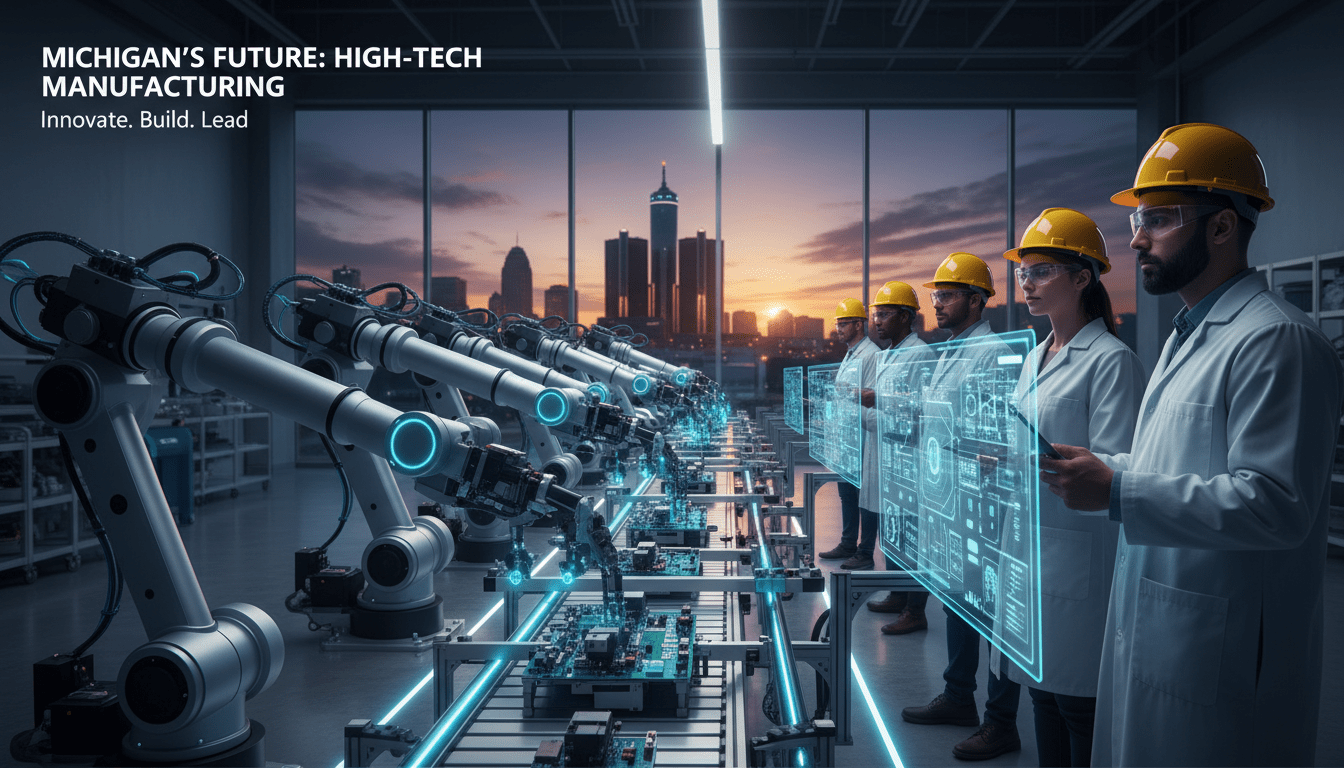
According to recent reports from the Michigan Economic Development Corporation (MEDC), the state has prioritized attracting high-tech manufacturing roles to insulate the economy from cyclical downturns. The push for “Industry 4.0″—the integration of smart digital technology into manufacturing—has spurred investment in automation, data exchange, and cloud computing within factories across Metro Detroit.
Local industry analysts point out that this transition is critical for long-term stability. Where previous eras relied heavily on manual labor, the current wave of Michigan manufacturing growth relies on technical aptitude. Facilities are increasingly seeking employees capable of managing robotics, analyzing production data, and maintaining complex electronic systems. This technological pivot is visible in the retooling of major plants, such as General Motors’ Factory ZERO, and the expansion of supplier networks in Macomb and Oakland counties that feed into Detroit’s production hubs.
Data Behind the Trends
Data from the U.S. Bureau of Labor Statistics indicates that while manufacturing employment nationally has faced headwinds, Michigan has maintained a resilient position relative to its peers. The state continues to lead the nation in automotive manufacturing jobs, but significant gains have been recorded in the battery manufacturing and defense sectors.
Economists at the University of Michigan’s Research Seminar in Quantitative Economics have forecasted a steady stabilization in the sector. Their outlook suggests that while the explosive post-pandemic recovery rates have normalized, the investment pipeline remains robust. The state’s strategic focus on the EV supply chain has resulted in billions of dollars in secured capital investments, which are projected to come online fully over the next two to three years.
Furthermore, the manufacturing sector’s contribution to the state’s GDP remains substantial. State officials have noted that for every job created in advanced manufacturing, there is a multiplier effect that supports additional jobs in logistics, construction, and professional services, further buoying the Detroit local economy.
Impact on Detroit Residents
For Detroiters, the macro-level statistics translate into tangible changes in the local job market. The demand for skilled labor has led to increased wages in the sector, as companies compete for a limited pool of qualified talent. This dynamic has forced employers to reconsider hiring practices, often lowering barriers to entry for those willing to undergo on-the-job training.
Local workforce development organizations report that training programs are seeing increased enrollment. Initiatives like “Detroit at Work” are pivoting to offer more certifications relevant to advanced manufacturing, such as mechatronics and computer-aided design (CAD). Community leaders emphasize that connecting residents to these opportunities is vital to ensuring that Michigan manufacturing growth benefits the city’s neighborhoods, not just corporate balance sheets.
Residents living near industrial corridors, such as those surrounding the Stellantis Mack Assembly Plant, have expressed a mix of optimism and caution. While new jobs are welcome, community meetings often highlight the need for these developments to come with environmental safeguards and commitments to local hiring. In response, several major manufacturers have established community benefits agreements intended to prioritize Detroit residents for new openings.
Challenges: The Talent Gap and Energy Transition
Despite the positive trajectory, significant hurdles remain. The most pressing challenge cited by business leaders is the “talent gap.” As the baby boomer generation retires, they take with them decades of institutional knowledge. Replacing this workforce is proving difficult, particularly as younger generations have historically viewed manufacturing as an unstable career path.
To combat this, the state has launched various marketing campaigns and scholarship programs aimed at rebranding manufacturing as a high-tech, high-reward career. Additionally, the transition to electrification poses logistical challenges. The energy infrastructure required to support massive battery plants and electrified assembly lines is immense. Utility providers and state regulators are currently engaged in complex planning to upgrade the grid without passing prohibitive costs onto consumers.
Supply chain volatility also remains a concern. While the acute shortages of the pandemic era have subsided, global geopolitical instability continues to threaten the flow of raw materials essential for high-tech manufacturing. Local suppliers are increasingly looking to “near-shore” their supply chains, moving production closer to Detroit to mitigate these risks.
Future Outlook for Michigan Manufacturing
Looking ahead to the remainder of 2025 and beyond, the outlook for manufacturing in the region is cautiously optimistic. The convergence of federal infrastructure spending and private sector investment creates a strong foundation for growth. Experts predict that the next phase of expansion will be defined by how well the region integrates artificial intelligence into production processes.
For Detroit, the stakes are high. The city’s ability to position itself as a hub for sustainable and advanced manufacturing will determine its economic trajectory for the next decade. If the current trends in Michigan manufacturing growth continue, the region could solidify its reputation not just as the Motor City, but as a premier center for modern industrial innovation.
As the landscape evolves, DetroitCityNews.com will continue to monitor how these macroeconomic shifts impact local jobs and startups across the metro area.