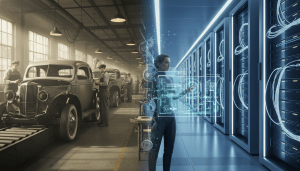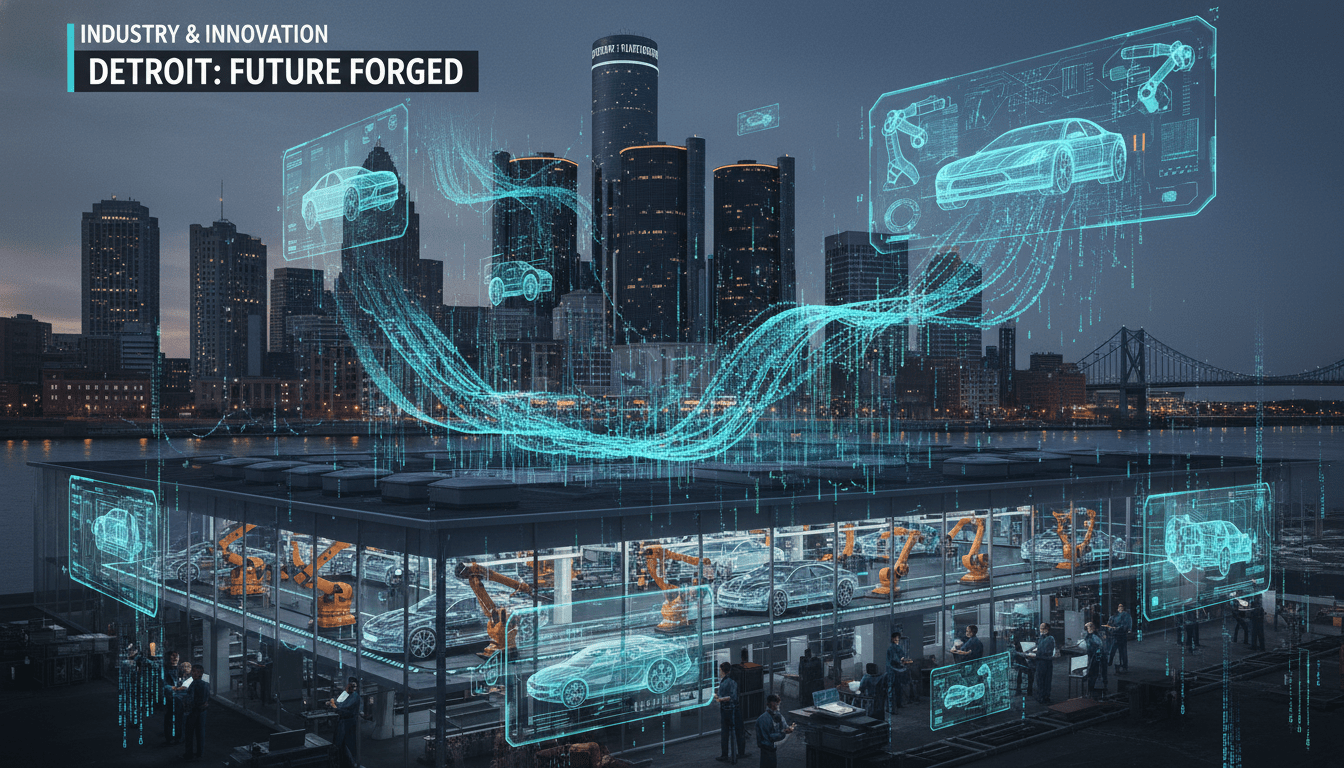
Michigan is in the midst of a profound economic metamorphosis. Long defined by the rhythmic clank of assembly lines and the physicality of heavy manufacturing, the state—and specifically the city of Detroit—is rapidly pivoting toward a data-driven future. This digital transformation in Michigan is not merely a corporate buzzword; it is a fundamental restructuring of how the state’s economy functions, how its government serves citizens, and how its workforce is preparing for the demands of the 21st century.
While the automotive industry remains the state’s backbone, the nature of that backbone is changing. The integration of artificial intelligence, the Internet of Things (IoT), and advanced robotics—collectively known as Industry 4.0—is blurring the lines between traditional manufacturing and high-tech software development. For Detroit, this shift promises a potential economic renaissance, provided the region can bridge the gap between legacy infrastructure and digital innovation.
The Rise of Industry 4.0 in Detroit
The engine of Michigan’s digital shift is undoubtedly the manufacturing sector’s adoption of Industry 4.0 technologies. According to the Michigan Economic Development Corporation (MEDC), the state is aggressively pushing for small and medium-sized manufacturers to modernize their operations. The goal is to ensure that the supply chain remains competitive on a global scale as automakers transition to electric and autonomous vehicles.
“The perception of manufacturing as dark, dirty, and dangerous is outdated,” says a representative from Automation Alley, a World Economic Forum Advanced Manufacturing Hub based in Troy. “Today, it’s about digital twins, predictive maintenance, and cybersecurity. Michigan is uniquely positioned because we have the hardware expertise, and now we are layering the digital infrastructure on top of it.”
This convergence is most visible in Detroit’s innovation districts. The Michigan Central development in Corktown is serving as a testing ground for this new reality, where mobility solutions are being developed in a collaborative ecosystem of startups and established tech giants. This isn’t just about building cars; it is about building the digital architecture that allows vehicles to talk to traffic lights, pedestrians, and each other.
For further reading on how local startups are contributing to this ecosystem, check our coverage on Detroit’s emerging innovation hubs.
Impact on Detroit Residents: The Digital Divide
While the corporate sector races toward digitalization, a critical component of digital transformation in Michigan is ensuring that residents are not left behind. For years, Detroit has struggled with a significant digital divide. Access to reliable, high-speed internet and the digital literacy required to navigate modern services has been a barrier for many households.
Recent initiatives suggest a turning point. The State of Michigan has been deploying federal funds from the Broadband Equity, Access, and Deployment (BEAD) program to expand fiber optic infrastructure. For Detroiters, this means more than just faster streaming; it means access to telehealth, remote educational opportunities, and the ability to apply for jobs that increasingly require digital savvy.
Local community centers are also stepping up. Organizations like the Detroit Community Technology Project are working to demystify technology for seniors and low-income residents, ensuring that the benefits of a digital economy trickle down to neighborhoods far removed from the downtown tech corridor.
Workforce Evolution: The “New Collar” Job
The digital transformation in Michigan is reshaping the job market, creating a high demand for what experts call “new collar” workers. These are roles that may not require a traditional four-year degree but demand specialized skills in coding, cybersecurity, or robotics maintenance.
Data from the Workforce Intelligence Network for Southeast Michigan highlights a surge in demand for IT professionals, not just in software companies, but embedded within traditional automotive and healthcare sectors. The narrative is shifting from “losing jobs to robots” to “training people to manage the robots.”
“We are seeing a desperate need for talent that understands the intersection of operations and IT,” noted a workforce development official during a recent Detroit Economic Club meeting. “If you can troubleshoot a network and understand a production line, you can write your own ticket in this town right now.”
Residents interested in these opportunities should look into state-funded apprenticeships and coding boot camps that have popped up across Wayne County. You can read more about local employment trends in our analysis of Michigan’s evolving workforce landscape.
Government Goes Digital
Beyond the private sector, the state government is undergoing its own digital overhaul. The “MiLogin” system and recent updates to the Secretary of State’s online services are part of a broader push to make government interactions frictionless. For Detroit business owners, this means easier access to permits, licensing, and grants.
According to the Michigan Department of Technology, Management & Budget, the state is prioritizing cybersecurity and user experience to match private sector standards. This digital governance strategy aims to reduce bureaucratic red tape, allowing entrepreneurs to focus on growth rather than paperwork.
What Happens Next?
The trajectory for digital transformation in Michigan is steep. The coming years will likely see an intensification of AI integration across all sectors. For Detroit, the challenge remains equitable growth. As the city cements its status as a mobility tech hub, the imperative will be to connect the prosperity of the innovation districts with the neighborhoods that surround them.
The narrative of the Rust Belt is being rewritten in code. With sustained investment in infrastructure, education, and cybersecurity, Michigan is poised to demonstrate that a legacy industrial power can successfully pivot into the digital age.