Detroit is a city defined by resilience, but beneath the headlines of economic recovery and architectural restoration lies a more complex and vibrant story: the evolution of Detroit cultural diversity. While the Motor City has long been recognized as a global center of African American culture, the demographic tapestry of the city is weaving new patterns that are reshaping neighborhoods, local economies, and the city’s identity in 2025.
From the bustling corridors of Southwest Detroit to the historic avenues of the North End, the interplay between long-standing communities and new immigrant populations is fueling a cultural renaissance. According to recent data, while the city remains a stronghold of Black heritage, there is a palpable shift driven by immigration and neighborhood revitalization efforts that is diversifying the local landscape.
The African American Foundation
To discuss Detroit cultural diversity, one must start with its bedrock. Detroit is, and has been for decades, the largest Black-majority city in the United States. According to the U.S. Census Bureau, African Americans make up approximately 77% of the city’s population. This demographic reality is not just a statistic; it is the soul of the city.
Local historians and community leaders emphasize that Detroit’s contributions to the world—from Motown to Techno, from civil rights leadership to labor movements—are rooted in this Black identity. “You cannot separate Detroit’s future from its Black history,” says a representative from the Charles H. Wright Museum of African American History. “The challenge and the opportunity lie in ensuring that as the city changes, this foundational culture is preserved and celebrated, not displaced.”
However, the narrative is expanding. As the city stabilizes, it is attracting a broader spectrum of residents, including a reverse migration of Black professionals returning from the South and suburbs, reinforcing the city’s status as a hub for Black excellence and entrepreneurship.
A Growing Mosaic: Immigrant Communities and Economic Impact
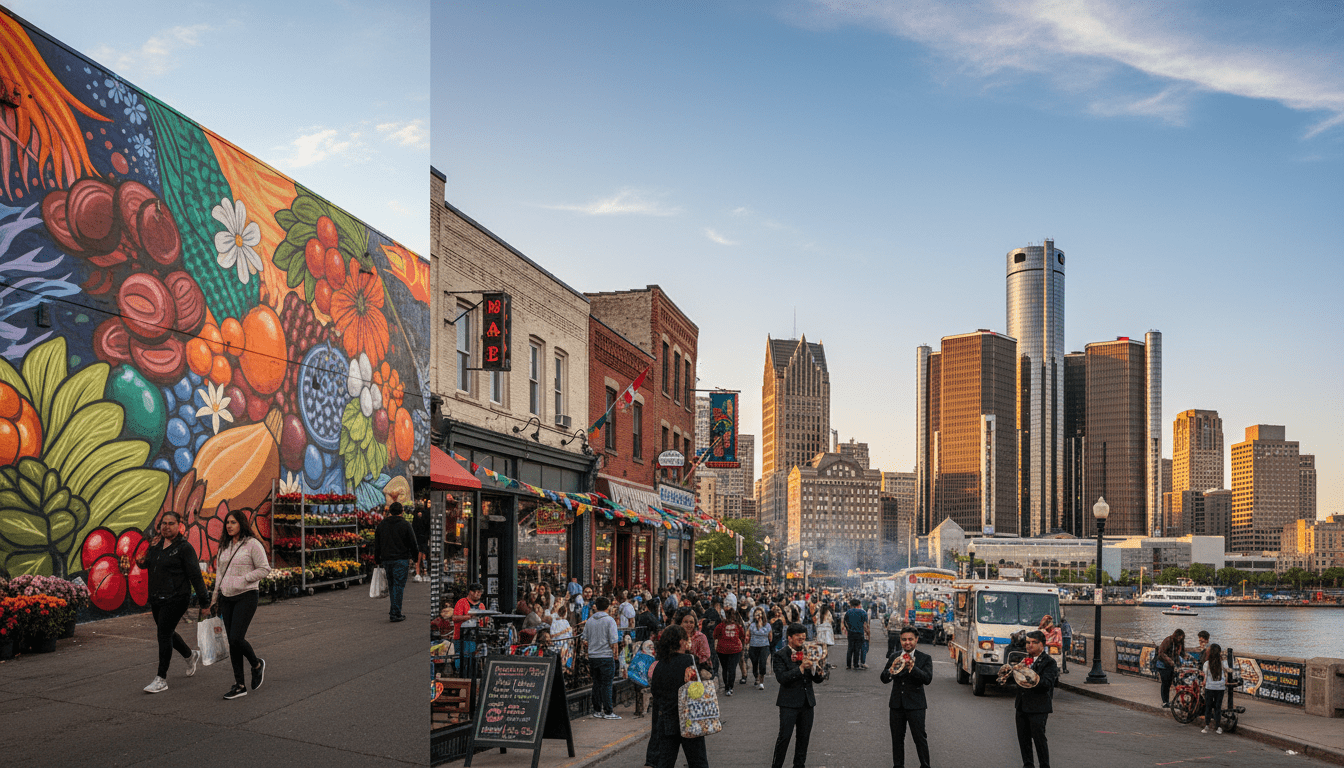
While the city honors its roots, new shoots are emerging. Organizations like Global Detroit have long documented the vital role immigrants play in stabilizing neighborhoods and driving economic growth. The most visible example of this is Southwest Detroit, often referred to as Mexicantown, though it is home to a diverse array of Latin American communities.
The vibrancy of Vernor Highway offers a stark contrast to the blight seen in other areas during the recession years. Here, local restaurants, grocers, and service businesses thrive, driven by Hispanic entrepreneurs. This area demonstrates how Detroit cultural diversity acts as an economic engine. According to data from Global Detroit, immigrant-owned businesses in the region are 40% more likely to be Main Street businesses—grocery stores, restaurants, and retail shops that anchor neighborhoods.
Furthermore, the city’s border with Hamtramck creates a fluid cultural exchange with Yemeni and Bangladeshi communities. The result is a unique urban fabric where the call to prayer can be heard near historic Polish catholic churches, and where soul food spots sit distinctively close to authentic taquerias.
Impact on Detroit Residents
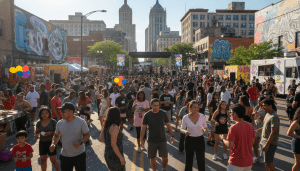
For the average Detroiter, this cultural blending offers both tangible benefits and complex challenges. On the positive side, the culinary and arts scenes are exploding. Residents have access to a global marketplace of goods and experiences without leaving the city limits. Festivals such as the Concert of Colors and Dally in the Alley highlight this integration, bringing distinct groups together in shared public spaces.
Local business owners are feeling the shift. “Ten years ago, my customers were almost entirely from the immediate block,” says a shop owner in Corktown. “Now, I see a mix of long-time residents, new immigrants, and young professionals. The diversity is good for business, but we have to make sure the original neighbors can still afford to shop here.”
This touches on the critical issue of inclusion. As Detroit real estate values rise, there is a valid concern among long-time residents about gentrification. The expansion of cultural diversity must be managed to ensure it doesn’t lead to the erasure of the communities that stuck with the city through its hardest times.
Background & Data: The Numbers Behind the Shift
Analyzing the demographics reveals slow but steady changes. While the African American population remains the clear majority, the Hispanic and Latino population in Detroit has seen growth, increasing by over 15% in the last decade according to census estimates. Additionally, the white population has seen a slight uptick in the chaotic “7.2 square miles” of the greater downtown area, though this demographic shift is less pronounced in the outer neighborhoods.
Another layer of data comes from the Arab American Institute, which notes that while Dearborn is the famous hub, the Arab American presence within Detroit city limits is significant and growing, particularly in the warrendale and border neighborhoods. This data underscores that Detroit cultural diversity is not a static metric but a dynamic flow of people seeking opportunity.
What Happens Next?
As we look toward the future, the City of Detroit has launched several initiatives aimed at equity and inclusion. The goal is to harness this diversity to attract international business and tourism while protecting legacy residents.
The Office of Arts, Culture and Entrepreneurship has been working to ensure that funding and support are distributed equitably across all cultural groups. The question for the next decade will be whether Detroit can serve as a national model for a majority-Black city that successfully integrates new immigrant waves and investment without succumbing to the displacement trends seen in cities like Washington D.C. or Brooklyn.
For now, the spirit of Detroit remains defined by a gritty, welcoming inclusiveness. Whether through the rhythms of a jazz club on the Avenue of Fashion or the mariachi bands in Clark Park, the city is proving that its strength lies not just in what it manufactures, but in who calls it home.