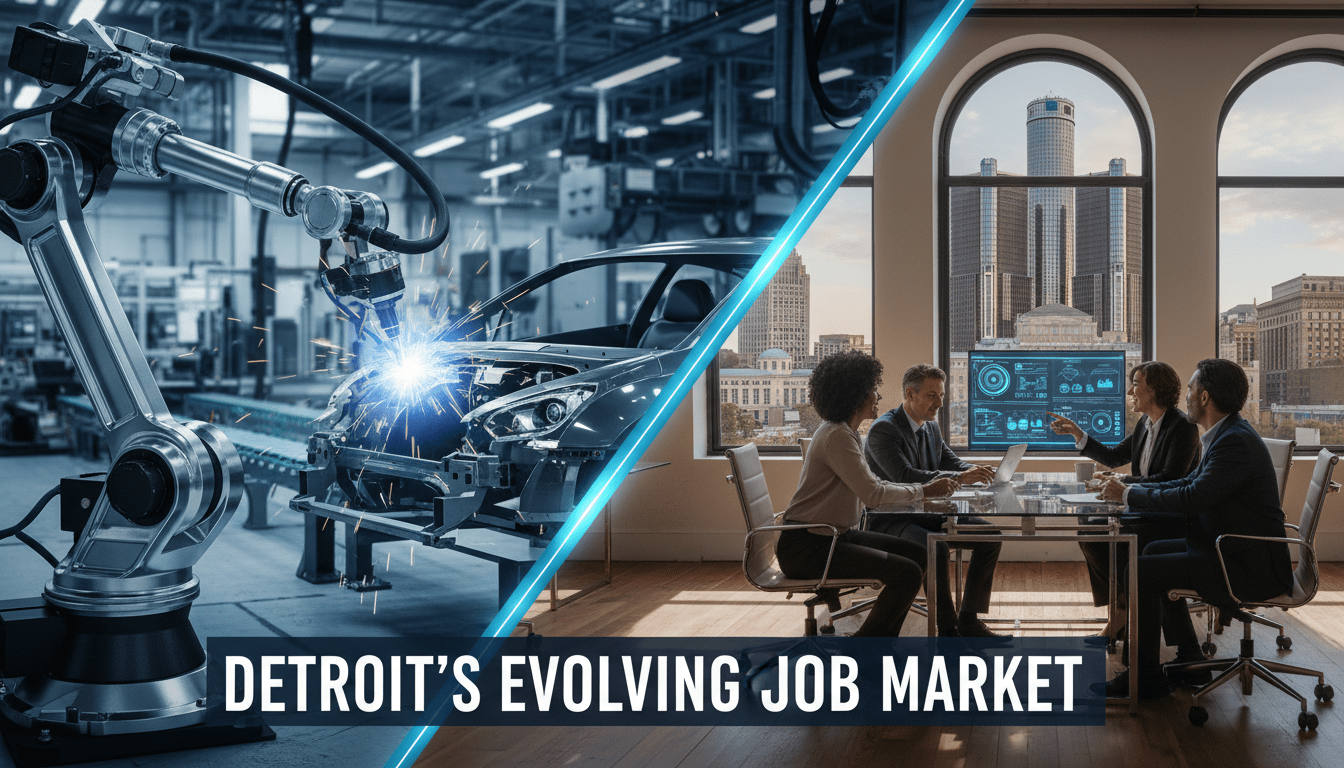
The Detroit job market is undergoing a significant transformation as the city continues to pivot from its traditional manufacturing roots toward a diversified economy centered on mobility, healthcare, and financial technology. As 2025 progresses, data from federal and local sources indicate a resilient yet evolving landscape for job seekers in Southeast Michigan.
While the automotive sector remains the region’s economic engine, the nature of employment within that sector is shifting rapidly. Simultaneously, the healthcare and professional services sectors are emerging as stabilizing forces, offering new opportunities for residents. This report analyzes the current trends, major hiring industries, and the economic outlook for Detroit’s workforce.
The Evolution of the Motor City Economy
For decades, Detroit’s economic health was inextricably linked to the production cycles of the Big Three automakers. Today, while Ford, General Motors, and Stellantis remain dominant employers, the Detroit auto industry is redefining what it means to work in manufacturing.
According to reports from the Detroit Regional Chamber, the transition to electric vehicles (EVs) is driving demand for a different caliber of talent. The focus has shifted from assembly line volume to battery technology, software engineering, and logistics. This shift is evident in the development of hubs like Michigan Central in Corktown, which is positioning Detroit as a global leader in mobility technology rather than just vehicle production.
“The narrative that manufacturing jobs are disappearing is incorrect; they are evolving,” said a representative from a local workforce development agency during a recent economic forum. “We are seeing a high demand for mechatronics technicians and systems engineers—roles that require a blend of mechanical knowledge and digital literacy.”
Top Hiring Industries in Detroit
Beyond the automotive sector, several industries are actively recruiting, providing a buffer against manufacturing volatility.
Healthcare and Life Sciences
The healthcare sector remains the largest private-sector employer in the city. With major institutions like the Detroit Medical Center (DMC) and Henry Ford Health anchoring the local economy, demand for clinical and non-clinical staff remains at an all-time high. Henry Ford Health’s massive expansion project in the New Center area is not only creating construction jobs but is expected to result in hundreds of permanent medical and administrative positions upon completion.
Fintech and Professional Services
Detroit has quietly become a significant player in the fintech space, led largely by Rocket Companies and a growing ecosystem of startups. This sector drives demand for mortgage bankers, data analysts, and IT professionals. The growth of downtown corporate headquarters has also spurred hiring in legal services, marketing, and human resources.
Hospitality and Tourism
As Detroit hosts major events—such as the NFL Draft witnessed in 2024 and ongoing convention circuits—the hospitality industry is rebounding. Hotels, restaurants, and local Detroit entertainment venues report a steady need for service staff, though local business owners note that wage competition remains fierce to attract retention.
Impact on Detroit Residents
For local residents, the shifting Detroit job market presents both opportunities and challenges. On one hand, the influx of technology and healthcare jobs brings higher wage potential. On the other hand, there is a distinct skills gap that city officials are racing to close.
Data from the U.S. Census Bureau highlights that while the median income in Detroit has seen incremental improvements, disparities remain. The jobs of the future require certifications or degrees that not all residents currently possess. In response, programs like “Detroit at Work” are aggressively promoting free training in skilled trades, CDL driving, and IT fundamentals to ensure long-time residents are not left behind by the city’s renaissance.
Residents are also navigating the post-pandemic reality of hybrid work. While downtown foot traffic has improved, many professional service firms maintain flexible policies. This has altered the daytime economy, impacting small businesses that rely on the lunch rush, though evening and weekend patronage remains strong.
Labor Market Data and Statistics
Understanding the numbers is crucial for grasping the full picture of the local economy. According to the U.S. Bureau of Labor Statistics (BLS), the unemployment rate in the Detroit-Warren-Dearborn Metropolitan Statistical Area has stabilized near pre-pandemic levels, though it fluctuates with seasonal manufacturing adjustments.
Key statistics include:
- Unemployment Rate: Hovering around 3.8% to 4.2% for the metro area, reflecting a tight labor market.
- Wage Growth: Average hourly earnings have increased by approximately 4% year-over-year, driven by competition for skilled labor.
- Job Openings: The ratio of unemployed persons to job openings remains low, giving job seekers steady leverage in negotiations.
However, economists warn that national inflationary pressures continue to impact real wage growth. While paychecks are larger, the cost of living—particularly housing and utilities—has also risen, meaning the purchasing power for the average Detroit worker has not grown at the same pace as salaries.
What Happens Next?
Looking ahead to the remainder of 2025, the Detroit job market is expected to remain robust, provided the national economy avoids a recession. The completion of major infrastructure projects, including the Gordie Howe International Bridge, is anticipated to create a logistics boom, further diversifying employment options beyond the auto assembly line.
Local universities, including Wayne State University and the University of Detroit Mercy, are increasingly partnering with private corporations to tailor curriculums to immediate industry needs. This pipeline from education to employment is critical for the city’s strategy to retain young talent.
For job seekers, the message is clear: versatility is key. The days of securing a job with a high school diploma alone are dwindling, replaced by a market that rewards technical certification, digital adaptability, and specialized skills in healthcare and mobility.