For decades, the narrative surrounding winter in Detroit has been one of hibernation. Residents and tourists alike frequently retreated indoors as temperatures dropped, leaving public plazas and parks largely dormant from January through March. However, a strategic shift in urban planning and public space management is currently reshaping the city’s cold-weather identity. Through a combination of public-private partnerships and targeted infrastructure investments, Detroit is actively rebranding itself as a four-season destination.
City officials, alongside organizations like the Detroit Riverfront Conservancy and the Downtown Detroit Partnership (DDP), have significantly expanded the scope of Detroit winter activities. The focus has moved beyond simple holiday lighting displays to robust, daily programming designed to keep foot traffic high and support local commerce during what has traditionally been the distinct slow season for the local economy.
Strategic Shift to Year-Round Placemaking
The transformation of Detroit’s winter landscape is not accidental; it is the result of a deliberate “winter city” strategy adopted by urban planners. This approach, popular in Scandinavian cities and Canadian neighbors like Montreal, posits that cold weather should not halt civic life. According to data from the Downtown Detroit Partnership, the activation of spaces like Campus Martius Park has successfully maintained visitor density even during freezing conditions.
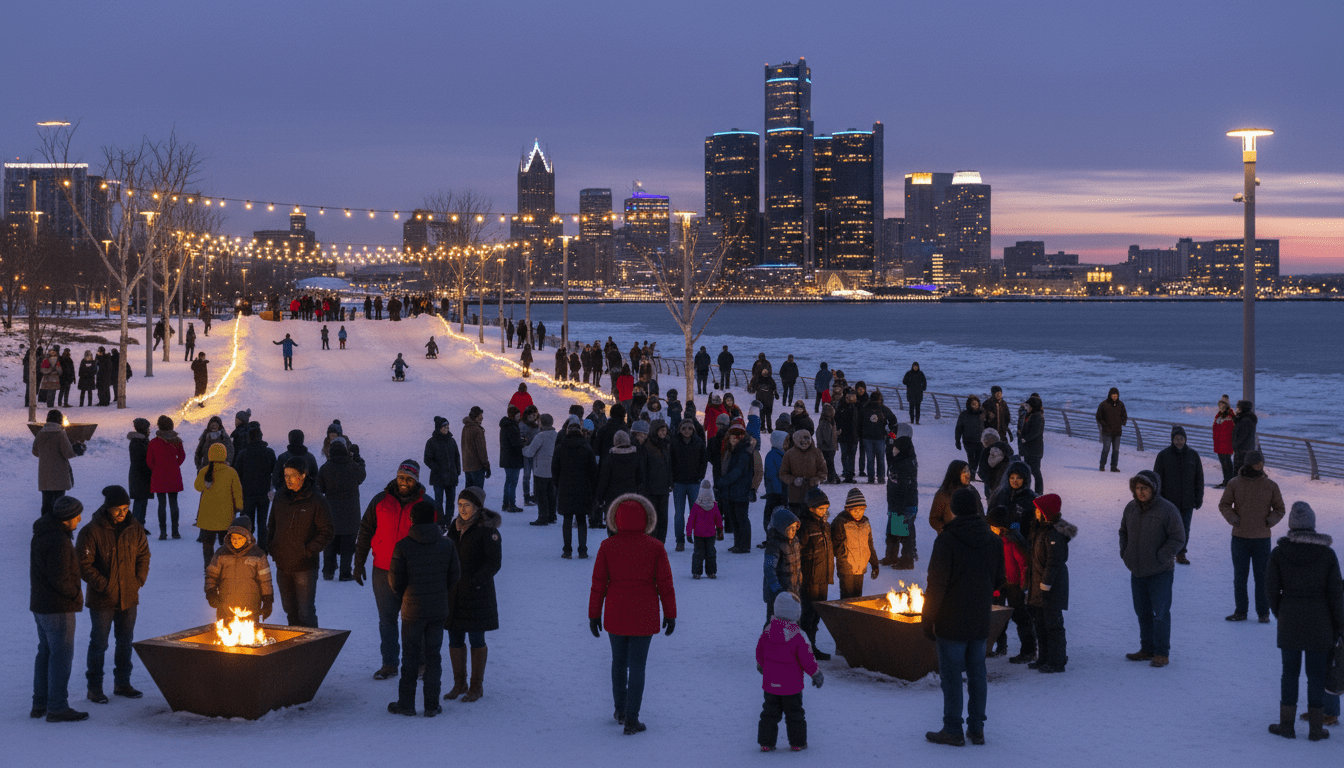
“The goal is to provide reliable, engaging infrastructure that makes the cold manageable and even enjoyable,” said a spokesperson for the Detroit Riverfront Conservancy in a recent press briefing. “By installing permanent fire pits, warming sheds, and scheduling consistent weekend programming, we are seeing numbers at the riverfront that rival our summer attendance.”
This strategy relies heavily on “placemaking”—a multi-faceted approach to the planning, design, and management of public spaces. In Detroit, this manifests as a concerted effort to link major development projects with walkable, active outdoor corridors.
Riverfront Activation: The Valade Park Success
Perhaps the most significant case study in this seasonal shift is the programming at Robert C. Valade Park. The initiative, widely known as “Winter at Valade,” has transformed a stretch of the East Riverfront into a hub of activity. Unlike traditional parks that rely on passive recreation, Valade Park features oversized outdoor fireplaces, a synthetic sledding hill, and winter-themed festivals that rotate themes throughout the season.
Reports from the Detroit Riverfront Conservancy indicate that thousands of visitors utilize the park during winter weekends. This activation is critical for the connectivity of the Riverwalk. By creating a destination point, the Conservancy encourages pedestrians to traverse the path even in snow, maintaining the Riverwalk’s status as a vital transportation and recreation artery year-round.
Local vendors have been integrated into this programming to ensure economic circulation. The presence of shed-style pop-up shops allows small business owners to sell hot food and retail goods, mitigating the revenue drop-off many vendors experience post-Christmas.
Downtown and the Economic Ripple Effect
In the downtown core, the strategy is anchored by the ice rink at Campus Martius, but it has expanded outward. The activation of the Monroe Street Midway (seasonal variations permitting) and the Woodward corridor creates a density of activity that supports brick-and-mortar businesses.
According to the Detroit Riverfront Conservancy and DDP reports, consistent outdoor programming correlates directly with increased restaurant reservations and retail sales in the immediate vicinity. When residents come downtown for skating or winter festivals, they are statistically more likely to dine at nearby establishments.
“We used to see a sharp decline in foot traffic immediately after New Year’s Day,” stated a representative from a local business association in the Central Business District. “Now, with the consistent programming at the parks and the riverfront, weekends remain viable for business owners through February. It flattens the curve of the seasonal slump.”
Impact on Detroit Residents
Beyond economics, the expansion of Detroit winter activities has a tangible impact on the quality of life for residents. The Midwest is prone to high rates of Seasonal Affective Disorder (SAD), often exacerbated by isolation and a lack of outdoor exposure. By creating safe, well-lit, and socially active outdoor spaces, the city provides a critical mental health resource.
Community feedback gathered by the City of Detroit Parks & Recreation Department suggests a growing appetite for winter wellness. Residents have increasingly participated in organized winter walks and outdoor fitness classes, signaling a cultural shift in how Detroiters view their environment. The ability to access free, family-friendly entertainment without needing to leave the city limits is cited as a major benefit by residents in neighborhoods adjacent to the greater downtown area.
Furthermore, this programming addresses an equity issue. Winter tourism in Michigan is often associated with expensive ski resorts in the northern part of the state. By offering low-cost or free activities like sledding and skating within the city, Detroit ensures that winter recreation is accessible to residents across various income levels.
Challenges and Infrastructure
Despite the success, challenges remain. Maintaining outdoor spaces in sub-zero temperatures requires significant operational funding. Snow removal, equipment maintenance for warming stations, and staffing costs are higher in winter months. Additionally, convincing suburban residents to drive into the city during inclement weather remains a hurdle for regional tourism marketers.
The city is also working to improve transportation infrastructure to ensure these hubs are accessible when road conditions are poor. The People Mover and the QLINE serve as essential connectors between the riverfront and downtown activities, allowing visitors to park once and move between venues without extended exposure to the cold.
Future Outlook
Looking ahead, the scope of winter programming is set to expand. With the anticipated completion of the Ralph C. Wilson Jr. Centennial Park on the West Riverfront, Detroit will gain another massive venue capable of hosting large-scale winter events. Planners envision a connected winter corridor stretching from the Ambassador Bridge to Belle Isle.
As Detroit continues to develop its public spaces, the integration of winter-specific design elements—such as wind blocks, heated pavements, and maximizes solar exposure—will likely become standard code for new projects. The city is proving that with the right investment and imagination, the winter season can be an asset rather than a liability.