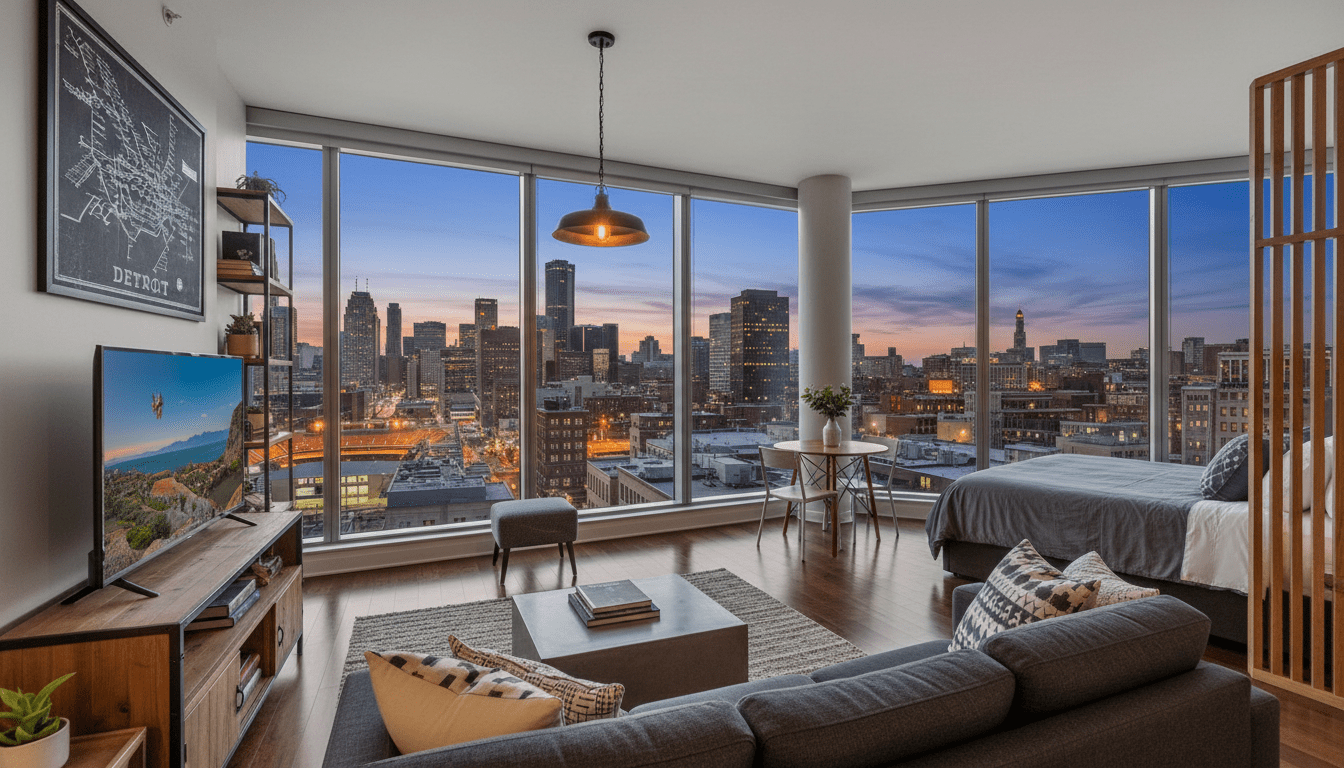
The landscape of rental housing in Detroit is undergoing a significant transformation, particularly within the market for smaller units. As development accelerates in Downtown, Midtown, and Corktown, Detroit studio apartments are becoming a focal point of the city’s housing debate, representing both the revitalization of the urban core and the growing affordability challenges facing single residents.
While the Motor City was once known for its sprawling historic homes and spacious industrial lofts, a new wave of construction is prioritizing density. Developers are increasingly bringing micro-units and compact studio layouts to market, catering to young professionals and students. However, data indicates that while the square footage is shrinking, the rental prices for these units are climbing at a rate that outpaces wage growth for many locals.
The Shift to Micro-Living in the Motor City
For decades, the allure of Detroit’s rental market was the abundance of space relative to cost. Today, that dynamic is shifting in the city’s most desirable neighborhoods. New developments such as The Exchange in Greektown and various projects within the Brush Park City Modern footprint are introducing high-density living concepts that rely heavily on studio and one-bedroom configurations.
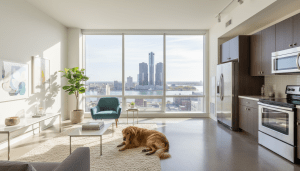
According to recent market analysis from RentCafe, the average size of new apartments in Detroit has followed a national trend of contraction. Yet, the demand for units in walkable, amenity-rich districts has allowed landlords to command premium prices. A standard 500-square-foot studio in the central business district can now range anywhere from $1,200 to over $1,600 per month, depending on the building’s amenities and views.
Real estate analysts suggest this shift is driven by construction costs and demographic changes. With more single-person households forming—a trend noted by the U.S. Census Bureau—developers are incentivized to build more units per floor. “The economics of modern development favor density,” explained a local urban planner who asked to remain anonymous. “To make the numbers work on a new high-rise in downtown Detroit, you need to maximize the unit count, which often means prioritizing studios over larger family-sized units.”
Impact on Detroit Residents
The rising cost of Detroit studio apartments has a direct impact on the city’s existing population, particularly those who do not work in the high-paying tech or finance sectors. For long-time residents, the influx of luxury studios presents a complex picture. While it signifies economic investment and population density—crucial for supporting local retail and Detroit restaurants—it also raises concerns about gentrification and displacement.
The core issue is the rent-to-income ratio. Financial experts generally recommend spending no more than 30% of gross income on housing. For a resident earning the city’s median income, a $1,300 studio apartment is mathematically out of reach. This creates a bifurcated market: luxury inventory for newcomers and higher-income earners, and a shrinking supply of quality, affordable units for the working class.
“We are seeing a squeeze on the single-person household workforce,” said a representative from a local housing advocacy group. “Teachers, service workers, and artists who used to find affordable lofts in Midtown are finding themselves priced out of the very neighborhoods they helped stabilize. When a studio costs what a mortgage used to cost in this city, we have to ask who this development is really for.”
Market Data and Trends
Data supports the anecdotal evidence of rising costs. Reports indicate that while Detroit remains more affordable than coastal hubs like New York or San Francisco, its year-over-year rent growth has been among the highest in the Midwest. The surge is not just limited to new builds; owners of older, renovated buildings in the Cass Corridor and New Center are also adjusting rents upward to match the market heat.
- Inventory Shifts: There has been a roughly 15% increase in studio inventory in the greater downtown area over the last three years.
- Price Per Square Foot: In premier downtown locations, the price per square foot for studios often exceeds that of larger two-bedroom units, reflecting the premium placed on privacy and location over raw space.
- Occupancy Rates: Despite price hikes, occupancy rates in Class A buildings remain high, suggesting strong demand from the influx of corporate relocations and medical professionals working at nearby health systems.
Furthermore, the Detroit housing market is seeing a ripple effect. As downtown prices rise, demand spills over into adjacent neighborhoods like North End and Southwest Detroit, pushing up rents for studio spaces in those areas as well.
Regulatory Responses and Future Outlook
The City of Detroit is not unaware of these pressures. The Housing & Revitalization Department has implemented inclusionary housing ordinances requiring developers receiving discounted land or public subsidies to set aside at least 20% of units for residents earning less than the area median income (AMI). These “deeply affordable” units are often the only way low-to-moderate-income residents can access new Detroit studio apartments in prime locations.
Looking ahead, the pipeline for 2024 and 2025 suggests that supply may eventually catch up with demand, potentially stabilizing prices. Several large-scale residential projects are nearing completion, which could soften the market competition. However, construction inflation continues to set a high floor for rental pricing.
For prospective tenants, the advice from real estate professionals is to look for “lease-up” concessions—such as one month of free rent—which are becoming more common as new buildings open their doors. Additionally, looking just outside the immediate downtown loop can yield significantly larger square footage for the same price point.
As Detroit continues its trajectory of redevelopment, the humble studio apartment has become a bellwether for the city’s broader economic health: a symbol of growth, but also a flashpoint for the critical conversation regarding equitable housing access.