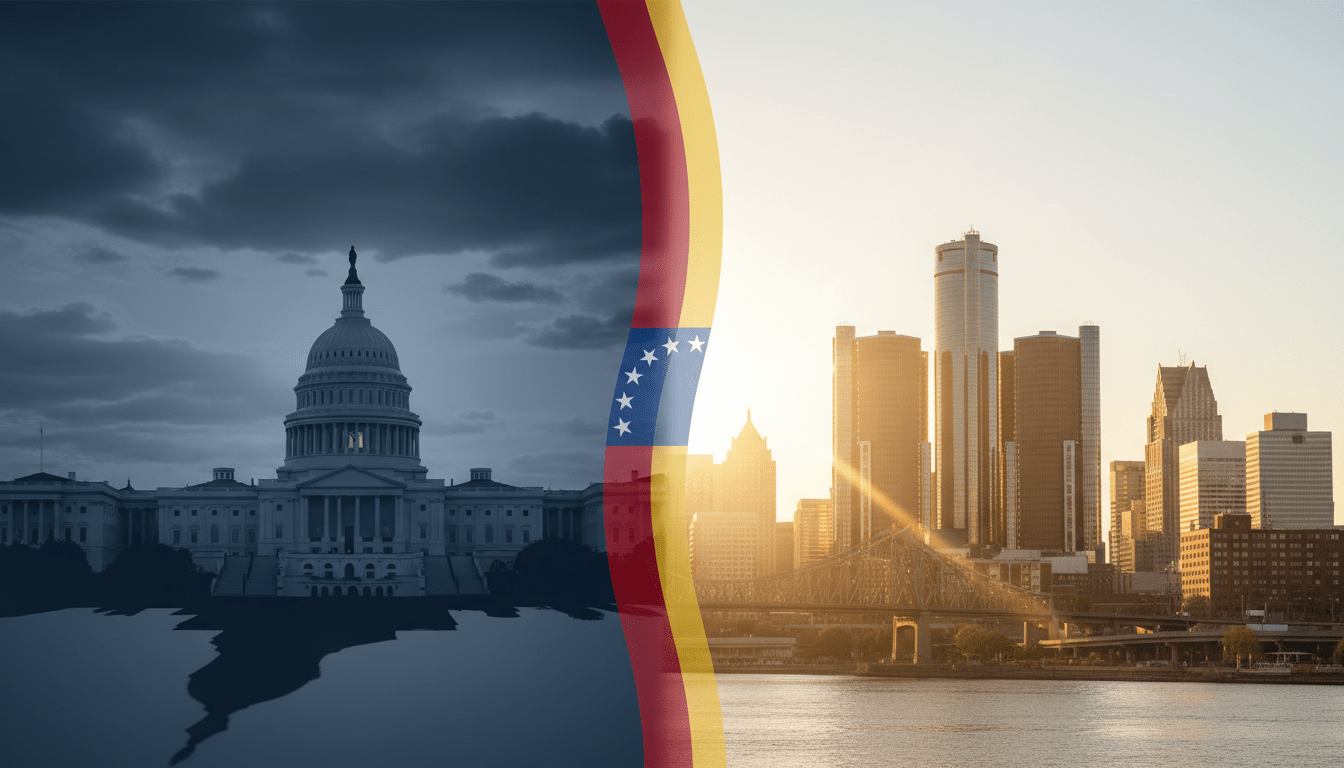
In the annals of history, King Louis XIV of France represents the ultimate consolidation of executive power, famously attributed to the phrase "L’État, c’est moi" (I am the State). In modern American politics, specifically regarding foreign policy and immigration, we are witnessing a resurgence of this "Sun King" dynamic. The current approach to Venezuela—fluctuating wildly between crushing sanctions, diplomatic overtures, and sudden border closures—is driven almost exclusively by executive decree rather than legislative consensus. While this political theater plays out in Washington D.C., the real-world consequences are landing squarely on the streets of Detroit.
For Detroiters, the distance between the White House and the Motor City often feels vast, but the tether of federal policy is short and snaps back hard. The unilateral decisions made by the Executive Branch regarding Venezuela are creating a ripple effect that destabilizes Detroit’s local economy, strains our housing infrastructure, and leaves our growing Venezuelan community in a state of perpetual limbo. To understand the local crisis, we must look at the failure of the imperial presidency to govern through coalition rather than edict.
The Volatility of Executive Rule
The core of the issue is not merely the policy itself, but the mechanism by which it is delivered. Over the last decade, spanning multiple administrations, U.S. relations with Venezuela have been dictated by Executive Orders. This creates a volatile environment where rules change overnight. One month, Temporary Protected Status (TPS) is expanded; the next, deportation flights are authorized; the following month, oil sanctions are tweaked to allow Chevron to pump crude.
According to political analysts, this lack of legislative stability makes long-term planning impossible for cities like Detroit. When immigration flows are turned on and off like a faucet based on the geopolitical whim of the President, local municipalities are left to clean up the spill without federal buckets. This "Sun King" approach assumes that federal decrees are self-executing, ignoring the operational reality faced by local mayors and city councils.
Venezuela Policy Impact on Detroit Housing
The most visible impact of this disjointed foreign policy is evident in Detroit’s neighborhoods. As economic conditions in Venezuela deteriorate—exacerbated by both mismanagement in Caracas and the yo-yo nature of U.S. sanctions—migration flows northward have surged. Detroit has historically been a welcoming city, a sanctuary of industry and opportunity. However, the unpredictability of arrivals has strained local resources.
Data from local social services agencies indicates a sharp rise in asylum seekers from Venezuela arriving in southeast Michigan over the last 18 months. Unlike traditional refugee resettlement, which is planned and funded via congressional budgets, these arrivals often occur in waves triggered by rumors of policy changes at the border. Because the policy is driven by executive reaction rather than legislative planning, federal funding to support these new residents often lags behind or is non-existent.
Local housing advocates have noted that Detroit’s shelter system is nearing capacity. Without a consistent federal strategy, the burden falls on local non-profits and city budgets. As reported in our coverage of Detroit’s housing market, the shortage of affordable units is already a critical issue for long-time residents. The added pressure of emergency housing for new arrivals creates friction that could be alleviated with a steady, Congressionally-mandated immigration policy rather than sporadic executive paroles.
The Economic Ripple: Oil and the Auto Industry
Beyond migration, the "Sun King" approach to Venezuela affects Detroit’s economic lifeblood: the automotive and energy sectors. Venezuela sits on the largest proven oil reserves in the world. The Executive Branch’s unilateral ability to ban or authorize the import of Venezuelan heavy crude directly impacts global oil prices and, by extension, the price of gasoline at Detroit pumps.
For the average Detroit commuter and the logistics companies that keep the city moving, volatility at the pump is a tax on daily life. When the White House eases sanctions to stabilize global markets, prices may dip, but when diplomatic rows flare up and sanctions return, prices spike. This instability hurts consumer confidence. Local business owners in the logistics sector have expressed frustration with the unpredictability, noting that fuel surcharges stifle growth.
Furthermore, energy analysts point out that heavy crude from Venezuela is particularly suited for Gulf Coast refineries, which supply much of the Midwest. A normalized, legislated energy policy toward Venezuela could stabilize fuel costs for Michigan drivers. Instead, we have a policy of switches and levers pulled by one person in the Oval Office, leaving Detroit’s economy vulnerable to geopolitical mood swings.
The Human Cost in Southwest Detroit
In neighborhoods like Southwest Detroit, the human cost of this policy incoherence is palpable. The Venezuelan diaspora here is vibrant but anxious. Many are living in mixed-status households where one executive order grants work authorization while another threatens deportation. This uncertainty hinders integration and economic contribution.
According to the U.S. Census Bureau, the foreign-born population contributes significantly to workforce growth in the Great Lakes region. However, without a clear path to residency—something that requires Congress, not just the President—these potential workers remain on the margins. Local community leaders have stated that the inability to plan for the future prevents many Venezuelan families from buying homes or starting businesses, stifling potential economic revitalization in Detroit’s neighborhoods.
Moving Beyond Government by Decree
The situation involving Venezuela and the United States is complex, involving human rights, global energy markets, and regional security. It is too complex to be managed solely through the "Sun King" style of executive presidency. Detroit deserves better than to be the collateral damage of Washington’s oscillation.
For the sake of our housing markets, our gas prices, and our neighbors, the United States needs to move away from foreign policy by executive order and toward robust, legislative solutions. As Detroit continues to rebuild its own infrastructure, we need a federal partner that offers stability, not surprise.
Until Congress reasserts its role in shaping foreign policy and immigration, cities like Detroit will continue to weather the storms created by the whims of the executive branch. The "Sun King" may rule, but it is the people of Detroit who pay the tithe.