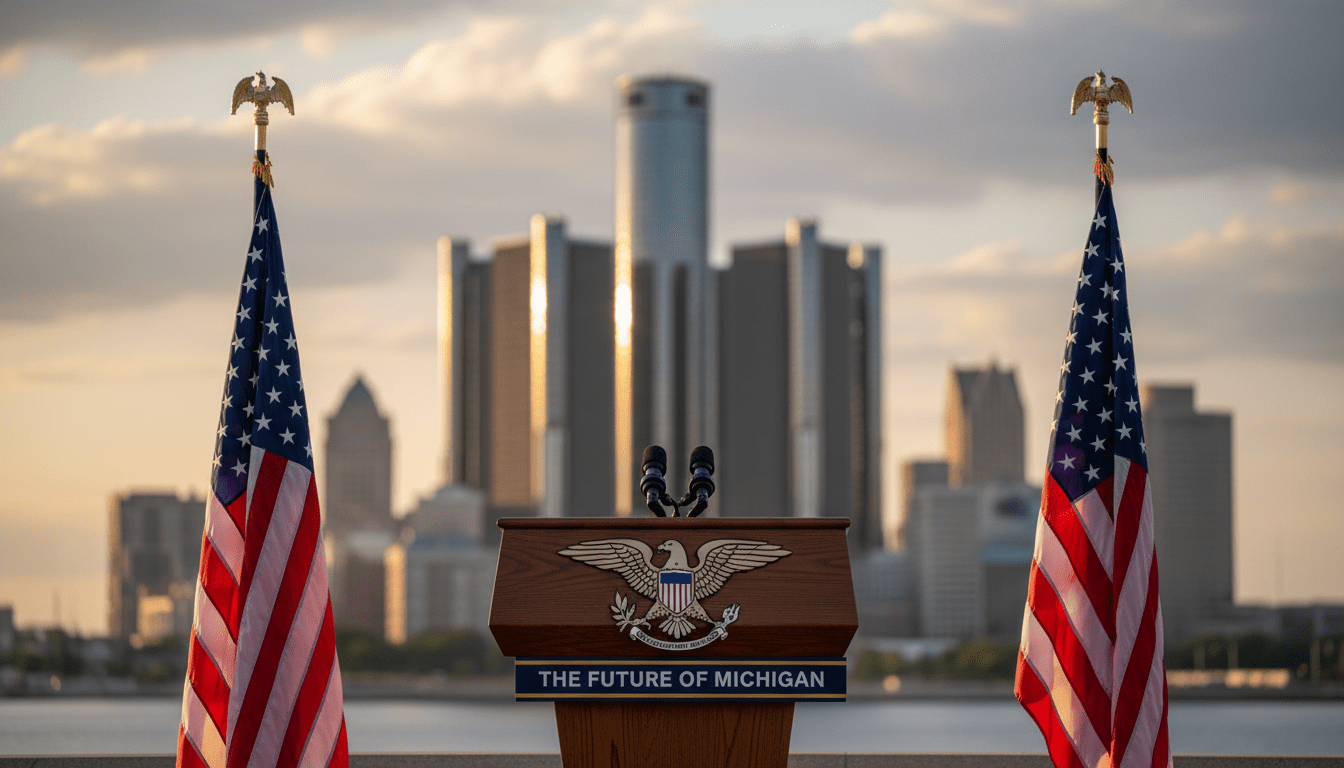
Former President Donald Trump appears to be gaining significant traction in Michigan, a critical battleground state that could determine the outcome of the 2024 presidential election. Recent polling data and renewed campaign activity throughout Wayne County suggest a shift in momentum, with the Republican nominee polling stronger in the Great Lakes State than he did at this point in both the 2016 and 2020 election cycles.
For political observers in Detroit, the tightening race represents a notable change in the electoral landscape. While the city remains a Democratic stronghold, the Trump campaign is aggressively courting non-traditional Republican demographics, specifically focusing on blue-collar auto workers and minority voters concerned about inflation and industrial policy. This strategy has turned what was expected to be a secure state for Democrats into a statistical dead heat.
Trump Michigan Campaign Strategy Shifts to Economic Focus
The core of the recent surge lies in a targeted economic message that resonates with the industrial base of Southeast Michigan. In recent weeks, the former president has intensified his rhetoric regarding the automotive industry, specifically attacking electric vehicle (EV) mandates which he claims threaten jobs in the Motor City.
According to data aggregated by RealClearPolitics, the spread between the candidates has narrowed significantly, with several major polls showing the former president within the margin of error or holding a slight lead. This is a marked departure from the 2020 cycle, where President Biden maintained a consistent lead throughout the summer and fall.
Local political strategists note that the Trump Michigan campaign is bypassing traditional suburban strategies to appeal directly to disaffected voters in urban centers. By visiting Detroit and hosting roundtables with community leaders, the campaign is attempting to chip away at the margins in Wayne County—a strategy that does not require winning the county, but simply losing it by less than previous Republican candidates.
Impact on Detroit Residents and the Auto Industry
For the average resident in Detroit, the implications of this political shift are largely centered on economic policy. The former president’s platform emphasizes the imposition of steep tariffs on foreign automakers and a rollback of federal emissions standards. He argues this will protect jobs at Ford, General Motors, and Stellantis.
“The cost of living is the number one issue we hear about at the diner,” said a local business owner in Southwest Detroit, who wished to remain anonymous. “People are looking at their grocery bills and their gas receipts. When a candidate talks about bringing prices down and saving factory jobs, people listen, regardless of the party label.”
However, economists offer mixed views on how these policies would impact the Detroit economy. While tariffs might protect domestic manufacturing in the short term, some analysts warn that trade wars could raise the cost of imported materials used by local suppliers, potentially increasing prices for consumers.
Furthermore, the future of Detroit’s burgeoning EV infrastructure is at stake. The current administration has poured billions into incentives for battery plants and charging stations. A reversal of these policies could disrupt current development plans in the region, creating uncertainty for thousands of workers currently transitioning to green energy manufacturing jobs.
Polling Trends and Demographic Shifts
The momentum is not just anecdotal; it is visible in the demographic breakdowns of recent surveys. Reports suggest that the Trump campaign is seeing improved support among African American men and union households compared to 2020. In a city where turnout is key, even a small shift in these demographics can alter the statewide calculation.
Data from the U.S. Census Bureau indicates that economic disparities remain a pressing issue in Detroit. With inflation outpacing wage growth for many lower-income residents over the last two years, the “change” message is finding fertile ground. The campaign has leveraged this by highlighting gas prices and housing costs, framing the election as a referendum on the current economic status quo.
The Battle for Wayne County
Wayne County remains the engine of Democratic votes in Michigan, but voter enthusiasm is the variable that both parties are watching closely. The Trump campaign’s presence in the area—including visits to convention centers and local union halls—is designed to dampen Democratic turnout while energizing a base that feels left behind by the post-pandemic recovery.
“It is not about winning Detroit outright,” explained a political science professor from a local university. “It is about the margins. If the Republican candidate can get 15% or 20% of the vote in Detroit, rather than 5%, it becomes mathematically very difficult for the Democrats to make up those numbers in the suburbs of Oakland and Washtenaw counties.”
This reality has forced local Democratic organizers to double down on canvassing efforts, emphasizing infrastructure projects and union protections delivered over the past four years. The clash of these two narratives—one of industrial protectionism and one of progressive investment—is defining the mood in the city.
What Happens Next?
As the election draws closer, Detroiters can expect an inundation of political advertising and high-profile visits. The fact that the Trump Michigan campaign is “on a roll” statistically means that the state is effectively a toss-up. Both campaigns will likely treat Detroit as ground zero for their closing arguments.
For residents, this means the national spotlight will remain firmly fixed on the city. Issues regarding Great Lakes conservation, manufacturing incentives, and urban housing development will likely take center stage in the national debate, giving Detroit a unique leverage point to demand specific policy commitments from both candidates.
With early voting set to begin soon, the trajectory of the race suggests that Michigan will once again be the tipping point of the presidency, with the streets of Detroit serving as the primary battleground for the working-class vote.