As the winter frost begins to recede across Southeast Michigan, a familiar transformation is taking place within the city limits. It is not just the changing weather, but a significant mobilization of civic energy known locally as the start of the Detroit spring volunteering season. Nonprofits, city agencies, and neighborhood block clubs are issuing urgent calls for support this March, marking the beginning of a crucial period for community service and urban revitalization.
While volunteerism is a year-round endeavor in the city, March serves as the strategic launchpad for major outdoor initiatives. From blight removal to park restoration and food security logistics, the demand for manpower spikes as organizations prepare for the warmer months. According to data from the Corporation for National and Community Service (AmeriCorps), Detroit has historically ranked high in civic engagement, a trend that local leaders expect to continue as new volunteer opportunities in Detroit become available this month.
Nonprofits Brace for High Demand
The transition into spring brings specific logistical challenges for Detroit’s safety-net organizations. Food banks and shelters, which often see a surge of donations during the winter holidays, frequently face a resource lull in late Q1. Officials from major regional organizations have noted that the need for hands-on assistance remains critical.
Reports from the Gleaners Community Food Bank indicate that volunteer shifts for sorting and packing food are vital to maintaining distribution schedules. The logistical burden of feeding thousands of households requires a steady stream of dependable labor. Similarly, smaller community hubs in neighborhoods like Brightmoor and Southwest Detroit are pivoting from emergency winter relief to long-term sustainability projects, requiring a different set of volunteer skills ranging from logistics to garden prep.
This seasonal shift is also the precursor to the city’s massive annual cleanup efforts. The City of Detroit’s Department of Neighborhoods typically ramps up recruitment in March for the “Motor City Makeover,” a coordinated campaign to clean up alleys and residential streets. While the official heavy lifting often occurs later in the spring, the organizational groundwork and preliminary neighborhood canvassing rely heavily on early Detroit neighborhood volunteers stepping up in March.
Environmental Restoration and Green Spaces
One of the most visible sectors for Detroit spring volunteering is environmental stewardship. As the ground thaws, organizations like The Greening of Detroit and the Detroit Riverfront Conservancy prepare for their busy seasons. The maintenance of the city’s expanding greenways and the Riverwalk—recently voted one of the best in the nation—depends not just on municipal funding but on thousands of volunteer hours.
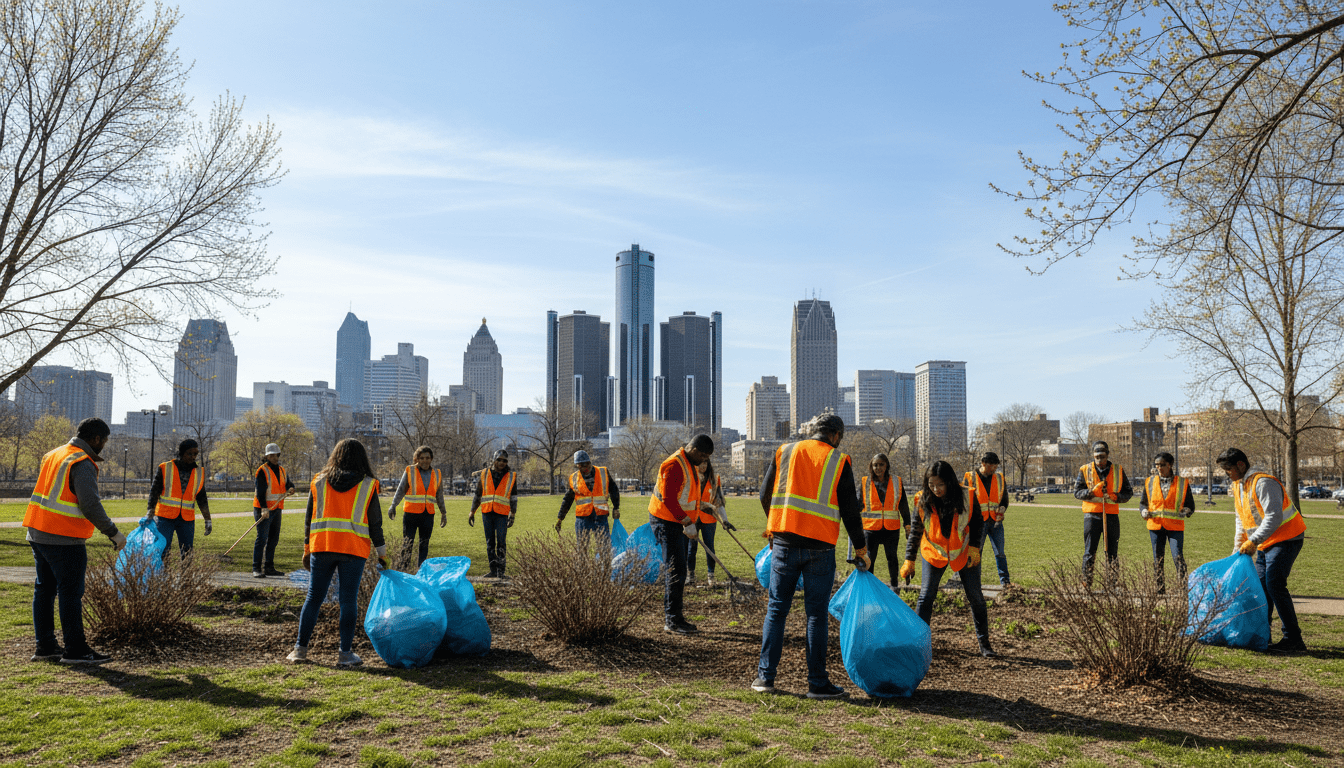
According to The Greening of Detroit, tree planting and park maintenance are critical for mitigating the urban heat island effect and improving air quality. March is often used for site preparation, pruning, and clearing debris left behind by winter storms. These environmental volunteer opportunities offer a dual benefit: they improve the immediate aesthetics of the city while contributing to long-term public health goals.
For the Detroit Riverfront Conservancy, volunteers are essential ambassadors. As foot traffic returns to the Dequindre Cut and the Riverwalk, volunteers assist with crowd control, event staffing, and general cleanup. The economic ripple effect of these well-maintained spaces is significant, drawing tourism and supporting local businesses along the waterfront.
Impact on Detroit Residents
The influx of volunteers during the spring has a tangible economic and social impact on Detroit residents. Beyond the visible cleanup of litter, organized community service acts as a cost-saving mechanism for the city and local nonprofits, allowing funds to be redirected toward direct services rather than labor costs.
Local community association leaders have pointed out that volunteer-led blight removal directly correlates with improved perception of safety and neighborhood pride. When residents see coordinated activity—neighbors helping neighbors—it strengthens community cohesion. Furthermore, many Detroit spring volunteering programs offer workforce development components, providing participants with skills in landscaping, logistics, and event management that can translate into employment.
However, the impact is not solely about labor. It is about connection. Sociologists studying urban resilience often cite Detroit’s strong network of block clubs and faith-based organizations as the city’s backbone. The spring service season is a manifestation of this resilience, bringing together corporate groups, suburban allies, and longtime residents in shared purpose.
Background and Data on Civic Engagement
Data consistently reinforces the value of this work. The Independent Sector, a national coalition of nonprofits, estimates the value of a volunteer hour in Michigan to be over $31. When applied to the thousands of hours contributed during the Detroit spring volunteering ramp-up, the economic contribution runs into the millions of dollars.
Furthermore, studies on urban development suggest that areas with high rates of civic participation recover faster from economic downturns. Detroit’s recovery narrative is frequently tied to large-scale Detroit development projects, but the grassroots data tells a story of recovery driven by block-level engagement. The mobilization seen in March sets the tone for the rest of the year, establishing networks of support that activate during crises or major city events.
Looking Ahead: How to Get Involved
For residents and metro-area citizens looking to engage, the opportunities are diverse. While the official “Motor City Makeover” dates usually span May, district managers begin coordinating registered groups in March. Interested parties are encouraged to contact their District Managers via the City of Detroit website.
Additionally, major institutions are hosting orientation sessions this month. The Detroit Historical Society and the Detroit Institute of Arts often seek docents and support staff ahead of the tourist season. For those preferring outdoor work, local community gardens are beginning their soil preparation and are actively seeking hands-on help.
As the city moves further into 2024, the spirit of service remains a defining characteristic of Detroit’s identity. The spring thaw brings not just flowers, but a renewed commitment to the collective well-being of the city.