DETROIT — As breaking news reports confirm joint military strikes by the United States and Israel against targets in Iran, the shockwaves are already being felt thousands of miles away in Metro Detroit. With former President Donald Trump signaling support for a broader regime-change strategy, the escalation represents a geopolitical turning point that has immediate and profound implications for Michigan’s economy, its political landscape, and its diverse population.
For Detroit, a city inextricably linked to global energy markets through the automotive industry and home to the nation’s largest concentration of Arab Americans, the conflict is not a distant foreign policy abstraction. It is a local crisis unfolding in real-time.
Impact on Metro Detroit’s Arab American Community
Nowhere in the United States is the tension palpable as it is in Wayne County. Metro Detroit, specifically the cities of Dearborn and Hamtramck, serves as the cultural heart of the Arab American diaspora. According to data from the U.S. Census Bureau, Michigan is home to over 300,000 residents of Middle Eastern and North African descent, with the vast majority living in the Detroit metropolitan area.
Community leaders in Dearborn expressed immediate alarm following reports of the attacks. For many residents, headlines about a US-Iran conflict and potential regime change wars evoke painful memories of previous conflicts in Iraq and Lebanon.
“This is not just about politics; this is about family,” said a representative from a local community advocacy group in Dearborn. “When you hear talk of regime change and see military strikes, people here are terrified for their relatives back home. The rhetoric coming from Washington, coupled with actual military engagement, is creating a climate of fear and frustration in our neighborhoods.”
Local mosques and community centers are reportedly organizing emergency meetings to discuss the implications of the escalation. There is a growing sense of betrayal among voters who had hoped for a de-escalation of tensions in the Middle East. With Michigan being a critical swing state, political analysts suggest that the local reaction to this war could fundamentally alter the voting patterns in the upcoming election cycle, potentially impacting the local political landscape significantly.
Economic Fallout: The Auto Industry and Energy Costs
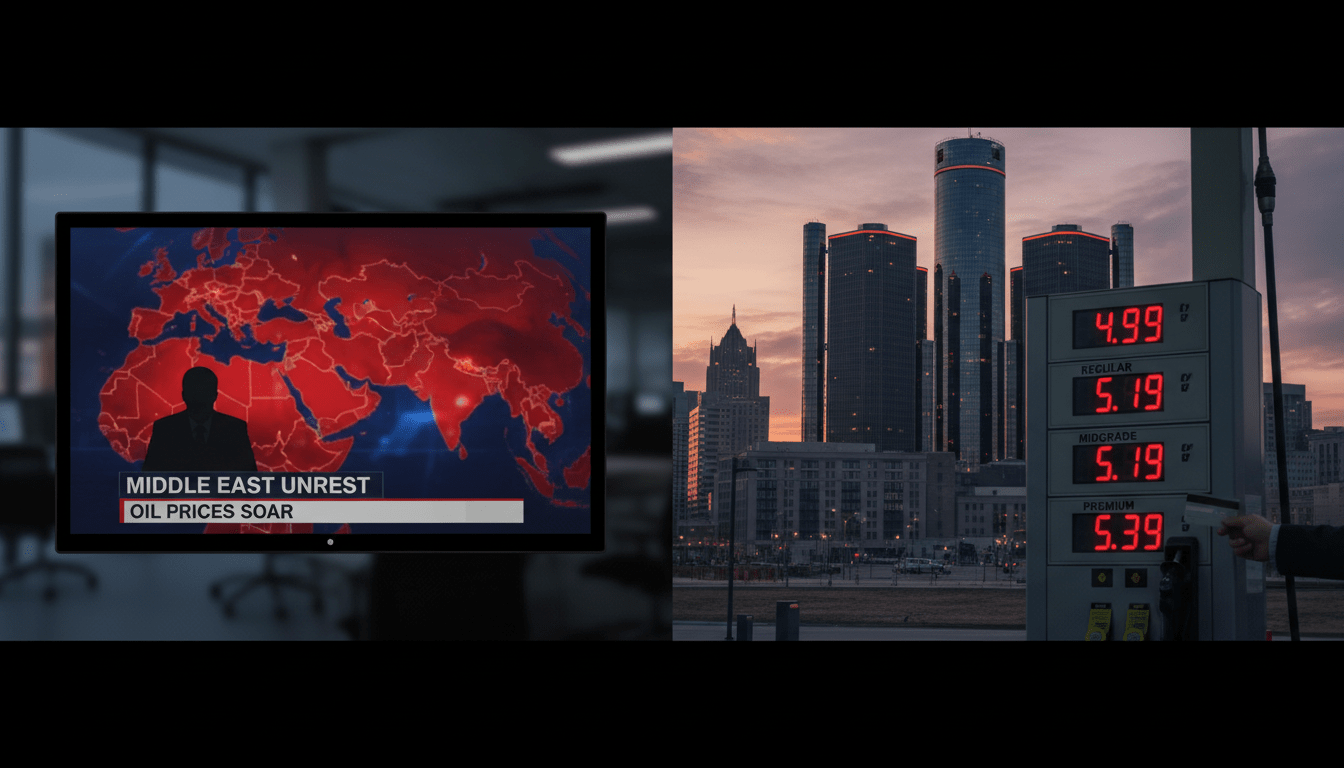
Beyond the humanitarian and cultural impact, the Detroit economy faces a precarious future if the conflict widens. The automotive industry, the backbone of Detroit’s financial stability, is highly sensitive to fluctuations in global oil prices. Historically, instability in the region involving Iran—a major global energy player—leads to immediate spikes in crude oil costs.
Patrick DeHaan, head of petroleum analysis at GasBuddy, has frequently noted in previous geopolitical flare-ups that Middle East tensions are the quickest catalyst for rising gas prices. For Detroit residents, a spike in gas prices acts as an immediate tax on household budgets. In a city where public transportation options are limited compared to other major metros, the majority of the workforce relies on personal vehicles to commute.
“If oil prices surge past $100 a barrel due to a blockade or retaliatory strikes on shipping lanes in the Strait of Hormuz, we are going to see gas prices in Michigan jump significantly,” said a local economic analyst. “This hurts consumer spending power immediately. But the bigger threat is to the automakers. High energy costs drive up manufacturing expenses and tend to cool demand for the high-margin trucks and SUVs that Ford, GM, and Stellantis rely on.”
The Detroit auto industry outlook has been stabilizing recently, but a sustained conflict could disrupt global supply chains, specifically regarding logistics and raw material transport costs.
Political Rhetoric and Local Reaction
The involvement of Donald Trump’s rhetoric regarding “regime change” has added a volatile layer to the local discourse. During a rally speech referenced in reports, signals of a more aggressive military posture have polarized Detroit voters.
In Macomb County, a bellwether for working-class voters, reactions are mixed. Some residents support a hawkish stance on national security, viewing the strikes as a necessary measure against nuclear proliferation. However, local union leaders are wary of getting entangled in another “endless war” that drains resources which could be used for domestic infrastructure and development.
“We need to focus on rebuilding Detroit, not destroying foreign capitals,” said a local union steward who asked to remain anonymous. “Every dollar spent on missiles is a dollar not spent on our schools or our roads.”
Security Concerns in the City
In light of the attacks, local law enforcement agencies are remaining vigilant. While there are no specific threats to the Detroit area, authorities often increase patrols around religious institutions and sensitive infrastructure during times of heightened international conflict.
According to the City of Detroit Police Department’s standard operating procedures during international crises, coordination with federal partners like the FBI usually increases to ensure the safety of all communities. This is particularly relevant given the high profile of Detroit’s diverse religious and ethnic communities.
What Happens Next for Detroiters?
As the situation develops, Detroiters are advised to brace for potential economic volatility. Financial advisors suggest that residents monitor their discretionary spending, anticipating that inflation may tick upward if energy costs soar.
Furthermore, local activist groups are planning demonstrations in downtown Detroit (Hart Plaza) and outside city halls in the metro area to protest the military engagement. These events highlight the unique position Detroit holds—a city focused on local revitalization but intimately tied to the fate of the Middle East through its people and its economy.
For ongoing updates on how this international conflict affects our neighborhoods, stay tuned to local news outlets and DetroitCityNews.com.