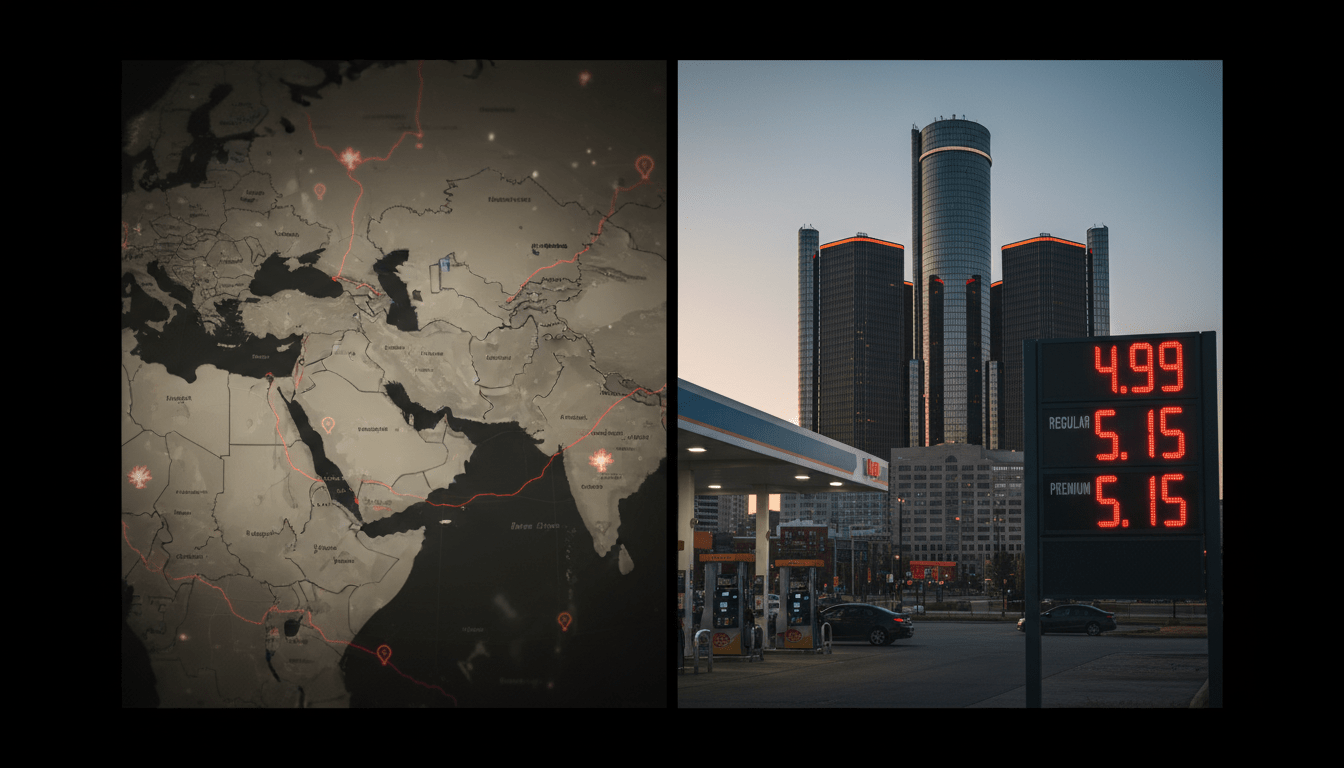
Recent reports emerging from state media in Iran, suggesting that Tehran is “waiting” for a possible U.S. ground operation, have sent ripples through international diplomatic channels that are already being felt in Detroit. While the geopolitical theater is thousands of miles away, the economic and social reverberations of escalating Middle East tensions in Detroit are becoming a primary concern for local economists, community leaders, and the automotive sector.
The statements, which imply a heightened state of military readiness in the region, come at a fragile time for the global economy. For the city of Detroit, inextricably linked to the automotive industry and home to one of the largest Middle Eastern diasporas in the United States, the potential for conflict is not just a foreign policy headline—it is a local stability issue.
Impact on Detroit Gas Prices and Commuters
The most immediate effect of the rhetoric coming out of Tehran is the volatility in global oil markets. Historically, threats of ground operations or military escalations in the Persian Gulf lead to speculative trading that drives up the price of crude oil. For Detroit residents, this invariably translates to pain at the pump.
According to data from AAA Michigan, statewide gas price averages often react swiftly to international instability. Local energy analysts warn that if the rhetoric transitions into tangible mobilization, Metro Detroit could see fuel prices spike by 15 to 20 cents per gallon within weeks.
“Detroit is a driving city. Our public transit infrastructure is improving, but the vast majority of our workforce relies on personal vehicles,” noted a representative from a local economic advocacy group. “When Tehran signals military readiness, the markets panic. That panic hits the wallets of auto workers in Warren and commuters in downtown Detroit almost immediately.”
This potential spike in rising fuel costs in the metro area poses a significant challenge for household budgets that are already contending with lingering inflationary pressures. For the logistics and trucking sectors based in Detroit, which serve as the heartbeat of the North American supply chain, increased fuel costs could compress margins and lead to surcharges on consumer goods.
Anxiety in Metro Detroit Communities
Beyond the economic indicators, the human cost of the rising Middle East tensions in Detroit is palpable. Metro Detroit, specifically Wayne County, is home to the highest concentration of Arab Americans in the United States. Cities like Dearborn and Hamtramck have deep familial and cultural ties to the region.
News of Tehran “waiting” for a ground operation exacerbates the anxiety of thousands of residents who have family members living in the region. Community organizations in Dearborn have reported an uptick in calls from residents concerned about the safety of relatives abroad and the potential for broader regional conflict that could entrap neighboring countries.
“We are monitoring the situation closely,” said a community organizer in Dearborn. “When headlines like this break, the atmosphere shifts. It affects local businesses, it affects the mood in our schools, and it creates a sense of uncertainty. People here understand that rhetoric can quickly turn into reality.”
Local mental health professionals have also noted that cycles of international tension often correlate with increased stress levels within diaspora communities. Local community leaders in Dearborn are urging residents to rely on verified news sources rather than social media speculation, which often amplifies fear during developing geopolitical events.
The Automotive Industry and Supply Chains
For Detroit’s defining industry, the threat of conflict involving the U.S. and Iran presents complex challenges. The automotive sector relies on a globalized supply chain that is sensitive to energy costs and shipping route security. While Detroit automakers have worked to domesticate supply chains in recent years, the global nature of raw material sourcing means that instability in the Middle East still poses risks.
Analysts from Wayne State University’s Department of Economics suggest that prolonged tension could affect consumer confidence. “The auto industry is cyclical and relies heavily on consumer sentiment,” one analyst explained. “If the public fears a new war or a significant ground operation involving U.S. forces, big-ticket purchases like vehicles are often the first to be delayed by households.”
Furthermore, petroleum-based products are essential not just for fuel, but for the manufacturing of plastics and polymers used in vehicle assembly. A sustained disruption in the region could tighten the supply of these raw materials, potentially slowing production lines in Michigan plants.
What Happens Next?
City officials and business leaders are adopting a “wait and see” approach. The Detroit Regional Chamber has previously emphasized the resilience of the local economy, but external shocks remain a vulnerability. The City of Detroit has not issued a formal statement regarding the specific foreign policy developments, but local economic development agencies are tracking energy indices closely.
In the coming days, eyes will be on Washington and Tehran to see if the rhetoric regarding a “possible US ground operation” de-escalates or intensifies. For Detroit, the hope is for a diplomatic off-ramp. A conflict would not only threaten global peace but would likely stall the economic momentum the city has fought hard to build over the last decade.
As the situation develops, Detroiters are advised to prepare for potential fluctuations in gas prices and to stay informed through credible news outlets regarding U.S. involvement. The connection between the Persian Gulf and the Detroit Riverfront may seem distant on a map, but in a globally connected economy, the distance is much shorter than it appears.