A quiet renovation in Detroit’s historic Boston-Edison district turned into a police matter this week after a homeowner’s persistent complaints of a scratching sound led to a shocking wall mystery. What was initially dismissed by contractors as a rodent infestation resulted in a home discovery that highlights a peculiar and unsettling challenge facing the city’s housing boom: the hidden history—and sometimes current inhabitants—within the walls of Detroit’s aging architecture.
The Scratching Sound Behind the Plaster
For weeks, a resident of West Boston Boulevard, who asked to remain anonymous due to the sensitive nature of the incident, reported hearing a rhythmic scratching sound emanating from behind the lath and plaster of a second-floor guest bedroom. The noise occurred almost exclusively at night, leading the homeowner to believe that squirrels or raccoons had infiltrated the property—a common issue in the neighborhood’s century-old mansions.
According to the initial police report, the homeowner contacted a local pest control service and a general contractor to investigate the issue. “We assumed it was a standard animal removal job,” said Mark Davis, a contractor familiar with the property’s renovation. “Old houses in Detroit breathe; they have voids, old coal chutes, and servant stairwells that get walled off. Animals find a way in.”
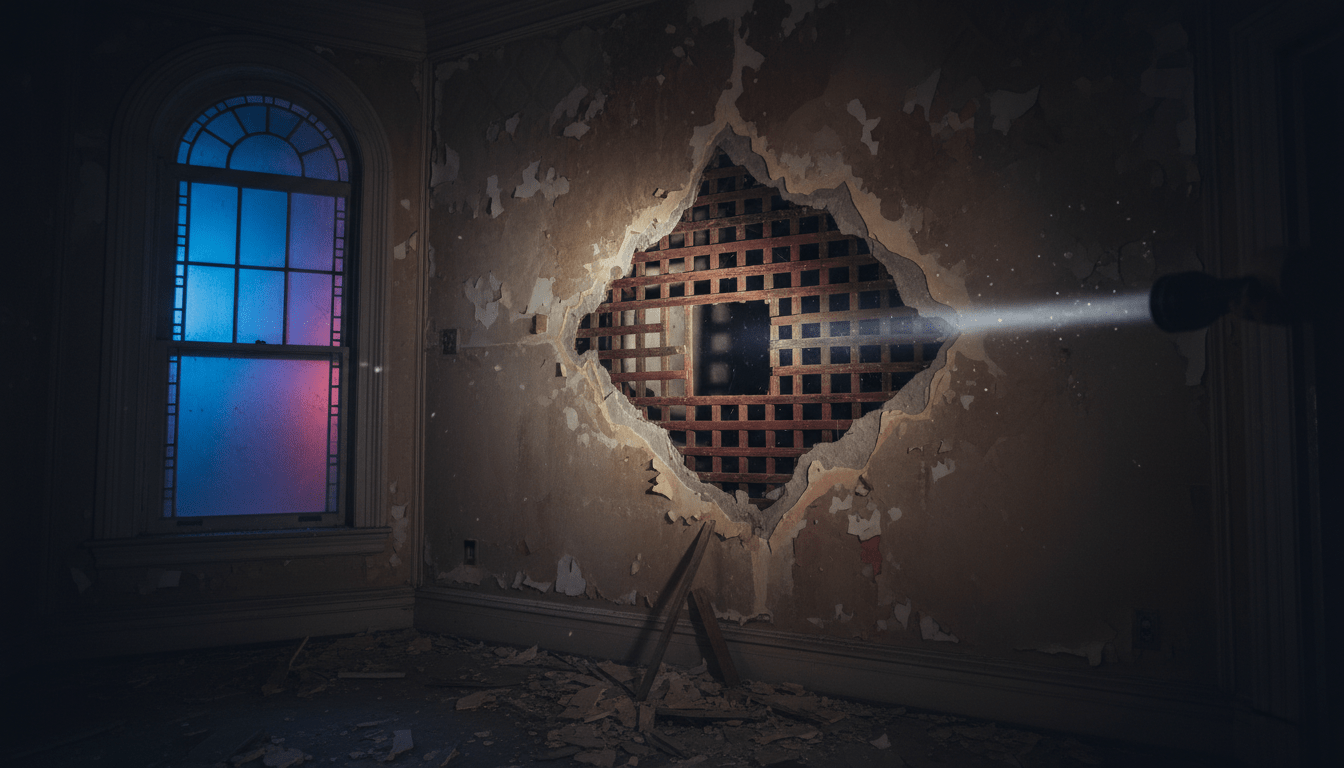
However, when the contractor cut a section of the drywall to place a trap, the wall mystery took a darker turn. Instead of nesting material or a trapped animal, the crew discovered a makeshift living space tucked into a sealed-off architectural void, likely an old service chase that had been accessible from the attic. The strange incident escalated quickly when the crew realized the space was currently occupied.
Police Called to the Scene
Upon the discovery, the contractors immediately retreated and police called to the residence. Officers from the Detroit Police Department (DPD) arrived shortly after 10:00 PM to secure the scene. According to law enforcement sources, an individual was removed from the crawlspace without incident. The person, identified as a transient male well-known in the area, had reportedly been accessing the home through a compromised roof vent that led into the wall cavity.
“It is a startling situation for any homeowner,” a DPD spokesperson stated regarding similar trespassing incidents. “While rare, the unique architecture of Detroit’s historic homes, combined with periods of vacancy, can sometimes create opportunities for unauthorized entry that go unnoticed for extended periods.”
The individual was charged with trespassing, though authorities noted he appeared to be using the space for shelter rather than with malicious intent to harm the residents. This strange incident has nevertheless sent ripples of concern through the local community, prompting neighbors to reinspect their own attics and crawlspaces.
A Symptom of a Broader Housing Issue
While this specific home discovery is extreme, it sheds light on the complexities of Detroit’s housing market recovery. As the city continues its aggressive push to rehabilitate vacant properties, new owners often encounter the remnants of the city’s difficult past.
According to data from the Detroit housing market trends report, the city has seen a massive influx of renovations in neighborhoods like Boston-Edison, Palmer Woods, and the University District. Many of these homes sat vacant for years, or even decades, before being purchased by new occupants. During those periods of vacancy, structures often suffer from “deferred maintenance” that leaves them vulnerable.
The Detroit Land Bank Authority has worked tirelessly to auction thousands of homes, but the transition from vacant structure to secure residence is not always seamless. “When a house sits empty, it becomes part of the public domain in a way,” explains urban planning consultant Sarah Jenks. “People use them for shelter. When those homes are bought and sealed up, sometimes the transition creates conflict. In this case, the architecture itself provided a hiding spot.”
Understanding Detroit’s “Hidden” Architecture
To understand how a person could hide behind a wall, one must understand the construction of Detroit’s golden-age housing. Homes built in the 1910s and 1920s were designed with complex service infrastructures.
“We see this often in historic district renovations,” says Jenks. “There are dumbwaiter shafts that were plastered over in the 1950s, secondary staircases for staff that were closed off to make larger closets, and massive attic spaces. If a renovation is cosmetic rather than structural, these voids remain checking accounts for surprises.”
In this recent wall mystery, the void was likely a chase for plumbing or ventilation that had been widened during a previous, undocumented renovation, creating enough room for a person to sit or lie down. The scratching sound heard by the homeowner was likely the movement of the individual shifting weight or attempting to stay warm.
Impact on Detroit Residents and Safety Tips
For Detroit residents, particularly those purchasing homes through auctions or in historic areas, this story serves as a stark reminder to prioritize security and thorough inspections. It is not enough to simply paint walls and refinish floors; understanding the structural integrity and security of the building envelope is crucial.
Local safety experts and the Detroit Police Department recommend the following for new homeowners:
- Conduct a full structural audit: Hire inspectors who specialize in historic homes to identify hidden voids or sealed-off areas.
- Secure the roofline: Inspect soffits, vents, and chimneys. These are the most common entry points for both wildlife and human intruders.
- Install modern security: Motion sensors in attics and basements can detect presence long before a scratching sound becomes a nightly disturbance.
“We love our historic homes,” the homeowner told reporters after the incident was resolved. “But we are definitely going to be more vigilant about what goes on behind the scenes. It’s a beautiful house, but it has secrets.”
What Happens Next?
The Detroit Police Department has stated they are increasing patrols in neighborhoods with high concentrations of ongoing renovations to deter trespassing. Meanwhile, the homeowner involved in this strange incident plans to continue the renovation, albeit with a more robust security system and fully sealed wall cavities.
As Detroit continues to rebuild and repopulate its most cherished neighborhoods, stories like this serve as urban folklore—cautionary tales that blend the city’s history with its present-day reality. For now, the police called to the scene have closed the case, but the conversation regarding safety in rehabilitated homes is just beginning.