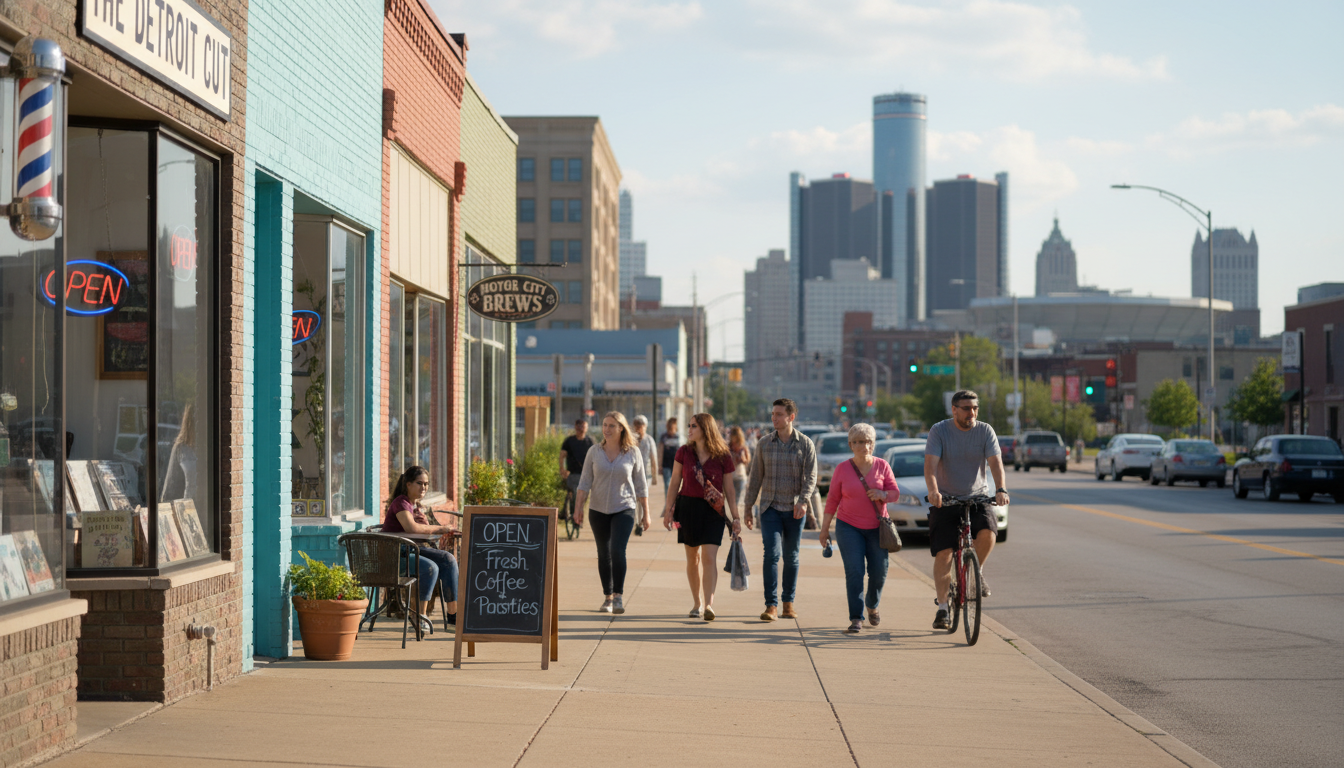
Across the city of Detroit, from the historic Avenue of Fashion to the bustling storefronts of Corktown, small business owners are facing a complex financial landscape. While the city has seen a remarkable resurgence over the last decade, a combination of persistent inflation, rising labor costs, and broader economic uncertainty is testing the resilience of the Detroit business community. For many entrepreneurs, the challenge is no longer just about growth, but about maintaining stability in a fluctuating local economy.
The Pressure of Inflation on Small Business Operations
According to the 2024 State of the Region report by the Detroit Regional Chamber, businesses across Southeast Michigan are grappling with the highest operational costs seen in years. For a small business in Detroit, these costs are often amplified by supply chain disruptions that have lingered longer than initially anticipated. From the price of raw materials to utility bills, the cost of doing business has climbed significantly, forcing many owners to make difficult choices regarding their pricing models.
“We are seeing a trend where the cost of goods is outpacing the ability of consumers to pay higher prices,” noted an analysis of the economy Detroit residents are currently navigating. Data from the U.S. Bureau of Labor Statistics (BLS) indicates that while the Consumer Price Index (CPI) has cooled slightly from its 2022 peaks, the cumulative effect of inflation over the past three years remains a heavy burden for independent retailers and restaurateurs who operate on thin margins.
Impact on Detroit Residents and Neighborhood Vitality
The struggle of local enterprises has a direct ripple effect on the surrounding neighborhoods. When a small business faces financial hardship, it often leads to reduced operating hours or a decrease in seasonal hiring. For Detroit residents, this means fewer local employment opportunities and potentially higher prices for essential goods and services within their own communities. Many residents have noted that the convenience of shopping locally is becoming a luxury as boutiques and specialty grocers are forced to adjust their stickers to keep up with wholesale increases.
Furthermore, the local economy relies heavily on the success of these neighborhood anchors to drive foot traffic and maintain property values. Empty storefronts, even temporary ones, can shift the perception of a neighborhood’s safety and vibrancy. Community leaders in areas like the Livernois Corridor have expressed concerns that without targeted support, the gains made in commercial occupancy over the last five years could be at risk if the current period of economic uncertainty persists through the next fiscal year.
Background & Data: The Numbers Behind the Struggle
Recent figures from the Michigan Department of Labor and Economic Opportunity highlight a tightening labor market that adds another layer of complexity for any Detroit business. While unemployment remains relatively low, the competition for skilled labor has driven up wage expectations. For a large corporation, these increases might be manageable; for a family-owned shop in Eastern Market, they can represent the difference between profit and loss.
Current trends in the economy Detroit faces also show that access to capital has become more restrictive. With the Federal Reserve maintaining higher interest rates to combat inflation, traditional small business loans have become more expensive. This has slowed down planned expansions and renovations. According to the Detroit Regional Chamber, nearly 40% of small business owners in the region cited “cost of capital” as a primary barrier to growth in the current quarter.
In addition to these external pressures, the shift in consumer behavior toward e-commerce continues to challenge brick-and-mortar establishments. You can read more about how these shifts are influencing local commercial spaces in our previous coverage of Detroit neighborhood development updates and our deep dive into Detroit real estate trends.
Navigating the Path Forward
Despite these headwinds, the spirit of innovation remains strong among Detroit’s entrepreneurs. Many are pivoting to new business models, such as shared commercial kitchens or collaborative retail spaces, to split the overhead costs. The City of Detroit’s “Motor City Match” program continues to provide a lifeline, offering grants and technical assistance to help businesses bridge the gap during lean months. However, experts suggest that long-term sustainability will require more than just one-time grants; it will require a stabilized local economy and continued patronage from the community.
City officials have emphasized that supporting a small business today is an investment in the city’s future. “When you spend a dollar at a local Detroit business, that money stays in the community, supporting local families and city services,” a spokesperson for the Detroit Economic Growth Corporation (DEGC) stated during a recent town hall. The organization is currently looking at expanding tax abatement programs for small businesses that commit to hiring residents from within the city limits.
What Happens Next for the Detroit Economy
Looking ahead to the remainder of the year, the outlook for the economy Detroit residents depend on is one of cautious optimism tempered by reality. Economists suggest that if inflation continues its gradual descent, consumer confidence may rebound in time for the critical holiday shopping season. However, the shadow of economic uncertainty remains as global geopolitical factors and domestic policy shifts continue to influence local market conditions.
For the average Detroit business, the strategy for the next twelve months is likely to be one of consolidation and efficiency. While the “Goldilocks” scenario of a soft landing for the national economy would be ideal, Detroit’s small business owners are preparing for all possibilities. The resilience that defined the city’s recovery from bankruptcy will once again be called upon as these local pillars fight to remain a permanent part of the city’s evolving landscape.