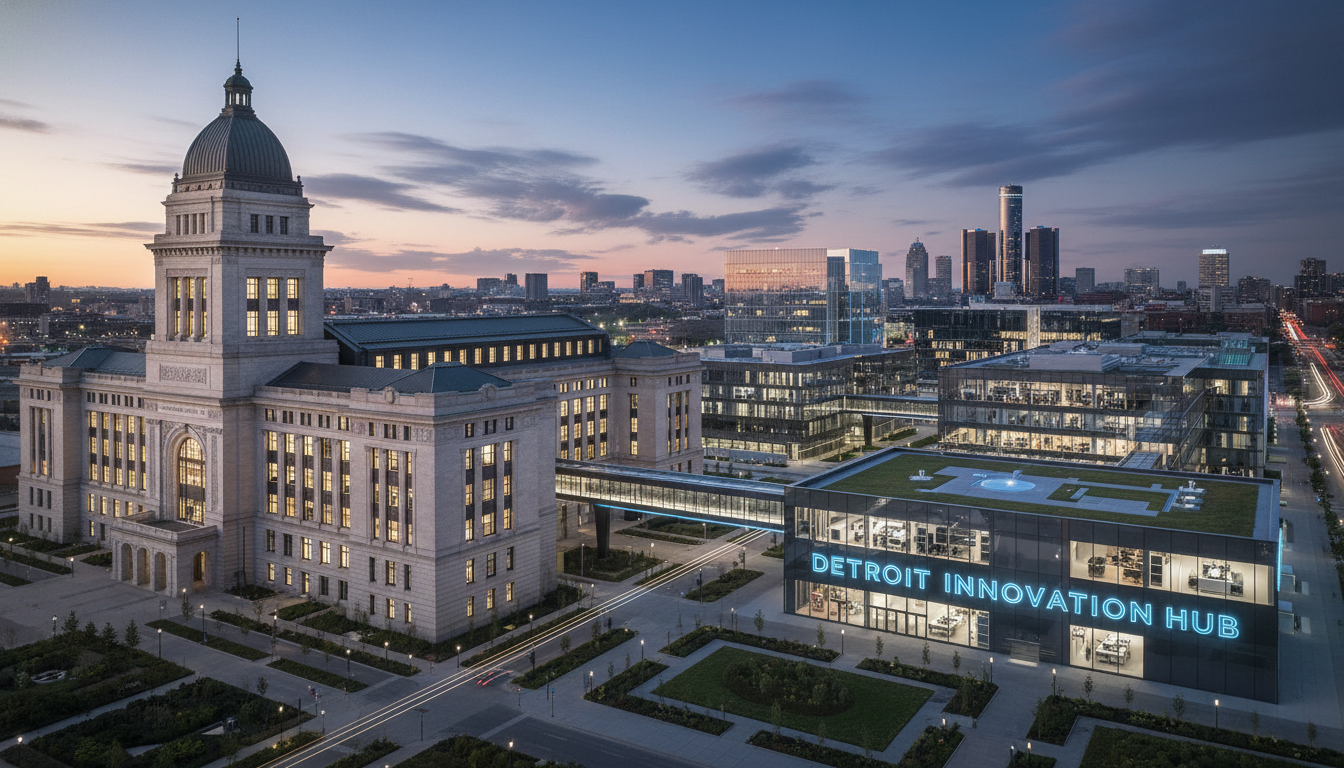
Detroit is rapidly shedding its singular identity as the historical center of the American automotive industry to embrace a new role: a premier destination for global technology and venture capital. The recent expansion of the Michigan Central innovation district, combined with a surge in state-backed incentives, has solidified the city’s status as a primary Midwest tech destination. This shift represents a broader economic evolution designed to retain local talent and attract high-growth startups from across the coastal tech corridors.
A New Chapter for the Motor City
The transformation of the iconic Michigan Central Station into a functional innovation hub serves as the physical manifestation of Detroit’s technological ambitions. According to reports from the Michigan Economic Development Corporation (MEDC), the district has already attracted dozens of companies specializing in mobility, clean energy, and artificial intelligence. This is not merely a real estate project; it is a strategic attempt to build a self-sustaining ecosystem where startups in Detroit can collaborate with established giants like Ford and Google.
State officials emphasize that the goal is to create a density of talent that rivals traditional tech cities. By providing state-of-the-art laboratory space and testing grounds for autonomous vehicles, Detroit is offering infrastructure that few other cities in the Midwest can match. This infrastructure is essential for the business growth currently being observed in the region, as companies look for environments that support both research and commercial application.
Impact on Detroit Residents
For long-time residents, the rise of a major innovation hub brings both opportunity and questions regarding accessibility. The City of Detroit has moved to address these concerns by integrating workforce development programs directly into the tech ecosystem. Local community leaders have pointed out that for the tech boom to be successful, it must provide a pipeline for Detroiters to enter high-paying roles in software engineering, data analysis, and technical project management.
Initiatives such as the Detroit at Work program have begun partnering with tech firms to offer specialized training. As Detroit tech companies expand, the demand for a local workforce grows, potentially reducing the unemployment rate and increasing the median household income in surrounding neighborhoods. Furthermore, the revitalization of the Corktown area—where the hub is located—has spurred secondary business growth in the form of grocery stores, service-based businesses, and affordable housing developments.
Connecting the Neighborhoods
Infrastructure improvements related to the tech hub are also benefiting the wider community. The city has invested in transit-oriented development to ensure that residents from across the city can access the new jobs being created. You can read more about how Detroit neighborhoods are evolving alongside these major commercial developments. The integration of the Joe Louis Greenway and improved bus rapid transit lines are key components of making this innovation leader accessible to all.
Data and Economic Trends
Data from the U.S. Bureau of Labor Statistics indicates that Michigan has seen a steady increase in professional and technical services employment over the last three years. While traditional manufacturing remains a cornerstone, the growth rate of Detroit tech roles is outpacing many other sectors. A recent study by PitchBook highlighted that Detroit is among the fastest-growing ecosystems for venture capital in the United States, with a significant portion of that capital flowing into early-stage startups based in the city.
This influx of capital is critical for Midwest tech sustainability. Unlike the high-burn environments of Silicon Valley, Detroit offers a lower cost of living and a lower cost of doing business, which is highly attractive to founders during periods of economic volatility. The ability to bootstrap or grow with modest seed funding further distinguishes the startups in Detroit from their coastal counterparts. This financial pragmatism has become a hallmark of the regional business culture.
Building a Diverse Tech Ecosystem
One of the unique strengths of Detroit’s tech scene is its focus on industrial application. While other cities may focus on social media or consumer apps, Detroit is leading the way in ‘hard tech’—the intersection of software and physical hardware. This includes drone technology, battery storage solutions, and advanced logistics software. According to researchers at the University of Michigan, the proximity to a robust manufacturing supply chain gives Detroit a competitive advantage that software-only hubs lack.
This industrial expertise is also attracting international attention. European and Asian tech firms are increasingly looking to Detroit as a gateway to the North American market, particularly for electric vehicle infrastructure. The collaborative environment fostered by local incubators like Newlab at Michigan Central allows these international players to pilot their technologies in a real-world urban setting, providing valuable data that can be used to scale operations globally.
What Happens Next for the Innovation Leader
Looking forward, the success of Detroit as a Midwest tech leader will depend on continued public-private partnerships. The Michigan state government has signaled its intent to maintain aggressive incentive programs, such as the Michigan Strategic Fund, to lure more high-tech manufacturing and R&D facilities to the region. Information regarding current state initiatives can be found on the official Michigan Economic Development Corporation website.
As the city prepares for the next phase of development, the focus will likely shift toward scaling the successes of the innovation hub to other parts of the city. There is a concerted effort to ensure that the wealth generated by the tech sector does not remain siloed in a few downtown blocks. Continued investment in local business growth and inclusive hiring practices will be the metrics by which this era of Detroit’s history is ultimately judged. For now, the momentum is undeniable, and Detroit is firmly positioned on the map of global innovation.