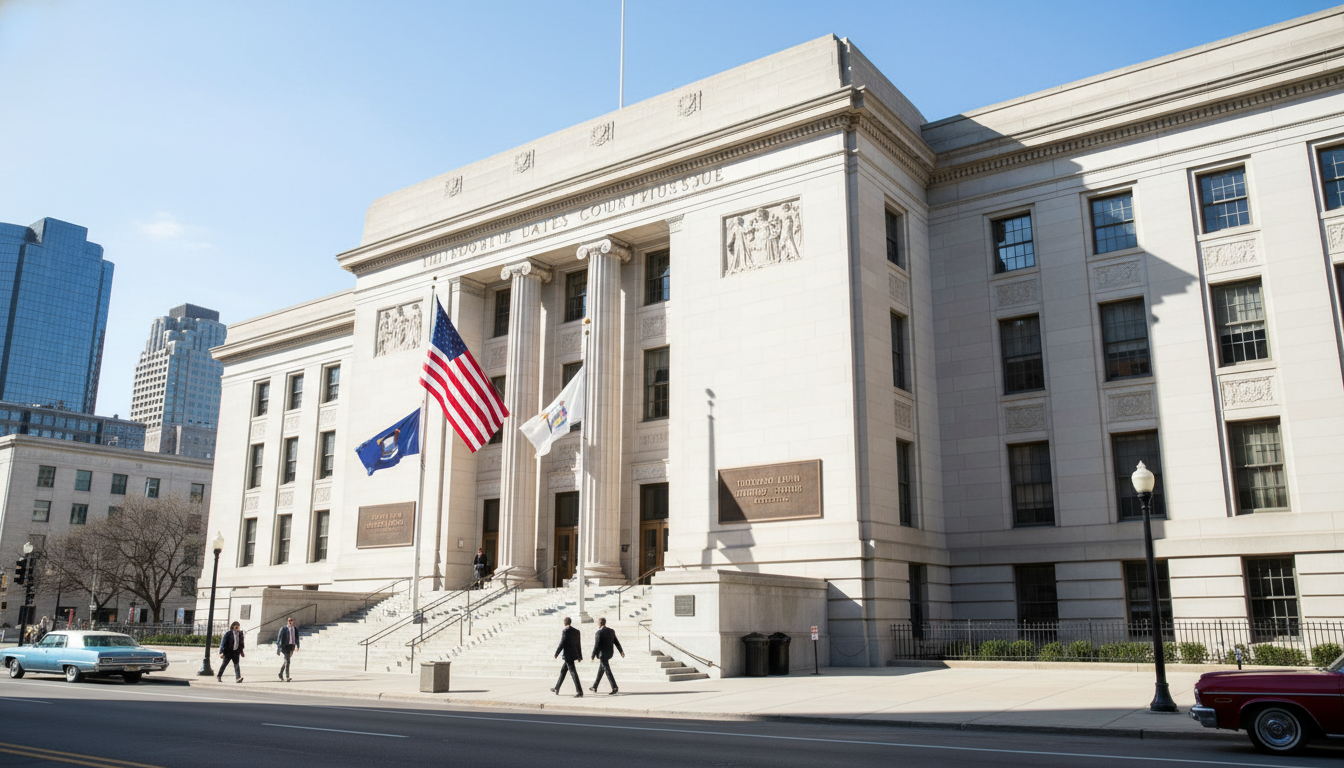
In a significant blow to narcotics distribution networks in the Midwest, a high-level organizer of a multi-state fentanyl trafficking operation has been sentenced to more than two decades in federal prison. The sentencing, handed down in the U.S. District Court for the Eastern District of Michigan, marks the culmination of a multi-year investigation into a drug bust that spanned several Detroit neighborhoods and suburban corridors.
According to the U.S. Attorney’s Office for the Eastern District of Michigan, the lead defendant was sentenced to 264 months—22 years—following a conviction on charges related to the distribution of controlled substances and conspiracy. Federal prosecutors established that the organization was responsible for flooding the streets of Detroit and surrounding municipalities with thousands of lethal doses of fentanyl, a synthetic opioid that continues to drive the region’s overdose crisis.
Details of the Multi-Agency Drug Bust
The investigation that led to this sentencing was a collaborative effort involving the Drug Enforcement Administration (DEA), the Michigan State Police, and local Detroit law enforcement agencies. The operation, which officials described as a major drug bust, utilized undercover surveillance, wiretaps, and coordinated raids across several residential properties used as stash houses.
During the execution of search warrants, agents recovered over 15 kilograms of fentanyl, several high-capacity firearms, and hundreds of thousands of dollars in illicit currency. The U.S. Attorney’s Office noted that the purity of the seized fentanyl was exceptionally high, suggesting a direct link to international supply chains before the narcotics were processed for local distribution in Michigan.
Court documents reveal that the trafficking ring operated with a high degree of sophistication. The group utilized encrypted communication platforms and a fleet of modified vehicles with hidden compartments to transport narcotics from the southwest border directly into the heart of Detroit. The sentencing of the ringleader follows the previous convictions of several lower-level associates who served as couriers and street-level distributors.
Impact on Detroit Residents and Community Safety
The impact of large-scale fentanyl trafficking on Detroit residents cannot be overstated. For many neighborhoods, the presence of such high-volume drug houses brings not only the risk of addiction but also an increase in secondary crimes, including property theft and violent disputes. Local community leaders have long advocated for more aggressive federal intervention to dismantle the corporate-style structures of these drug organizations.
“When we see a major sentencing like this in federal court, it provides a sense of relief to the families who have lost loved ones to the opioid epidemic,” said a spokesperson for a Detroit-based community health organization. “However, the removal of one ringleader is only part of the solution. We must continue to pair enforcement with robust public health initiatives to reduce demand.”
For Detroiters, the sentencing represents a step toward reclaiming neighborhood safety. Law enforcement officials emphasized that the disruption of this specific ring has led to a measurable, albeit temporary, decrease in non-fatal overdose calls in the specific precincts where the group was most active. Residents are encouraged to report suspicious activity to the DEA’s tip line or through local crime prevention programs established by the Detroit Police Department.
The State of the Opioid Crisis: Background & Data
Data from the Michigan Department of Health and Human Services (MDHHS) highlights the severity of the challenge facing the state. In recent years, synthetic opioids—primarily fentanyl—have been involved in approximately 90% of all opioid-related overdose deaths in Michigan. The Detroit metropolitan area remains the epicenter of this struggle, accounting for a disproportionate share of the state’s total fatalities.
According to a report from the U.S. Attorney’s Office for the Eastern District of Michigan, the volume of fentanyl seized in the region has increased by over 300% since 2019. This surge is attributed to the low cost of production and the ease with which the drug can be mixed with other substances, often without the user’s knowledge. The federal court has seen a corresponding rise in the severity of sentences as judges aim to create a deterrent for those entering the high-level trafficking trade.
Public health experts point out that while law enforcement focus remains on the supply side, the potency of fentanyl makes it a unique threat. A dose as small as two milligrams—roughly equivalent to a few grains of salt—can be fatal to an adult. This high lethality rate is why federal prosecutors often seek the maximum allowable sentences in cases involving large-scale distribution.
What Happens Next for Law Enforcement Efforts
The sentencing of this ringleader is part of a broader federal strategy known as Operation Overdrive, which targets the most violent drug trafficking organizations in cities with high rates of drug-related violence. Federal authorities indicated that additional indictments are expected as they continue to trace the financial assets of the dismantled organization.
Looking ahead, the focus of Michigan crime prevention is shifting toward a more integrated approach. This includes the use of the High Intensity Drug Trafficking Areas (HIDTA) program, which facilitates better data sharing between local and federal partners. For the residents of Michigan, the hope is that these high-profile sentencings will signal a shift in the tide against the fentanyl epidemic.
While this specific case is now closed, the U.S. Attorney’s Office reiterated that there are currently dozens of open investigations into similar trafficking networks. The goal remains the same: to dismantle the infrastructure of fentanyl trafficking before the drugs reach the consumer level, ultimately saving lives and stabilizing communities throughout Michigan.