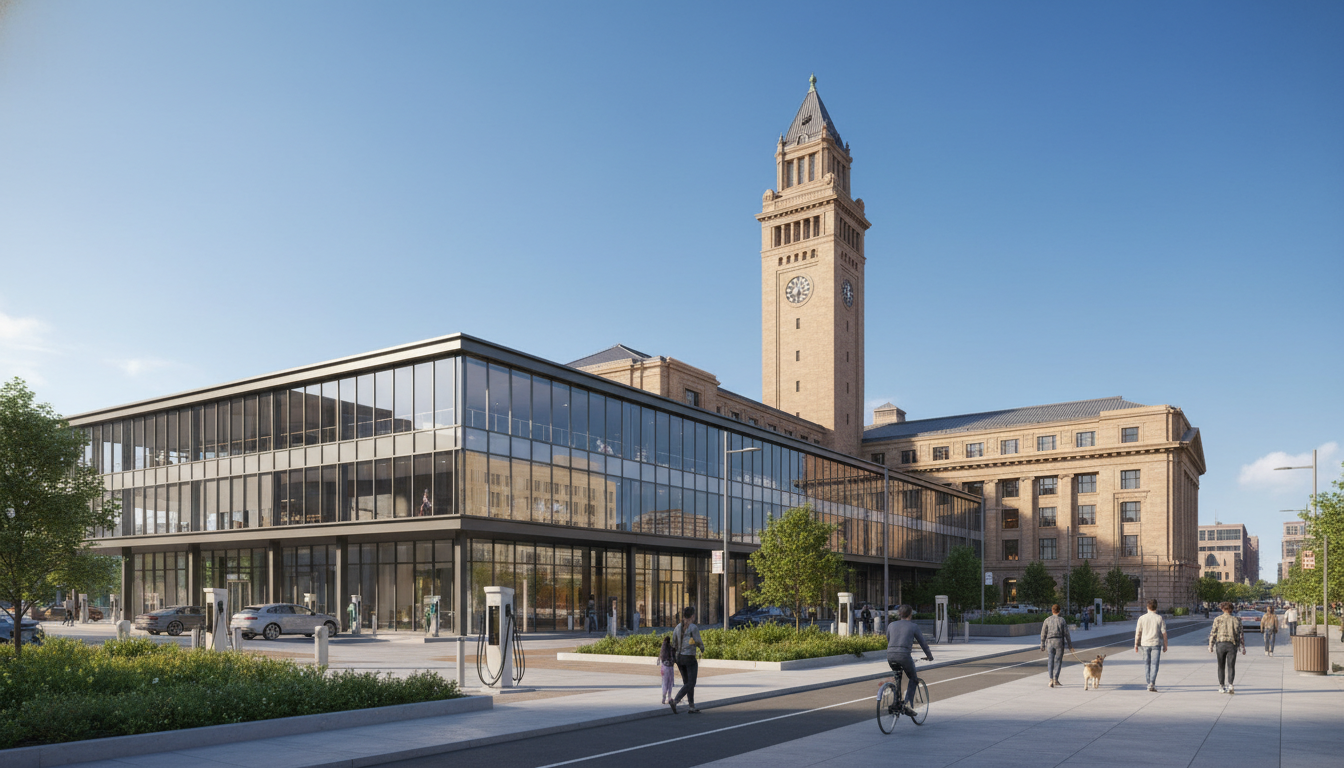
For decades, the towering silhouette of Michigan Central Station served as a stark reminder of Detroit’s industrial decline and the slow erosion of its infrastructure. Today, that narrative has shifted entirely. Following a massive restoration project led by Ford Motor Company, the site is being reimagined not just as an office space, but as a central Detroit transportation hub. This 30-acre innovation district in Corktown is designed to serve as a testing ground for the future of mobility, potentially changing how residents and visitors navigate the city.
A Catalyst for Urban Development in Corktown
The transformation of Michigan Central is part of a broader vision for urban development that integrates commercial real estate with high-tech infrastructure. According to the City of Detroit’s Planning and Development Department, the area is becoming a focal point for the Strategic Neighborhood Fund, which aims to revitalize corridors outside of the downtown core. The centerpiece of this effort is the Bagley Mobility Hub, a state-of-the-art parking and transit facility that provides 1,250 parking spaces, e-bike charging stations, and dedicated areas for micro-mobility solutions like electric scooters.
Ford Motor Company has invested approximately $950 million into the Michigan Central district, aiming to create an ecosystem where tech companies, urban planners, and transit authorities can collaborate. This development is already attracting high-profile partners. Google, as a founding partner, has committed to providing digital skills training and computer science education to local youth, further cementing the district’s role as a community-centric tech hub. For more information on local business growth, readers can explore our coverage of Ford’s ongoing investment strategy in Detroit.
Impact on Detroit Residents and Local Commuters
For long-time Detroiters, the reopening of the Michigan Central area represents more than just a real estate win; it is a fundamental shift in local accessibility. The Detroit transportation hub at Michigan Central aims to bridge the gap between disparate neighborhoods. For residents in Corktown and Southwest Detroit, the development brings improved streetscapes, enhanced lighting, and safer pedestrian walkways. According to data from the Michigan Department of Transportation (MDOT), integrating multi-modal transit options in high-density areas can reduce traffic congestion and lower the carbon footprint of daily commutes.
Local business owners in the surrounding area have already reported an uptick in foot traffic. The influx of workers and tourists to the station is expected to support a new wave of retail and dining establishments. However, the project also raises questions about housing affordability. The City of Detroit has implemented several zoning adjustments to ensure that new residential developments include a percentage of affordable units, mitigating the risk of displacement as property values in Corktown continue to climb. For those interested in how these changes affect property taxes, check our guide on Corktown redevelopment and housing trends.
Infrastructure Detroit: The Future of Mobility
The technical aspect of the new hub is perhaps its most ambitious feature. Infrastructure Detroit has long been criticized for its reliance on private vehicles, but Michigan Central is built on the premise of ‘mobility as a service.’ The district serves as a ‘living lab’ for autonomous vehicle testing and smart city technologies. This includes a unique ‘mobility platform’ that allows for the testing of inductive vehicle charging, where electric cars can charge while driving over specialized road surfaces.
Strategic partnerships with the Michigan Economic Development Corporation (MEDC) have facilitated the creation of the Michigan Central Innovation District, a designated zone where regulations are streamlined to allow for rapid prototyping of new transit technologies. This approach is intended to position Detroit as a global leader in the race to define 21st-century urban transit. Industry analysts suggest that if the Michigan Central model is successful, it could be exported to other legacy industrial cities looking to modernize their transportation networks.
What Happens Next: Rail and Regional Connectivity
The long-term success of the Detroit transportation hub depends on its ability to reconnect with the broader regional rail network. While the station currently serves as a hub for cars, bikes, and buses, there is ongoing advocacy from transit groups like Transportation for Michigan (T4M) to restore passenger rail service to the platform. Historically, Michigan Central was the gateway for rail travel in the Midwest, and advocates argue that restoring Amtrak or commuter rail service between Detroit and Ann Arbor would be the final piece of the puzzle.
While no official timeline for the return of rail service has been finalized, the infrastructure has been designed to accommodate it. MDOT continues to study the feasibility of expanded rail corridors, noting that the demand for non-car travel among younger workers is at an all-time high. In the coming years, the district will continue to evolve as new buildings within the 30-acre campus are completed, including the renovated Book Depository which now houses startup incubators. As Detroit moves toward a more connected future, Michigan Central stands as a testament to the city’s ability to innovate while honoring its historic roots.