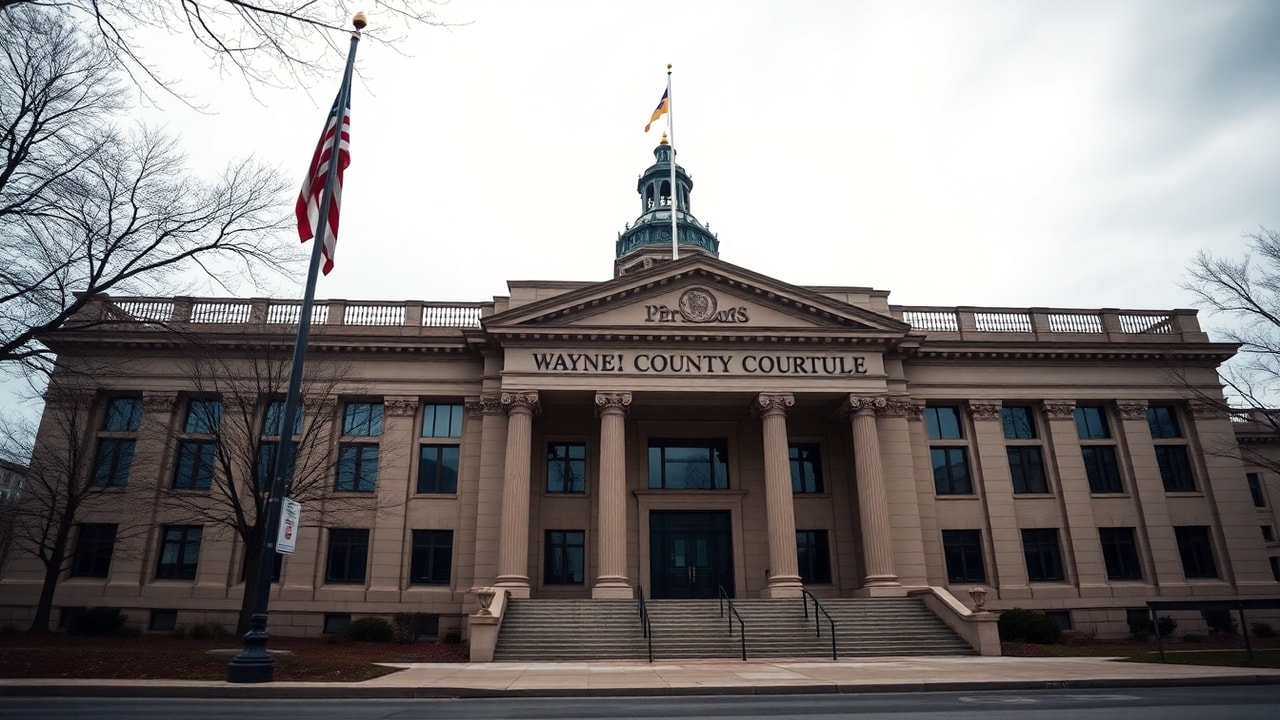
A Michigan judge has ordered that Terrion Arnold remain in pretrial custody while a Wayne County case proceeds, according to court scheduling information. The decision means Arnold will stay locked up pending trial as attorneys prepare for the next Detroit court hearing, where arguments will focus on bail and conditions ahead of trial.
The ruling comes as Wayne County courts continue to manage a heavy volume of pretrial matters and as defendants’ requests for release are closely scrutinized under Michigan law, particularly when prosecutors argue public-safety concerns or flight risk. Arnold’s next appearance is set for a Detroit-area courtroom, where both sides are expected to address whether continued detention is warranted.
Michigan judge keeps Terrion Arnold in pretrial detention
Under the order, pretrial detention remains in effect for Terrion Arnold, with the court setting the case for further proceedings. Court filings and scheduling updates indicate that Arnold’s status will be revisited at the upcoming Detroit court hearing, which will determine whether there is any change to custody conditions before the case moves closer to trial.
According to Michigan Court Rules, judges have discretion in deciding whether a defendant should be released pending trial and under what conditions, including when evaluating factors such as risk to the community and the likelihood of returning to court. In practice, those determinations are often influenced by the specific allegations, the defendant’s prior court history, and arguments presented by prosecutors and defense counsel.
Wayne County prosecutors have previously argued in similar cases that keeping defendants detained—at least for the pretrial period—helps address concerns about safety and ensures court appearances, while defense attorneys typically argue that conditions short of incarceration can mitigate risk.
What is at issue in the Wayne County court proceedings
In Detroit-area cases, bail and detention decisions are frequently tied to the question of whether a defendant can be safely managed in the community while awaiting trial. At the next Detroit court hearing, both sides are expected to present updated arguments on custody. Prosecutors may contend that continued detention is necessary, while defense attorneys will likely seek an adjustment—such as a reduction in bail or alternative conditions—depending on what the court finds credible.
“Each pretrial decision is fact-specific,” a legal analyst from the Michigan judiciary system would typically emphasize in public guidance about how judges weigh evidence and statutory factors. While the exact arguments in Arnold’s case will come from the parties, the broader framework for pretrial detention is governed by state law and procedural rules that require courts to balance public-safety considerations with a defendant’s liberty interests.
Separately, local oversight groups have argued that detention practices should be evaluated carefully because prolonged pretrial incarceration can disrupt employment, family stability, and access to counsel. The pretrial detention period can also affect case preparation timelines and the ability to meet with attorneys or gather evidence, particularly for defendants who lack transportation or stable housing.
Impact on Detroit residents and the local justice system
Although Arnold’s case is an individual matter, pretrial custody decisions have ripple effects across Detroit’s legal system. Wayne County residents can feel those impacts through court operations—schedules, detention capacity, and the pace of case resolution—as well as through the public perception of fairness and consistency.
As reported by the U.S. Department of Justice in guidance on pretrial practices, pretrial detention can have consequences that go beyond the courtroom, including increased barriers to maintaining employment and housing. For Detroit families, the stakes are real: a decision to keep someone locked up pending trial can affect who can earn income, who can care for children, and whether a case is able to proceed with full participation from the defendant.
At the same time, prosecutors and courts often respond to safety concerns raised in charging documents. For residents, that tension can shape how the community views the justice process—especially when pretrial decisions are made early, before a judge has heard evidence at trial.
Why the next hearing matters
The next step in the case is expected to clarify whether Arnold will remain in custody or whether the court will modify conditions. In Wayne County, hearings can move quickly, but each decision can set the tone for how a case proceeds—whether defense can pursue certain pretrial steps with fewer restrictions, and whether prosecutors will be able to rely on detention to address alleged risks.
If the court maintains pretrial detention, the issue will likely return again as the case progresses. If the court considers alternatives, it may involve conditions such as supervision, restrictions on travel, or requirements designed to assure court appearance.
Background & data on pretrial detention in Michigan
Michigan’s approach to pretrial matters follows state statutes and court rules that require individualized consideration. According to the Michigan Legislature and Michigan court guidance, judges must weigh statutory factors when deciding whether detention is appropriate. Those factors typically relate to the seriousness of charges, potential risks, and whether less restrictive options can reasonably address concerns.
Nationally, researchers and policy groups have documented that the use of detention can vary widely by jurisdiction and can be influenced by local resources, legal strategies, and how courts apply risk assessments. While those patterns differ from place to place, Detroit-area residents generally see the effects in the structure and speed of court processing.
Local reporting and state oversight also emphasize that defendants’ access to counsel and ability to participate in court proceedings can be affected when individuals are held in jail prior to trial. For a case like Arnold’s—where the court has determined that continued custody is warranted at this stage—the ability to prepare for trial may depend on the practical conditions of detention and attorney access.
What happens next in Arnold’s case
With a Detroit court hearing scheduled in Wayne County, the immediate question is whether the court’s decision to keep Arnold in custody will change. The hearing is expected to bring new arguments about the appropriateness of continued detention under the case’s specific circumstances.
For residents following the case, the key updates to watch include:
- Whether the judge modifies bail or custody conditions during the hearing
- Any changes to scheduling for trial-related motions
- Statements in court that clarify how the judge is weighing public-safety and court-appearance concerns
Until that hearing occurs, Terrion Arnold will remain subject to pretrial detention under the current order, continuing the period of being locked up pending trial as the case moves forward in Wayne County.
As always with active cases, specific facts and legal arguments are determined by the filings and testimony presented in court. Detroit-area residents can expect the next appearance to shed more light on whether the court views detention as necessary at this stage or whether alternatives will be considered.