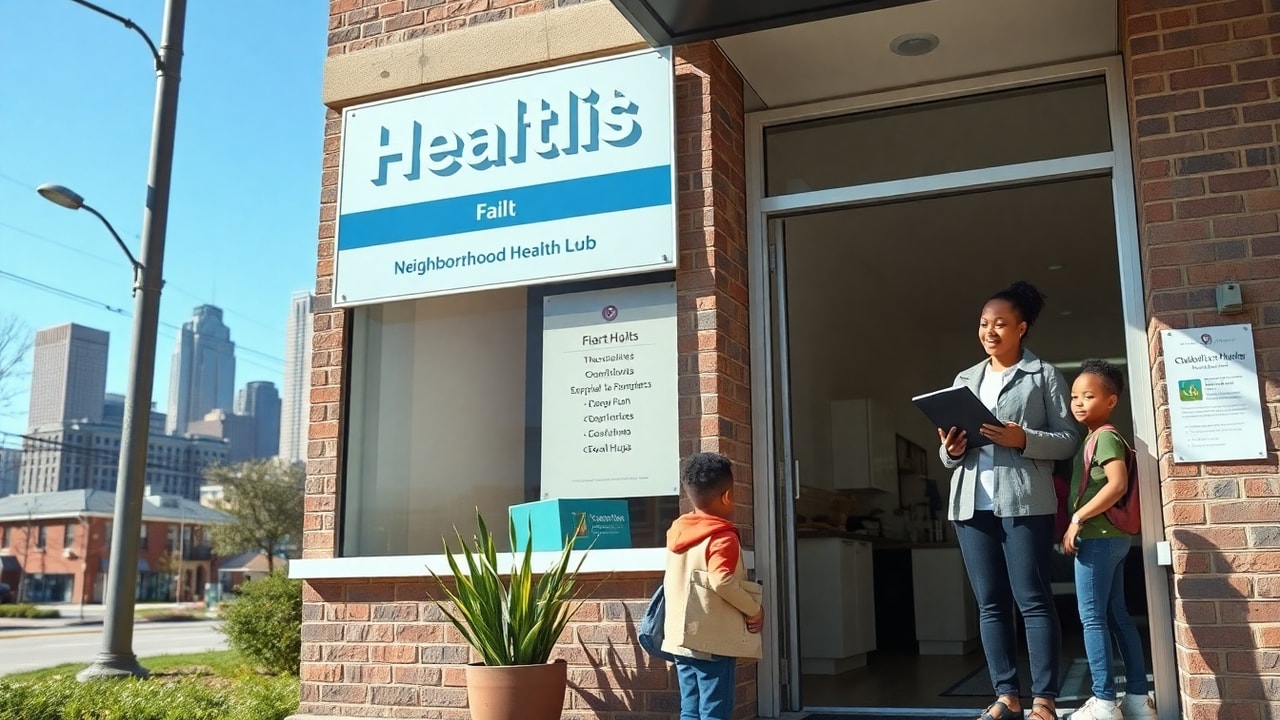
Detroit’s health hubs are helping keep more students in class. Across multiple neighborhoods, staff at community-based clinics and school partners are addressing health barriers that contribute to missed days—often before they turn into a chronic pattern, according to city and partner reports.
The initiative, part of Detroit public health initiatives focused on family support programs, blends medical and behavioral health services with practical supports tied to schools and attendance recovery. While chronic absenteeism is driven by many factors—transportation, housing instability, caregiving demands, and student health—Detroit officials say the hubs are working to connect families to care faster and keep school attendance on track.
Detroit health hubs link students to care and family support programs
Chronic absenteeism is typically defined as missing a substantial portion of the school year for any reason, including illness. In Detroit, local partners describe a common scenario: students fall behind in early weeks when health or mental health needs go unmet, then absences become harder for families to reverse.
Detroit’s Detroit health hubs aim to interrupt that cycle by bringing support closer to families. The hubs coordinate referrals for primary care, follow-up for ongoing conditions, and connections to behavioral health resources. In addition, hub teams support families navigating appointments, insurance or benefits, and care plans—efforts described as central to student attendance.
“We’re trying to meet families where they are and reduce barriers that prevent consistent school attendance,” a spokesperson from the Detroit Department of Health said in a recent update on the program’s school partnership work. The department said the hubs coordinate with schools to identify students at risk of falling behind and to ensure families can access timely services.
In interviews with partner organizations, officials also emphasized the importance of follow-through. Rather than treating attendance as a discipline or truancy issue, staff described attendance recovery as a health and family support problem—one that can require coordination across clinics, schools, and community resources.
Impact on Detroit residents: fewer missed days, more stability
For Detroit residents, the benefits of the program show up most directly inside classrooms. When students miss fewer days, educators can keep pace with instruction, and students are more likely to build routine—especially during transitions like the move from elementary to middle school.
In a community setting, health-related absences can look like something else at first: a child who frequently stays home “just for the day,” recurring symptoms that lack follow-up care, or anxiety that affects readiness to attend. Detroit’s hub model attempts to address those underlying drivers by improving access and supporting families through obstacles that often stack up in real life.
According to data from the U.S. Department of Education reported in the department’s chronic absenteeism resources, chronic absenteeism can harm academic outcomes and is influenced by health conditions, family circumstances, and school climate. Detroit partners say their work aligns with that broader research: reduce health and access barriers, then attendance outcomes improve.
Several Detroit schools and partners have used early warning processes—flagging students with rising absence counts and then linking them to hub staff. Detroit officials describe this as schools and attendance recovery done as a coordinated workflow, not as one-off referrals.
“Chronic absenteeism isn’t one issue,” said Dr. Robert Segal, a senior fellow at attendance research organization Attendance Works, in remarks cited in the group’s public guidance on attendance and health. He has emphasized that successful interventions combine family engagement with health-related supports, which is consistent with Detroit’s hub approach.
Background & data: why health hubs matter for student attendance
Nationally, chronic absenteeism has remained a persistent challenge even after the COVID-19 disruptions. The U.S. Department of Education has documented the relationship between missed school days and academic risk, noting that absenteeism can be both a cause and a symptom of broader challenges, including health needs.
Detroit’s approach has been shaped by local realities. The city contains neighborhoods where residents face barriers to consistent care—such as limited transportation, difficulty scheduling appointments, or delays in accessing follow-up treatment. In those contexts, illness and unmet health needs can quickly produce prolonged absences.
Detroit public health initiatives have increasingly focused on prevention and community-based access. The Detroit health hubs model—built around neighborhood presence and partnership with schools—reflects that shift. Rather than expecting families to locate care independently, hub staff work to lower the effort required to obtain services.
While officials caution that attendance is multifactorial and outcomes vary by school and neighborhood, they say the hubs have helped reduce the number of students who slide into chronic patterns. In practice, that means faster connection to clinicians for recurring issues, improved communication between schools and health providers, and more consistent family support programs to help maintain routines.
How schools and partners work together
In Detroit, hub staff typically coordinate with school teams that track attendance. When a student shows a concerning pattern—such as repeated absences, tardiness, or reported symptoms—schools and hub partners identify potential barriers and pursue supports.
Those supports may include scheduling assistance, referral to primary care, help accessing behavioral health services, and connection to resources tied to day-to-day functioning. Hub teams also emphasize communication that respects families’ time and constraints, which can be especially important when health appointments conflict with work schedules or caregiving responsibilities.
Attendance recovery efforts also involve practical steps that can improve daily attendance. Detroit officials say these steps are designed to reduce friction: clarifying care plans, supporting appointment adherence, and ensuring that health needs are addressed quickly enough to prevent repeated absences.
What happens next for Detroit health hubs
Detroit’s next phase will likely involve scaling what works and refining how early warning systems connect to services. Officials say the key is tightening the loop between attendance data and community health supports—so that families receive help before absences become entrenched.
Across Detroit, schools and community organizations will continue to refine how they identify at-risk students and how hub teams respond. Partnerships with health providers and social service organizations are expected to remain central, as chronic absenteeism often intersects with broader issues like housing stability and access to routine medical care.
For families, the program’s goal is straightforward: make it easier to get the care and support needed for consistent learning. For educators, fewer missed days can translate into steadier progress and more time for instruction.
In Detroit, tackling chronic absenteeism has become inseparable from public health and family support. With Detroit health hubs serving as a bridge between healthcare access and schools, city partners say thousands of students are being reached earlier—helping more children show up, stay engaged, and recover lost momentum.