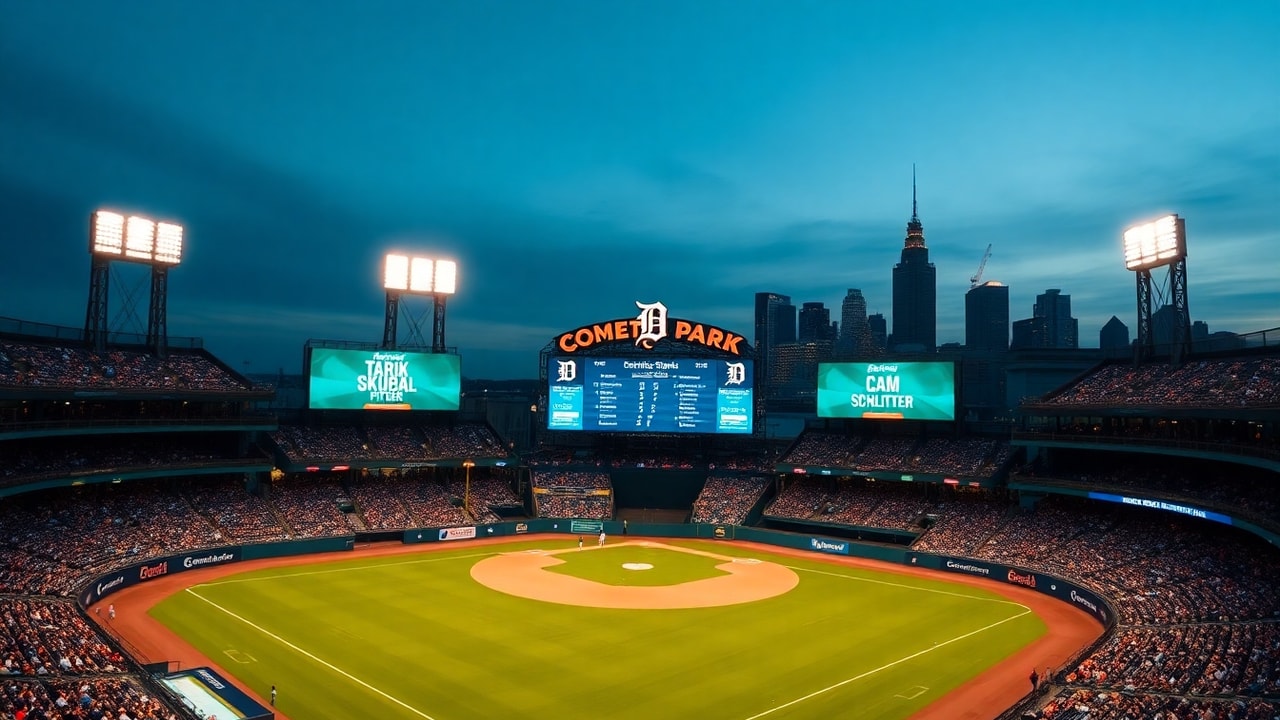
The Detroit Tigers and the New York Yankees square off at Comerica Park as Tarik Skubal takes the mound for Detroit against Cam Schlittler of the Yankees, setting up a marquee Tigers starting pitcher battle that will draw fans across the city and region. With both clubs aiming to build momentum during the stretch of the season, the Skubal vs Schlittler matchup is poised to shape the outcome early, especially in a ballpark where command and pitching sequencing often decide key innings.
For Detroit baseball fans, the game is more than a matchup of star prospects and established talent. It also reflects the broader role that Major League Baseball plays in city life—through jobs tied to game days, local transit activity, and business revenues for nearby restaurants and retailers. The Tigers’ home schedule draws a steady flow of visitors, and Detroit’s tourism and hospitality sectors routinely experience ripple effects when marquee teams like the Yankees come to town.
Detroit Tigers vs New York Yankees: the Skubal vs Schlittler matchup
Skubal, Detroit’s ace, enters the game with a reputation built on repeatable mechanics and an ability to attack hitters with multiple looks. In matchups like this, his ability to locate breaking pitches and manage pitch counts can be as important as raw velocity—factors that frequently determine whether Detroit can keep the Yankees off balance in high-leverage at-bats.
Schlittler, meanwhile, brings a different style to the mound for New York. Against a lineup like Detroit’s, his effectiveness is likely to hinge on whether he can work through traffic—turning contact into outs, limiting walks, and keeping the ball in the strike zone long enough to force hitters to swing at productive pitches.
From a tactical standpoint, the Tigers starting pitcher versus the Yankees’ approach will be a storyline to watch from the first inning. Yankees hitters often look to capitalize on fastball mistakes, while Tigers batters have tended to emphasize patient at-bats that can turn counts into opportunities for extra-base damage. How both managers use early innings—particularly if either starter hits the zone consistently—could decide the tone for the bullpen.
Why this matchup matters at Comerica Park
When teams of this caliber meet in Detroit, the environment at Comerica Park tends to be louder and more concentrated around the middle innings. With the Yankees frequently bringing traveling support, sections of the stadium can shift quickly, creating a high-pressure atmosphere for pitchers and hitters alike. For Detroit players, pitching with composure in those moments often separates competitive games from ones that get away.
According to the Tigers’ official game-day operations information, the team’s schedule and stadium services are designed to support smooth fan flow and stadium readiness for every home series. That operational consistency matters when high-profile opponents visit, because larger crowds affect staffing needs for security, concessions, and parking and transit coordination.
Impact on Detroit Residents
Home games involving the Yankees typically draw visitors from outside the region, which can affect daily routines for Detroit residents near downtown. Increased traffic around Comerica Park, heightened demand for rideshare pickup zones, and changes to parking availability are common during high-attendance nights.
Local businesses near the ballpark often benefit from the same surge. Restaurants and bars typically see increased walk-in traffic before first pitch and during the late innings. In addition, game-day employment—ranging from event staffing to concessions—can provide short-term work for local residents, particularly through seasonal scheduling systems used by stadium vendors.
There’s also a public-safety and infrastructure dimension. Large events place extra strain on traffic and public transit capacity. Data from the U.S. Census Bureau has shown that metropolitan areas like Detroit are strongly shaped by commuting patterns and labor mobility, and major downtown gatherings add visible demand to transportation networks. City and regional partners often plan around those peaks to reduce congestion and ensure emergency access routes remain available.
Downtown ripple effects
For Detroit residents who commute through downtown, the most noticeable impacts are timing and travel choices. Many drivers adjust departure windows to avoid peak congestion tied to ballpark entrances and exits. Transit riders may also experience heavier loads before first pitch and after the final out.
For workers at nearby businesses, the game’s high-profile nature can shift staffing needs. Orders can increase within predictable time windows—especially between doors opening and the start of play—and teams that staff accordingly can translate game traffic into meaningful same-night revenue.
Background & Data on Detroit baseball and game-day economics
Detroit’s relationship with the Tigers is deeply intertwined with the city’s identity as a sports market. Baseball serves as a shared ritual for residents across neighborhoods, from longtime fans who follow the franchise’s weekly rhythms to newer arrivals who experience the downtown corridor during home series.
Economically, stadium events contribute to local activity. The Detroit Economic Growth Corporation (DEGC), a nonprofit focused on business development in the city, has highlighted how major attractions and anchor venues influence broader downtown commerce by supporting foot traffic and encouraging investment. While each game doesn’t independently “drive” the city’s entire economy, high-attendance matchups are part of how downtown sustains a year-round base of customers for restaurants, retail and services.
For residents, that matters because downtown economic activity can support broader service employment and keep retail corridors active. When teams with national followings—like the Yankees—visit Detroit, the visibility of the downtown district rises, which can extend beyond game night through media coverage and visitor spending.
What Happens Next
For fans trying to plan their evening, the key is monitoring pitching usage and early-game developments. If Skubal establishes command quickly, Detroit could turn the matchup into a pitch-efficiency battle—forcing the Yankees to work counts and potentially limiting bullpen strain. If Schlittler finds similar rhythm, New York’s hitters may look to test Detroit’s late-inning matchups early by driving fastballs before pitchers adjust.
The next phase after the starters—whether through bullpen matchups or pinch-hit strategy—will likely reflect each team’s approach to maximizing matchup advantages. In a high-stakes rivalry-style environment with the Yankees in town, those adjustments can become decisive even if the first 2–3 innings look relatively even.
Regardless of the final score, the Detroit Tigers vs New York Yankees game will be measured by how the Skubal vs Schlittler matchup unfolds in real time—how each starter handles pressure, how quickly errors or walks appear, and whether Detroit’s defense turns challenging at-bats into outs. For Detroit baseball, it’s a night that showcases the sport’s ability to unite the city around a common place and a common story.