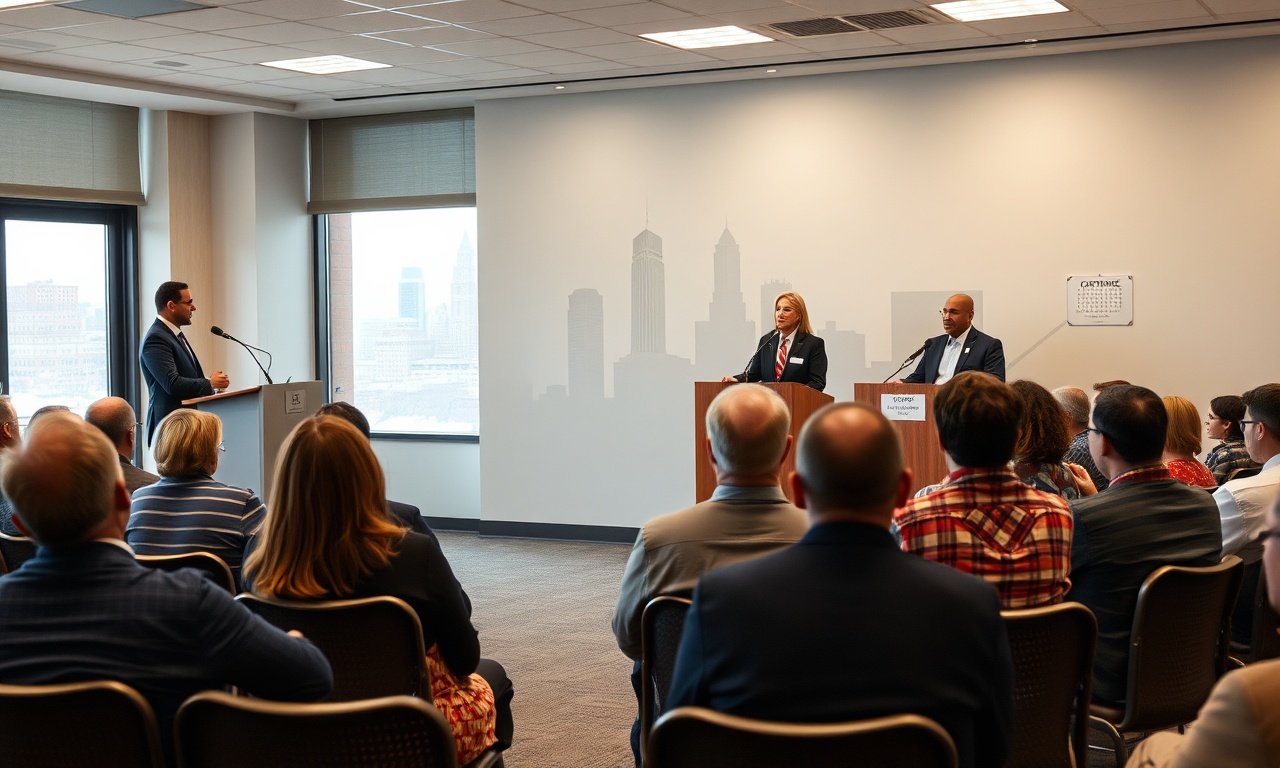
DETROIT — A local legal panel discussion on constitutional rights brought together community members and legal experts this week to examine how major U.S. Supreme Court opinions — including decisions involving birthright citizenship and firearms policy — could shape public policy in Michigan. The event, held in Detroit, focused on the practical effects of the U.S. Constitution as interpreted by the court, including the roles of Justice Alito and Justice Thomas, and what residents should watch as new cases work their way through the federal system.
Organizers said the goal was to connect national legal developments to issues Detroiters are already debating: public safety, immigration, and the scope of state and local authority. Speakers also addressed how courts typically weigh constitutional text against long-standing practices, and why outcomes in Washington can still influence local enforcement and legislative priorities months or even years later.
Legal panel discussion connects Supreme Court themes to Detroit
The panel centered on two intersecting topics: federal constitutional limits on immigration restrictions tied to birthright citizenship, and the future of guns policy after recent Supreme Court guidance on the Second Amendment. Panelists discussed how these rulings are not always immediate “policy changes,” but can alter the legal landscape that state lawmakers, local prosecutors, and police departments operate within.
According to a briefing distributed by the event’s host legal organization, constitutional questions often determine whether states and cities can enforce certain rules at all, or whether they must change how they justify those rules in court. The organization emphasized that local officials typically follow federal court interpretations, even when they disagree politically.
Speakers also discussed the broader ideological approaches represented by the court’s current conservative bloc. In recent years, opinions authored or joined by Justice Alito and Justice Thomas have signaled a continuing interest in original meaning and limits on regulatory power, though panelists stressed that each case turns on its own facts and record.
“When the Supreme Court narrows or expands the range of permissible government action, it changes what lower courts can do next,” a panelist with the Michigan-focused civil rights advocacy group said during the discussion, noting that Detroit’s local policies must still align with federal constitutional standards.
Birthright citizenship: what Detroit residents should understand
On birthright citizenship, panelists traced the constitutional basis for citizenship for people born in the United States to the text of the U.S. Constitution and how it has been understood historically. They discussed why the topic resurfaces during political cycles and why litigation can follow when administrations or state actors attempt to limit citizenship-related claims.
According to the U.S. Citizenship and Immigration Services (USCIS), birthright citizenship is generally recognized under longstanding federal interpretations of constitutional citizenship, and eligibility can depend on facts about where and when a person was born. USCIS materials also explain that citizenship determinations typically involve document review and legal standards established in statute and case law.
Panelists told attendees that even when a Supreme Court decision does not directly involve Detroit, it can affect families locally by changing how claims are processed, how federal agencies set enforcement priorities, and how advocates and attorneys advise clients. They also noted that local community organizations often provide translation, legal orientation, and resources for residents navigating immigration procedures.
Several attendees asked whether Michigan could respond legislatively if federal litigation changes how citizenship is interpreted. Panelists said that while states may attempt to adjust processes — for example, in how local records are handled — immigration status determinations are primarily federal in practice, and constitutional rulings can preempt state policy.
Guns policy and the Second Amendment: implications beyond headlines
The panel’s second major segment focused on guns policy and how Supreme Court decisions can shift the boundaries of what governments may regulate. Panelists described how courts apply tests that look at constitutional history, past practice, and the level of justification required for certain kinds of firearms rules.
A senior attorney in the panel group noted that lower courts often treat Supreme Court guidance as controlling, even when the underlying statutes remain on the books. “The question becomes not just what a law says, but whether it survives constitutional scrutiny in a specific factual setting,” the attorney said, highlighting that Detroit’s local criminal justice system can be affected when prosecution standards or evidentiary rules change.
Panelists also discussed how gun policy disputes typically involve more than one layer of government — federal constitutional law, state statutory authority, and local enforcement priorities. For residents, that means the effect can show up at different times: sometimes first in court filings and charging decisions, and later in longer-term legislative debates at the state level.
While the panel did not advocate for a specific policy position, it aimed to clarify what the court’s reasoning means for officials trying to draft rules that can withstand litigation. Speakers noted that challenges to firearms regulations frequently turn on questions like the scope of permissible restrictions, how courts interpret historical analogues, and whether certain regulations are treated as burdens on “core” constitutional rights.
Impact on Detroit Residents
For many Detroit residents, the biggest immediate impact is informational: court decisions affect how people understand their rights and how attorneys and community groups advise them. Panelists said that Detroit’s diverse immigrant communities and the city’s ongoing public safety debates make these issues especially salient.
On the citizenship front, families may face uncertainty when federal litigation changes the framing of eligibility or documentation standards. Even when courts do not overturn established interpretations, the pace of administrative processes can influence the time residents spend gathering records and the costs they may incur for legal assistance.
On the firearms front, changes in legal interpretation can affect what officers and prosecutors consider enforceable. Panelists explained that when a particular type of regulation is called into question in court, it can lead to pauses in enforcement, shifts in how cases are charged, or additional guidance requests for agencies at the state and local levels.
Finally, speakers emphasized that Detroit’s community dialogue matters. A constitutional debate is not only legal; it is also civic. Residents asked pointed questions about how far local government can go when federal courts define the outer boundaries.
Background & Data
The U.S. Constitution is the framework that courts use to evaluate whether federal and state actions comply with constitutional rights. In immigration litigation, challenges often focus on how constitutional citizenship has been interpreted historically and applied in federal policy. In firearms cases, challenges frequently address whether regulations align with constitutional protections as interpreted by the Supreme Court.
According to the U.S. Census Bureau, Detroit and the broader Michigan region include a mix of residents with varying immigration histories, and demographic changes can influence how many families are affected by shifts in federal administrative or legal procedures. Data from the Census Bureau has long been used by researchers to examine population changes, citizenship-related categories, and community needs for services.
Panelists also referenced how Supreme Court opinions are carried out in practice through lower federal courts. In general, district courts and appellate courts apply Supreme Court precedent to specific facts, which can produce different outcomes in different jurisdictions until conflicts are resolved.
What Happens Next
For Detroit residents, the next phase will likely involve continued court activity and corresponding changes in federal and state guidance. Panelists said they expect more litigation as parties challenge or defend how court rulings are applied to administrative processes and enforcement.
On immigration-related issues tied to birthright citizenship, speakers noted that administrative agencies may revise procedures or further clarify documentation requirements, particularly when new rulings change how legal standards are interpreted. On guns policy, they said it is common for legal outcomes to cascade into state-level legislative debates and prosecutorial guidance — especially when Supreme Court reasoning affects whether certain restrictions can be enforced.
Organizers said future community programs will follow as new decisions are issued and as Michigan lawmakers consider how to align policy with constitutional standards. In the meantime, panelists urged residents to rely on credible legal information sources and local nonprofit partners for updates, rather than speculation circulated on social media.