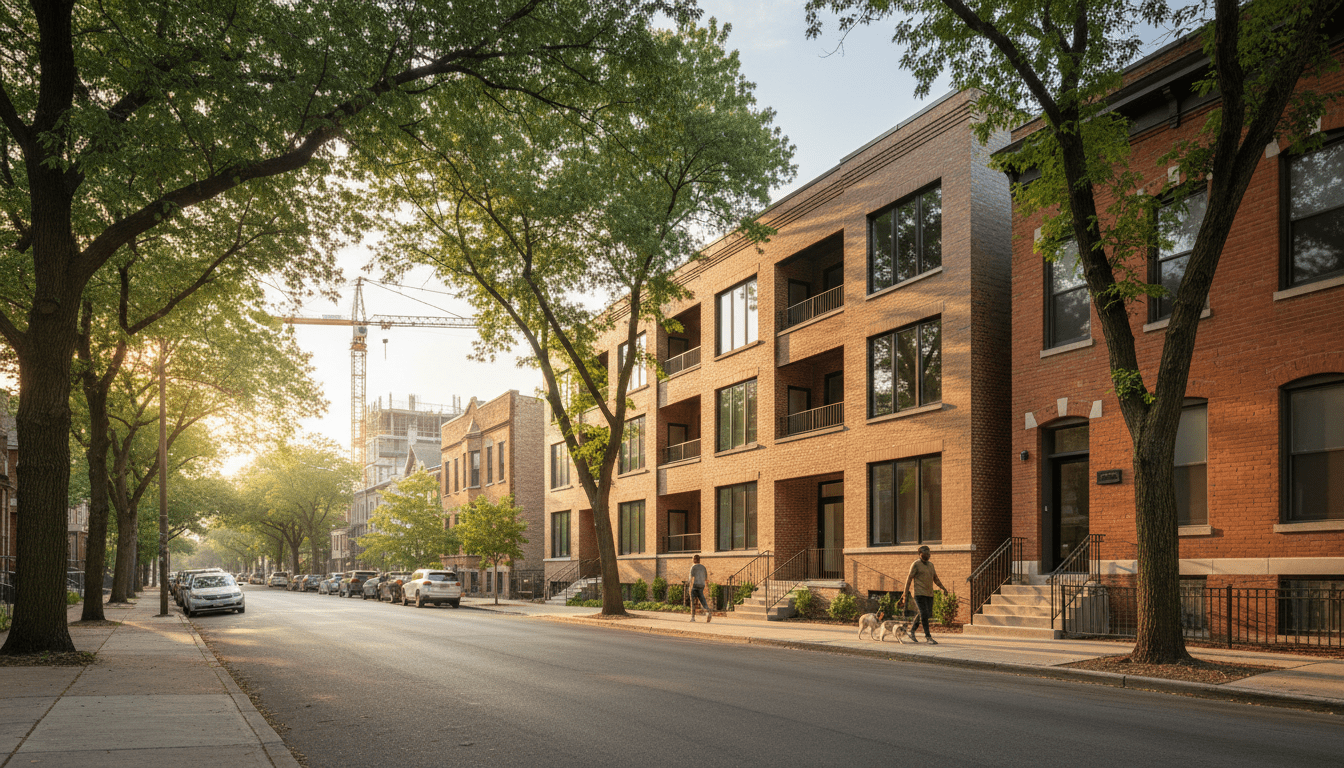
As Detroit continues to navigate its complex economic recovery, the urgent need for affordable housing in Detroit has moved to the forefront of the city’s legislative and developmental agenda. With property values rising in key corridors and rental inventory tightening, city officials and housing advocates are racing to implement strategies designed to protect long-term residents from displacement while encouraging necessary market growth.
The juxtaposition of luxury high-rises in the central business district against the struggle for safe, attainable housing in the neighborhoods has defined much of the discourse regarding the city’s revitalization. In response, the City of Detroit has intensified its focus on the Affordable Housing Leverage Fund and the preservation of existing Low-Income Housing Tax Credit (LIHTC) units, attempting to secure stability for thousands of families.
The State of Affordable Housing in Detroit
For decades, Detroit was characterized by an abundance of available housing stock, albeit often in varying states of disrepair. However, the narrative has shifted significantly over the last five years. As investment floods into areas like Corktown, Midtown, and New Center, the ripple effects on rental prices have been felt throughout the city.
According to data from the U.S. Census Bureau, a significant portion of Detroit residents remain "rent-burdened," meaning they spend more than 30 percent of their monthly income on housing costs. This statistical reality underscores the fragility of the housing market for low-to-moderate-income families.
Local officials have acknowledged that relying solely on market forces will not solve the shortage. The Detroit Housing & Revitalization Department (HRD) has been actively deploying capital to bridge the financing gap for developers willing to designate units for lower-income tenants. The city’s strategy relies heavily on the "7-Point Plan," a framework initially introduced to ensure that the economic comeback includes residents of all income levels.
Recent reports indicate that thousands of affordable units were at risk of converting to market rates as their compliance periods expired. In response, the city has prioritized the preservation of these units, negotiating extensions with property owners to keep rents manageable for existing tenants.
Impact on Detroit Residents
For residents living in Detroit neighborhoods outside the downtown core, the term "affordable" is often a point of contention. The federal definition of affordability is tied to the Area Median Income (AMI), a figure calculated regionally that includes wealthy suburban communities in Oakland and Macomb counties.
Consequently, an apartment deemed "affordable" at 80 percent of the regional AMI may still be out of reach for a Detroit family relying on the city’s median household income, which sits significantly lower than the regional average. This discrepancy has led to increased demand for "deeply affordable" housing units—those targeted at households earning 50 percent or 30 percent of the AMI.
Housing advocates argue that without specific protections for these lower income brackets, new developments often fail to serve the people who need them most. "The challenge isn’t just building units," noted a representative from a local housing non-profit during a recent city council planning session. "The challenge is building units that match the actual paychecks of the people living here right now."
Residents are also facing the challenge of housing quality. Affordability initiatives are not only about rent caps but also about funding renovations for aging apartment complexes. Many of the city’s naturally occurring affordable housing stock requires significant capital improvements to address plumbing, heating, and structural issues.
Background & Strategic Investments
To combat the disparity between income and rent, the administration has utilized the Detroit Housing for the Future Fund (DHFF). This private-public partnership aims to deploy capital specifically for the development and preservation of affordable housing in Detroit. By providing developers with low-interest loans and grants, the fund attempts to make the math work for projects that would otherwise be financially unfeasible.
According to the City of Detroit, the goal is not merely to construct new buildings but to stabilize neighborhoods. When housing costs are predictable, residents are more likely to stay, contributing to community stability and local economic participation. The link between housing stability and Detroit local business growth is well-documented; families who are not rent-burdened have more disposable income to spend within their local economy.
Data from the University of Michigan’s Poverty Solutions initiative has frequently highlighted the intersection of housing stability and public health. Their research suggests that secure housing is a prerequisite for improving educational outcomes and reducing health disparities in the city.
Challenges in Implementation
Despite these efforts, obstacles remain. Construction costs have soared due to inflation and labor shortages, complicating the financial models for affordable housing developers. A project that was viable in 2021 may now require additional subsidies to break even. This economic environment forces the city to be more creative with its financing stacks, often layering Low-Income Housing Tax Credits (LIHTC), state grants, and philanthropic dollars to get a single project across the finish line.
Furthermore, administrative hurdles can slow the pace of development. Developers have occasionally cited zoning delays and permitting backlogs as barriers to rapid construction. The city has moved to streamline these processes, but the timeline from proposal to ribbon-cutting can still span several years.
What Happens Next
Looking ahead to the remainder of 2024 and into 2025, the pipeline for affordable housing in Detroit appears robust, though insufficient to meet total demand immediately. Several large-scale mixed-income developments are slated for ground-breaking in neighborhoods such as Piety Hill, Brush Park, and Southwest Detroit.
The city is also expected to place a heavier emphasis on single-family home repairs. While multi-family developments grab headlines, many Detroiters live in detached single-family homes. Programs like the Detroit 0% Home Repair Loans represent a critical component of the housing ecosystem, allowing seniors and long-term residents to maintain their properties and age in place without fear of condemnation or forced sale.
As the city evolves, the measure of success will be whether longtime Detroiters can continue to call the city home. The coming months will be a test of whether the current policy frameworks can withstand market volatility and deliver on the promise of an inclusive Detroit.