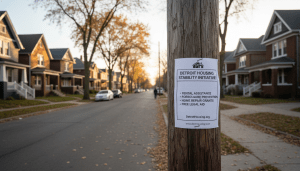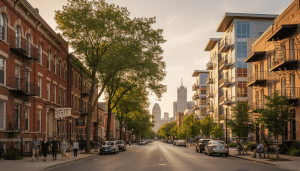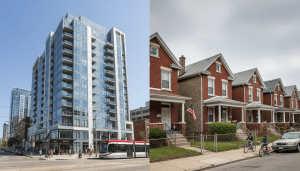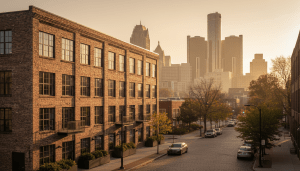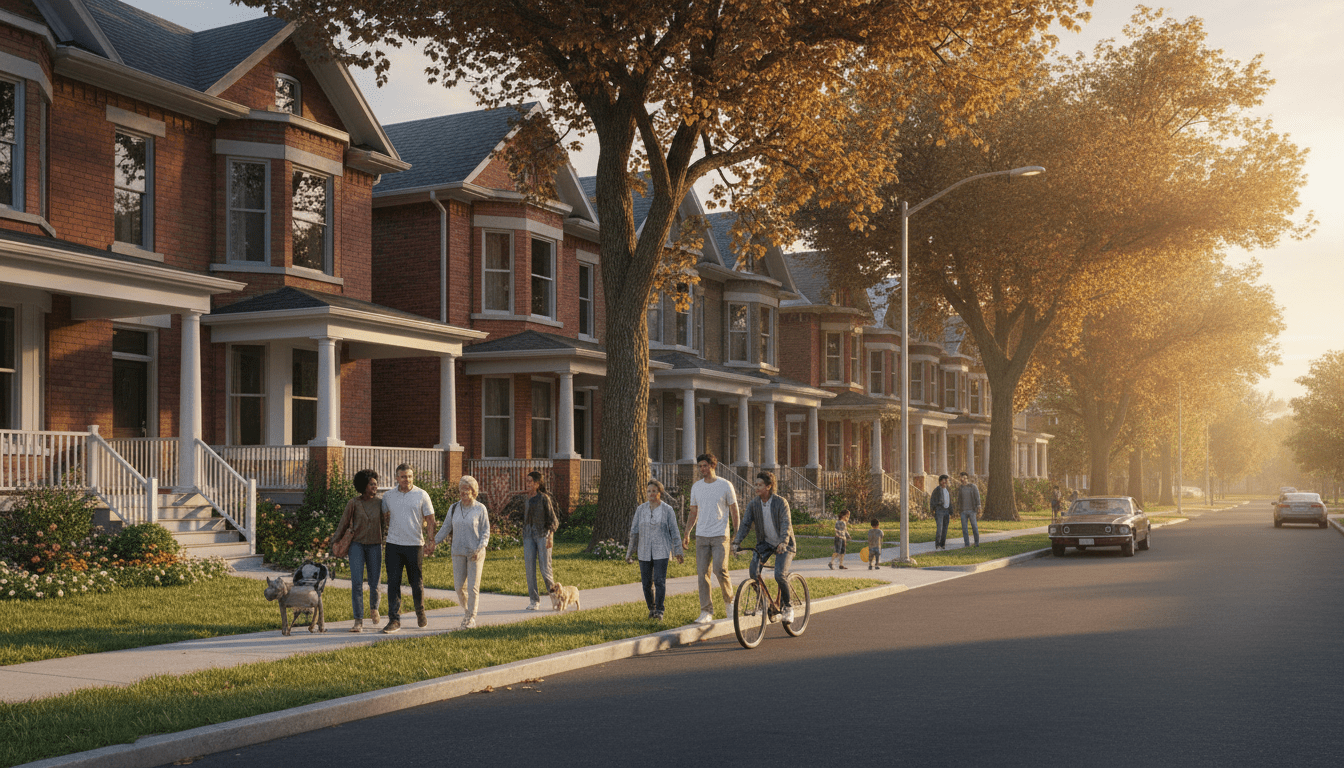
The narrative surrounding Detroit’s residential landscape has shifted significantly over the past decade. While the revitalization of the downtown core and the riverfront dominated headlines in the late 2010s, 2024 has marked a distinct turning point where attention—and capital—is flowing outward. When analysts and residents discuss the best neighborhoods in Detroit today, the conversation is no longer limited to high-rise apartments in the Central Business District; it has expanded to historic districts and Strategic Neighborhood Fund (SNF) zones that are seeing unprecedented stabilization and growth.
According to recent data from the City of Detroit’s assessment division, residential property values across the city have seen steady appreciation, driven not just by speculation, but by owner-occupancy and targeted municipal investment. This trend suggests a maturing market where livability, rather than just proximity to stadiums, defines neighborhood success.
Shifting Metrics for the Best Neighborhoods in Detroit
Real estate experts and urban planners are increasingly categorizing the city’s top-performing areas into two distinct tiers: the established historic enclaves and the emerging corridors supported by public-private partnerships. Areas like Corktown, the city’s oldest neighborhood, have cemented their status at the top of the market, largely influenced by Ford Motor Company’s restoration of Michigan Central Station. However, the ripple effect of this development is now tangible in adjacent communities.
“The market is valuing connectivity and community fabric more than ever,” said a representative from a local housing advocacy group during a recent town hall on equitable development. “The areas performing best are those where long-term residents have anchored the community, and new amenities are filling in the gaps without erasing the neighborhood’s identity.”
Neighborhoods such as West Village and Indian Village remain perennial favorites due to their historic housing stock and walkability. Yet, strictly looking at market appreciation and community engagement, areas like Bagley and the University District are frequently cited by realtors as offering a balance of space, safety, and community cohesion that attracts growing families.
Impact on Detroit Residents
For locals, the designation of an area as a “best neighborhood” is a double-edged sword. On one hand, rising property values equate to wealth generation for long-time homeowners who stuck it out during the city’s bankruptcy era. On the other hand, the pressure on affordability remains a critical concern.
The City of Detroit’s Strategic Neighborhood Fund has attempted to mitigate uneven growth by directing millions of dollars into streetscapes and commercial corridors in neighborhoods like Livernois-McNichols and Southwest Detroit. This strategy aims to ensure that the amenities often associated with the best neighborhoods in Detroit—such as walkable retail, parks, and safe transit stops—are accessible to residents outside the greater downtown bubble.
Local business owners along the Avenue of Fashion have noted that these improvements have increased foot traffic, directly benefiting the local economy. However, housing advocates caution that as these neighborhoods improve, tax capture and rent stabilization must remain priorities to prevent the displacement of legacy residents. Read more about Detroit housing market trends and how assessment changes are impacting property taxes.
Background & Data: What the Numbers Say
Data from the U.S. Census Bureau and recent real estate market reports illustrate a stabilizing population in key residential pockets. Unlike previous years where growth was isolated, current trends show a more distributed pattern of investment. For instance, Palmer Woods and Sherwood Forest continue to command some of the highest price points in the city, but transaction volumes have also picked up in North Rosedale Park.
A 2023 report on Detroit’s housing ecosystem highlighted that neighborhoods with active block clubs and community associations often see faster property value recovery than those without. This social infrastructure is a key, though often unquantifiable, metric in determining neighborhood health. Furthermore, crime statistics in targeted SNF zones have shown improvements relative to citywide averages, reinforcing the correlation between physical blight removal and public safety.
The expansion of the Joe Louis Greenway is another data point influencing future projections. Neighborhoods along this planned 27.5-mile loop are seeing increased speculative interest. Urban planners predict that once completed, the greenway will redefine what constitutes a prime location, placing a premium on non-motorized transit access.
What Happens Next
As Detroit moves through 2024, the definition of the “best” neighborhoods is expected to diversify further. The focus is shifting toward “20-minute neighborhoods,” a planning concept where residents can access most daily needs within a 20-minute walk or bike ride. This pushes the spotlight onto areas like Mexicantown and the Villages, where density supports local commerce.
Future development projects, including the continued rehabilitation of multi-family apartment buildings, will be crucial in determining if the city can maintain affordable entry points for new residents. The city administration has signaled a continued commitment to the “Land Value Tax” proposal, which could theoretically lower taxes for homeowners while penalizing land speculators, potentially accelerating development in dormant neighborhoods.
For residents and potential buyers, the outlook is one of cautious optimism. The consensus among local leaders is that while the days of bargain-basement pricing may be ending in the city’s most desirable zip codes, the opportunity for community-based growth is higher than it has been in decades. For further insights on how commercial growth supports these residential areas, see our report on local business development in emerging corridors.