

By Sarah Jenkins
Published: October 24, 2023
Location: Detroit, Michigan
Rising Trends in Corporate Relocation to Detroit Signal Economic Shift
For decades, the narrative surrounding Detroit’s business sector was dominated exclusively by the automotive industry. However, a shifting economic landscape and strategic urban planning have begun to diversify the city’s commercial profile. Recent data indicates a steady uptick in corporate relocation to Detroit, driven by a combination of competitive real estate costs, a growing tech-literate workforce, and aggressive state-level incentives.
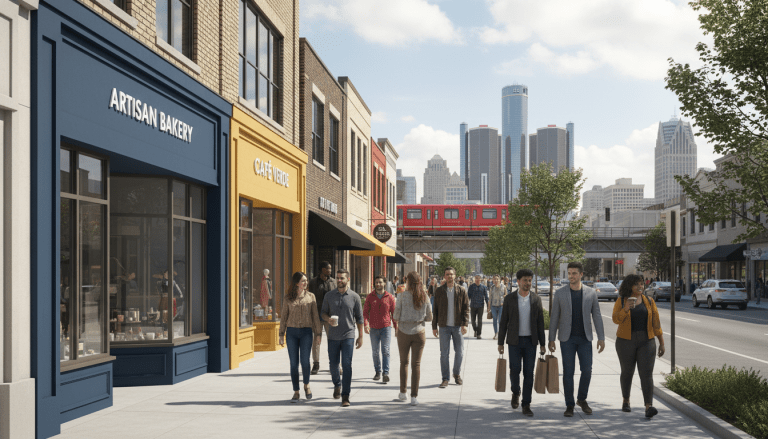
As coastal hubs continue to grapple with exorbitant operating costs and saturated markets, mid-sized Midwestern cities are becoming increasingly attractive alternatives. Detroit, with its revitalized downtown core and the high-profile launch of the Michigan Central innovation district, is positioning itself as a viable contender for headquarters and regional hubs.
The Drivers Behind the Move
The decision for a business to uproot or expand is never taken lightly. According to reports from the Detroit Economic Growth Corporation (DEGC), the city has seen increased inquiries from sectors outside of traditional manufacturing, including fintech, green energy, and logistics.
Several key factors are fueling this interest:
- Cost Efficiency: Commercial Class A office space in Detroit remains significantly more affordable than in Chicago, New York, or San Francisco.
- Talent Pipeline: With major research universities like the University of Michigan and Wayne State University nearby, companies have access to a steady stream of engineering and business graduates.
- Infrastructure Investment: The city’s focus on modernizing transportation and the availability of move-in-ready historic renovations offer unique branding opportunities for companies.
“We are seeing a change in the conversation,” noted a representative from a local commercial real estate firm during a recent development summit. “Ten years ago, the discussion was about stabilization. Today, the discussion regarding Detroit business growth is about expansion and talent acquisition.”
Impact on Detroit Residents
While the influx of businesses serves as a boost to the city’s tax base, the trend of corporate relocation to Detroit brings complex implications for long-time residents. On one hand, the arrival of new companies promises job creation. The city’s ‘Detroit at Work’ program has been active in trying to ensure that these new roles are accessible to Detroiters, not just imported talent.
However, increased corporate presence often correlates with rising property values in surrounding neighborhoods. Local housing advocates have expressed caution, urging city officials to maintain strict requirements for affordable housing and community benefits agreements (CBAs) when approving large-scale commercial developments.
“Development is welcome, but it must be inclusive,” says a community organizer from the Corktown neighborhood. “If a company moves here, we need to see them hiring from the neighborhood and supporting local supply chains.”
Real Estate and Market Data
The commercial real estate sector is arguably the most visible beneficiary of this trend. Vacancy rates in the Central Business District (CBD) have fluctuated as hybrid work patterns settle, yet the demand for high-quality, amenity-rich office space remains resilient.
Data suggests that companies are opting for smaller, higher-quality footprints rather than sprawling campuses. This aligns with the renovation of historic structures in the Detroit Real Estate market, where businesses seek spaces with character to attract employees back to the office.
What Happens Next?
Looking ahead to 2025 and beyond, the trajectory of corporate movement into the city will likely depend on the continued stability of the state’s tax environment and the success of the innovation districts currently under construction. If the city can balance the needs of incoming enterprises with the welfare of its existing population, Detroit could solidify its status not just as a manufacturing giant, but as a diversified corporate hub.