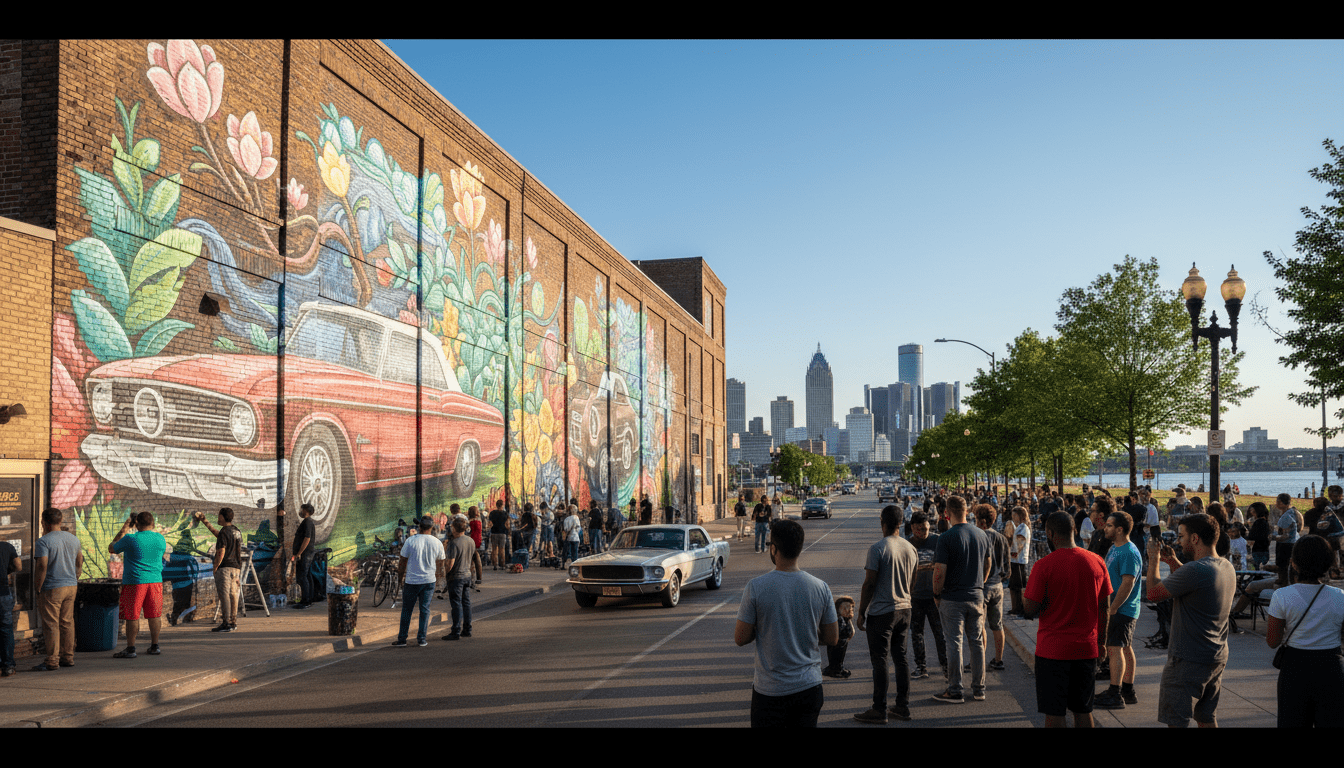
From the raw industrial spaces of the Russell Industrial Center to the polished galleries of Midtown, the Detroit art scene has long been a mirror of the city’s resilience. What was once characterized by underground movements and DIY creative spaces is now maturing into a robust economic engine, supported by institutional investment and a designated UNESCO City of Design status.
While the automotive industry remains the city’s historic backbone, data indicates that the creative economy is rapidly becoming a defining pillar of Detroit’s future. Local artists are no longer just beautifying neighborhoods; they are driving tourism, influencing real estate development, and reshaping the city’s narrative on a global stage.
The Economic Impact of the Detroit Art Scene
The transition from hobbyist collectives to sustainable creative businesses is evident across the city. According to reports from Design Core Detroit, the city’s design and creative economy employs more than 45,000 people and generates billions in annual revenue. This shift is not accidental but the result of deliberate policy and community effort.
“We are seeing a pivotal moment where art is recognized as labor and industry, not just decoration,” says a representative from a Midtown gallery association. “The investment in public art, specifically, has changed foot traffic patterns in neighborhoods that were previously overlooked.”
This economic ripple effect is closely tied to Detroit development projects. Developers are increasingly commissioning local muralists and sculptors to integrate work into new housing and commercial spaces, recognizing that cultural capital drives property value. However, this synergy brings its own set of challenges regarding affordability for the very artists creating this value.
Impact on Detroit Residents and Neighborhoods
For long-time residents, the flourishing Detroit art scene offers both pride and tangible benefits. Public art installations in parks and alleyways—such as the celebrated murals in Eastern Market—have transformed neglected infrastructure into community gathering spaces. The City of Detroit’s Office of Arts, Culture and Entrepreneurship (Detroit ACE) has been instrumental in ensuring that this beautification reaches all seven districts, not just the downtown core.
“It changes how you feel about your walk to school or work,” explains a resident of the North End, referring to the increasing number of sculptures and murals in residential zones. “It feels like the city cares about us.”
However, the conversation often turns to accessibility. As the profile of Detroit’s creatives rises, so does the cost of studio space. Organizations like the Kresge Foundation have stepped in with significant grants to ensure individual artists can sustain their practice within city limits, preventing the displacement often seen in other cultural capitals like New York or San Francisco.
Background & Data: Funding the Future
The sustainability of the creative sector relies heavily on a mix of philanthropic support and private investment. Data from the Kresge Arts in Detroit initiative shows that millions of dollars have been injected directly into the hands of local artists over the last decade. These fellowships provide “no strings attached” funding, allowing creators the financial freedom to experiment and grow.
Furthermore, Detroit’s designation as the first UNESCO City of Design in the United States continues to attract international attention. This status helps local designers and architects secure contracts and collaborations that might otherwise go to coastal firms. It positions Detroit not just as a consumer of culture, but as a primary producer.
What Happens Next
Looking ahead to 2025 and beyond, the focus is shifting toward infrastructure that supports long-term careers in the arts. Proposals for affordable artist housing and co-op studio spaces are currently being discussed by city planners and private developers. The goal is to ensure that the creators who built the reputation of the Detroit art scene can afford to stay and thrive in it.
As the city continues to evolve, the integration of arts into broader Detroit local living initiatives will be crucial. The challenge remains balancing high-end cultural tourism with the grassroots authenticity that put Detroit on the artistic map in the first place.