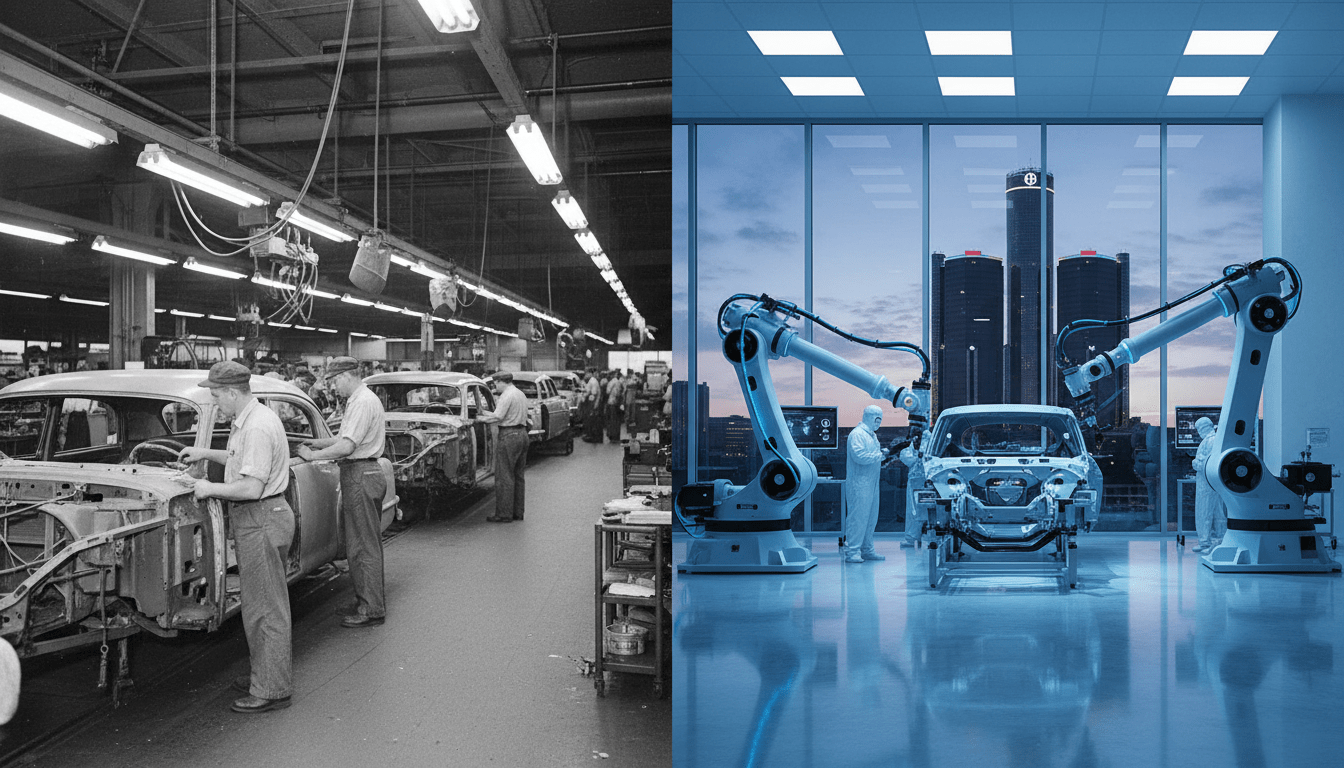
For decades, the narrative surrounding Detroit has been inextricably linked to the rise and fall of American manufacturing. However, as the global automotive sector undergoes its most significant transformation since the invention of the assembly line, the "Motor City" is not merely resting on its laurels. Instead, Detroit is aggressively positioning itself as the epicenter of the next generation of mobility, shifting from a legacy of combustion engines to a future defined by electrification, autonomy, and software.
The Detroit auto industry future is no longer just about bending steel; it is about coding software, engineering battery chemistries, and redesigning urban infrastructure. With billions of dollars in investment pouring into Southeast Michigan from the "Big Three"—Ford, General Motors, and Stellantis—alongside a burgeoning startup ecosystem, the city is staking its claim to lead the electric vehicle (EV) revolution.
“We are seeing a fundamental shift in the DNA of Detroit,” says a recent economic report from the Detroit Regional Chamber. “The convergence of Silicon Valley technology and Detroit manufacturing muscle is creating a new industrial identity for the region.”
The Electric Revolution and Infrastructure Investment
At the heart of this transition is the rapid pivot toward electric vehicles. General Motors has led the charge locally with the transformation of its Detroit-Hamtramck Assembly Center into Factory ZERO, an all-electric vehicle assembly plant. This facility serves as a tangible symbol of the industry’s commitment to a zero-emissions future.
Similarly, Ford Motor Company is reshaping the landscape, quite literally, with its restoration of the historic Michigan Central Station in Corktown. This development is not just a real estate play; it is designed to be an innovation hub focused on mobility solutions. By clustering talent and technology companies in one distinct district, Ford aims to accelerate the development of autonomous technologies that will define the Detroit auto industry future.
According to data from the Michigan Economic Development Corporation (MEDC), Michigan has secured more than $16 billion in EV and battery manufacturing investments since 2019. A significant portion of this capital is flowing directly into Detroit and its immediate suburbs, ensuring that the supply chains of tomorrow are rooted in the region.
Impact on Detroit Residents: Jobs and Training
For the residents of Detroit, this high-tech transition presents both massive opportunities and significant challenges. The primary question on the minds of local community leaders is whether the existing workforce can pivot to meet the demands of advanced manufacturing.
The shift to EVs requires fewer parts than internal combustion engines, which has raised concerns about job contraction in traditional powertrain sectors. However, the rise of battery plants and software integration is creating new roles that demand higher technical skills. The City of Detroit has partnered with various organizations to bridge this gap.
Programs like Detroit at Work are actively recruiting residents for training in robotics and electrical engineering support. Mayor Mike Duggan has emphasized repeatedly that Detroiters must be "first in line" for the jobs created by these new facilities. Local residents are seeing a shift from traditional assembly line work to roles that require interaction with complex digital interfaces.
“It’s not just about bolting things together anymore,” said a training coordinator at a local workforce development center. “We are preparing Detroiters for careers where they are monitoring automated systems and managing data. The pay is often better, but the barrier to entry is higher, which is why these training programs are critical.”
Merging Tech and Manufacturing
The battle for the future of the car is often framed as Detroit vs. Silicon Valley. However, recent trends suggest a merger of these two worlds. While California tech giants excel at user interfaces and autonomous algorithms, they have struggled with the complexities of mass manufacturing scale—an area where Detroit remains the undisputed king.
This reality has led to a surge in tech-focused startups setting up shop in the city. The Detroit auto industry future is becoming increasingly dependent on partnerships between legacy automakers and agile tech firms. These collaborations are focused on "software-defined vehicles," where a car’s features can be upgraded over the air, much like a smartphone.
For further reading on how local startups are influencing the economy, check out our coverage on Detroit’s emerging tech sector.
Background & Data: The Economic Stakes
The stakes for the local economy could not be higher. According to the Center for Automotive Research, the automotive sector remains the largest single contributor to Michigan’s GDP. However, the global market is fierce. China has taken an early lead in EV battery production and supply chain dominance.
To counter this, federal incentives from the Inflation Reduction Act have made domestic manufacturing more attractive, directly benefiting Detroit. Local economists point out that the multiplier effect of an auto job is high; for every job created at an assembly plant, multiple jobs are created in logistics, local services, and component manufacturing.
- Investment Volume: Over $12 billion committed to EV projects in Southeast Michigan in the last three years.
- Job Growth: Advanced mobility sector jobs have grown by 15% year-over-year in the region.
- Infrastructure: The state plans to deploy thousands of public charging ports, with a focus on equitable access in Detroit neighborhoods.
What Happens Next?
Looking ahead to 2030, the landscape of Detroit will likely look vastly different. The integration of the Detroit auto industry future with smart city infrastructure implies that the cars produced here will talk to the traffic lights, the parking garages, and each other.
However, the transition will be bumpy. Supply chain disruptions, high interest rates, and consumer adoption rates for EVs remain hurdles. Yet, the consensus among industry experts is that if the auto industry is to survive the century, it will do so by evolving—and that evolution is happening right now on the streets of Detroit.
As the lines between a car company and a tech company blur, Detroit is proving that it has the resilience and the innovation capacity to drive the world forward once again.