
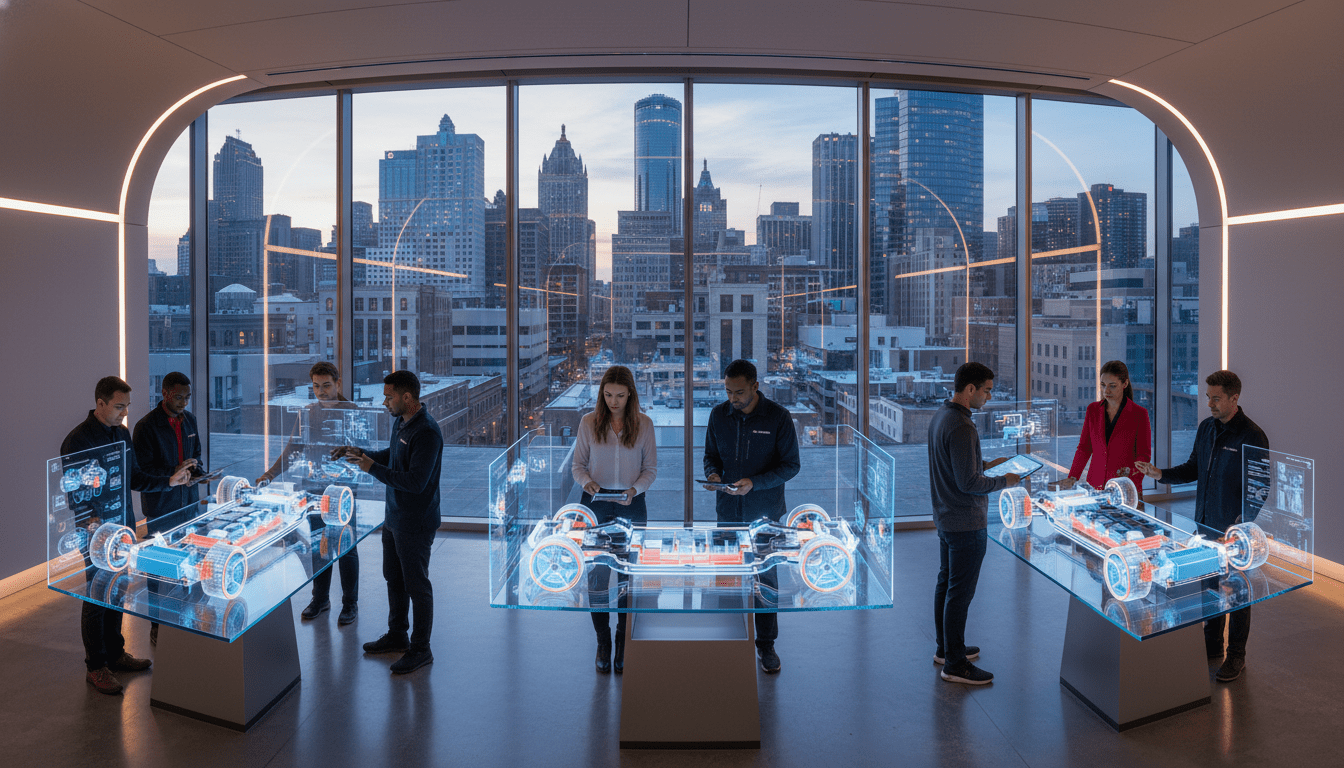
Detroit is currently undergoing a profound transformation that goes far beyond the assembly line. While the city has long been known as the manufacturing capital of the world, a quiet revolution in Detroit automotive design and engineering is repositioning the region as a global hub for mobility technology. As the industry pivots toward electric vehicles (EVs) and software-defined vehicles (SDVs), the demand for high-tech talent is reshaping the local economy and the very fabric of the city.
For decades, the narrative surrounding Detroit focused on industrial capacity—how many units could roll off the line at heavy manufacturing plants. Today, however, the focus has shifted upstream to the research and development centers in Dearborn, Warren, and Detroit’s Corktown neighborhood. The emerging focus on integrating artificial intelligence, advanced battery architecture, and user experience (UX) design into vehicles is creating a new identity for the Motor City.
The Shift to Software-Defined Vehicles
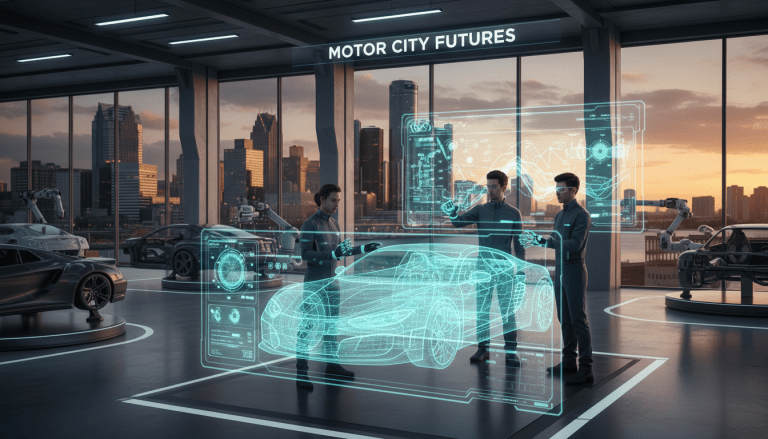
The modern vehicle is increasingly viewed as a computer on wheels, a shift that has forced legacy automakers to fundamentally rethink their approach to vehicle development. According to recent industry analyses, the value of software in vehicles is projected to outpace mechanical hardware within the next decade. This transition places Detroit automotive design at the intersection of traditional mechanical engineering and Silicon Valley-style software development.
Local industry experts note that this shift is driving major investments in the region. Ford’s restoration of the Michigan Central Station is perhaps the most visible symbol of this pivot. The campus is designed not as a factory, but as an innovation district intended to attract coders, designers, and mobility engineers who might otherwise look to the West Coast.
“We are seeing a convergence where the mechanical engineer and the software developer must work in tandem from day one,” said a spokesperson for the Detroit Regional Chamber in a recent economic outlook briefing. “This requires a new kind of collaborative workspace and a new approach to urban planning in Detroit.”
Major Investments in Local Engineering
General Motors and Stellantis are also doubling down on their engineering footprints in Southeast Michigan. GM’s continued investment in its Global Technical Center in Warren highlights the durability of the region’s engineering prowess. Meanwhile, Stellantis has emphasized the importance of its North American design studios in crafting the next generation of electrified Jeeps and Rams.
This consolidation of engineering talent is vital. Data from the Michigan Economic Development Corporation (MEDC) suggests that Michigan has the highest concentration of engineering talent in the nation. By anchoring these high-value jobs in and around Detroit, automakers are ensuring that the intellectual property of the next century of transportation remains rooted in Michigan.
Impact on Detroit Residents
For Detroit residents, this shift presents both opportunities and challenges. On one hand, the surge in engineering and design roles brings high-paying jobs to the area, boosting the local tax base and supporting small businesses in neighborhoods like Corktown, Midtown, and New Center.
However, access to these opportunities requires specialized education. Local institutions are stepping up to bridge the gap. Detroit education initiatives at Wayne State University and the College for Creative Studies (CCS) are increasingly focused on mobility design and mechatronics. The goal is to ensure that Detroiters are not just spectators to this renaissance but active participants.
“The pathway from Detroit public schools to a career in automotive design needs to be paved with robust STEM programs,” said a representative from a local workforce development non-profit. “We are working to ensure that when these companies look for talent, they find it right here in the city.”
This economic ripple effect is already visible. Restaurants and retail spaces near innovation hubs are seeing increased foot traffic during weekdays, driven by the influx of white-collar professionals returning to office environments or hybrid workspaces.
Background & Data: The Engineering Job Market
The demand for specialized skills in Detroit automotive design is backed by hard numbers. According to labor market data, postings for automotive software engineers and battery systems engineers in Metro Detroit have risen steadily over the last three years, even as traditional manufacturing roles fluctuate.
- Engineering Concentration: Southeast Michigan holds a location quotient for mechanical and industrial engineers that is significantly higher than the national average.
- EV Investment: Billions of dollars have been committed to EV product development within the state, directly fueling the need for design and testing facilities.
- UX/UI Focus: As screens dominate vehicle interiors, the demand for digital designers in the automotive sector has skyrocketed.
This trend reinforces the necessity of the city’s strategy to position itself as a “mobility city” rather than just a “motor city.” The distinction is subtle but critical: one implies movement and service, while the other implies machinery.
Looking Ahead: The Future of Mobility
What happens next for Detroit depends on the successful execution of these high-tech initiatives. The competition is fierce, with technological hubs in California, Texas, and China all vying for dominance in the EV space. However, Detroit possesses a unique advantage: the ability to integrate design with mass production capability.
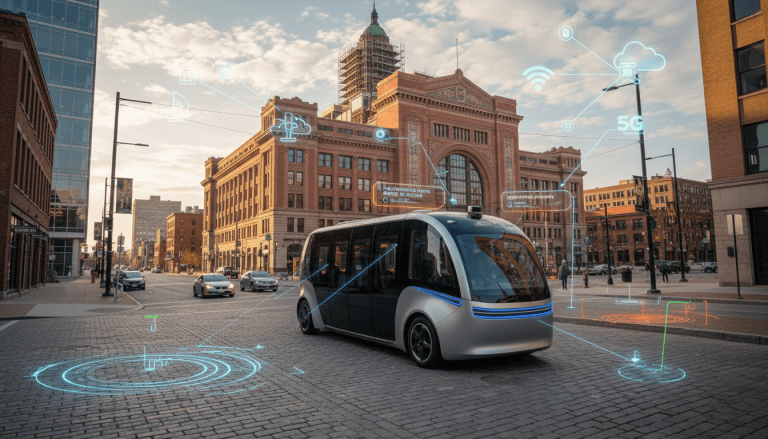
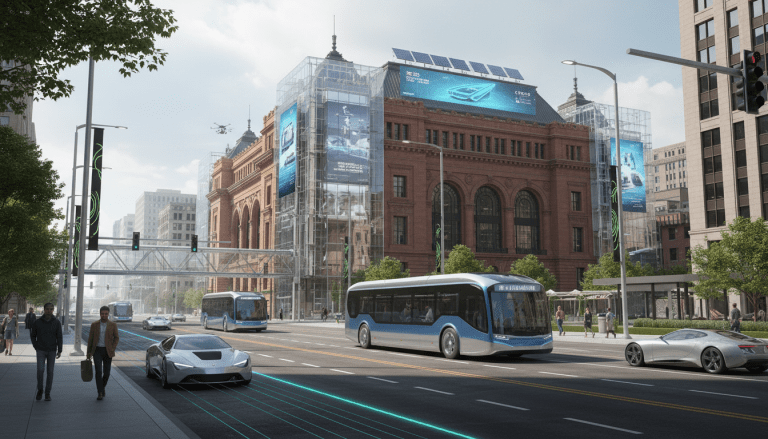
As we look toward 2026 and beyond, the integration of autonomous systems will likely be the next frontier for Detroit automotive design. City planners are already discussing how infrastructure—such as smart traffic lights and connected roadways—can communicate directly with the vehicles being designed just miles away.
For more on how local businesses are adapting to these changes, read our coverage on local business technology adaptations.
Ultimately, the story of Detroit’s automotive future is being written in code as much as it is in steel. For the residents of this city, the engineering revolution offers a promise of renewed economic vitality, provided that educational pathways continue to open doors for local talent.