
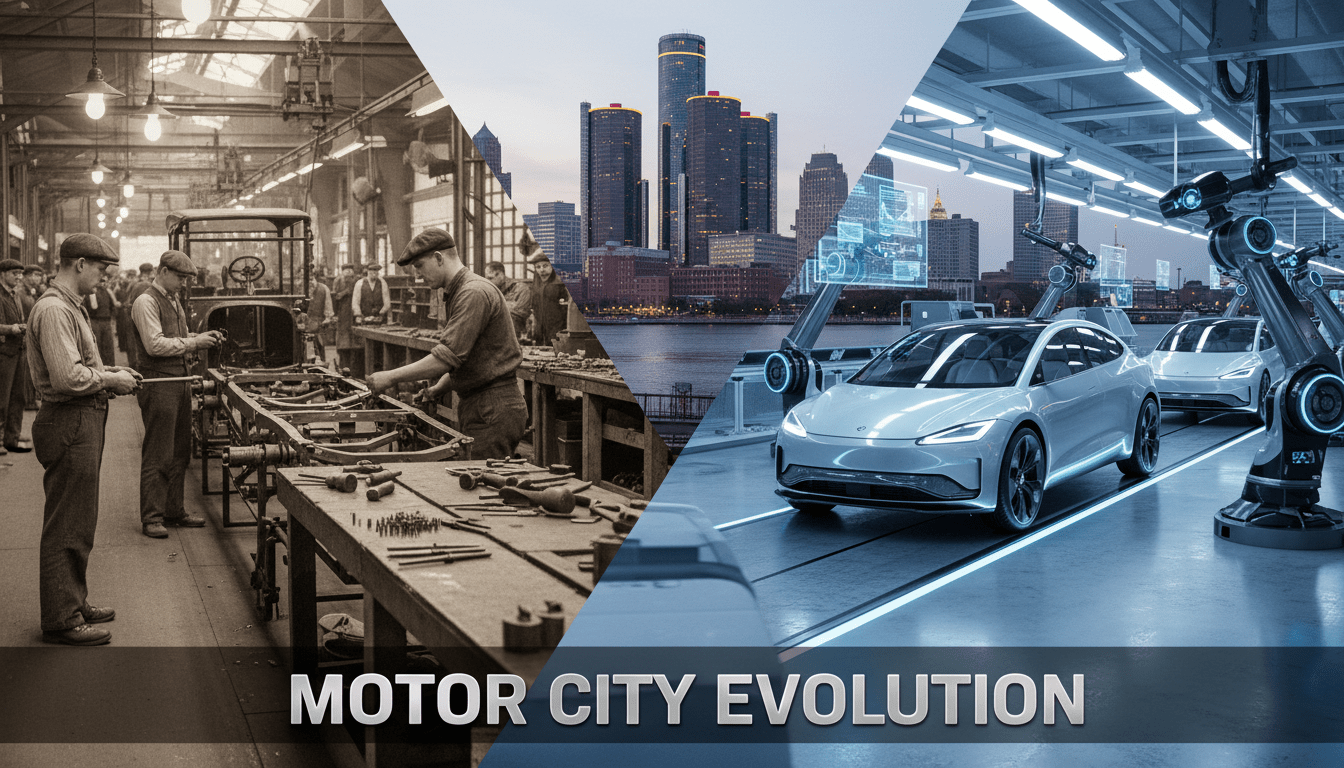
For over a century, the global identity of Detroit has been inextricably linked to the internal combustion engine. While the city has evolved into a hub for technology, art, and culinary innovation, Detroit’s automotive history remains the bedrock upon which the region’s economy and culture were built. As the industry pivots toward electrification, local historians and economic experts are reflecting on how the early days of the assembly line established a framework that continues to define the lives of Detroiters today.
The story of the Motor City is often simplified into a tale of three companies: Ford, General Motors, and Chrysler (now Stellantis). However, a deeper look reveals a complex tapestry of innovation, labor movements, and urban planning that created the modern middle class. According to data from the Detroit Historical Society, the city was once home to over 125 auto companies in the early 20th century, a concentration of mechanical talent that rivals the density of Silicon Valley tech firms today.
The Birth of Mass Production
The catalytic moment in Detroit’s automotive history occurred at the Ford Piquette Avenue Plant. It was here, in 1908, that the Model T was designed and first built. However, it was the subsequent implementation of the moving assembly line at the Highland Park plant that truly revolutionized the world.
“The assembly line didn’t just change how cars were made; it changed how people lived,” notes Dr. Sarah Miller, an industrial historian specializing in the Midwest. “It reduced the time to build a chassis from 12 hours to roughly 90 minutes, making the automobile affordable for the masses rather than a toy for the wealthy.”
This efficiency allowed Henry Ford to introduce the $5 workday in 1914, more than doubling the average wage for unskilled labor at the time. This move triggered a massive migration to Detroit from the American South and Europe, causing the city’s population to surge. The architectural footprint of this era is still visible in neighborhoods like Boston-Edison and the historic districts surrounding the grand boulevards, which were built to house the booming management and labor classes.
The Arsenal of Democracy
Detroit’s manufacturing prowess faced its greatest test during World War II. The automotive industry halted civilian car production entirely to manufacture tanks, bombers, and Jeeps. The Willow Run plant, built by Ford, famously produced one B-24 Liberator bomber every hour.
President Franklin D. Roosevelt referred to Detroit as the “Arsenal of Democracy,” a title that local institutions still wear with pride. According to the National Park Service, which manages the MotorCities National Heritage Area, this era solidified Detroit’s reputation not just as a car builder, but as a global manufacturing superpower. The legacy of this wartime mobilization shaped the city’s infrastructure, leading to the rapid expansion of expressways to transport goods and workers across the region.
Preserving Industrial Landmarks
In recent years, there has been a concerted effort to preserve the physical remnants of Detroit’s automotive history. The restoration of Michigan Central Station by Ford Motor Company serves as the centerpiece of this movement. Once the gateway to the city, the station sat vacant for decades, becoming a symbol of decline. Its reopening as an innovation hub symbolizes the industry’s evolution.
However, preservation remains a challenge. The sprawling Packard Automotive Plant, once the most modern factory in the world, has faced partial demolition after years of failed redevelopment attempts. City officials have had to balance the respect for historical significance with the practical needs of modern residents and the dangers posed by decaying structures.
“We cannot save every brick, but we must save the stories and the spirit of innovation,” said a spokesperson for the City of Detroit Planning and Development Department during a recent town hall on industrial reuse. “The goal is to repurpose these spaces for the next generation of manufacturing jobs.”
Impact on Detroit Residents
For locals, the automotive industry is not just history; it is a daily reality. The heritage of the “Big Three” still influences local employment rates, tax bases, and philanthropic efforts. Thousands of Detroit families have multi-generational ties to the assembly lines, with grandfathers, mothers, and sons all carrying UAW cards.
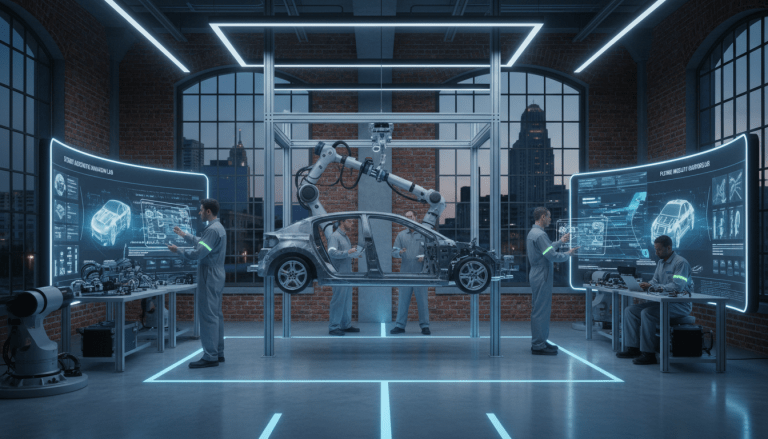
This deep connection impacts the local economy significantly. When the auto industry thrives, Detroit’s small businesses—from Coney Island diners to logistics startups—thrive with it. Conversely, the shift toward electric vehicles (EVs) is creating anxiety and opportunity in equal measure. While EV production requires fewer parts and potentially fewer workers, it also requires new skill sets.
Local educational institutions, including Wayne State University and community colleges, are ramping up programs to retrain the workforce. This ensures that the residents who built the internal combustion legacy are not left behind as the industry transforms.
The Future: From Motor City to Mobility City
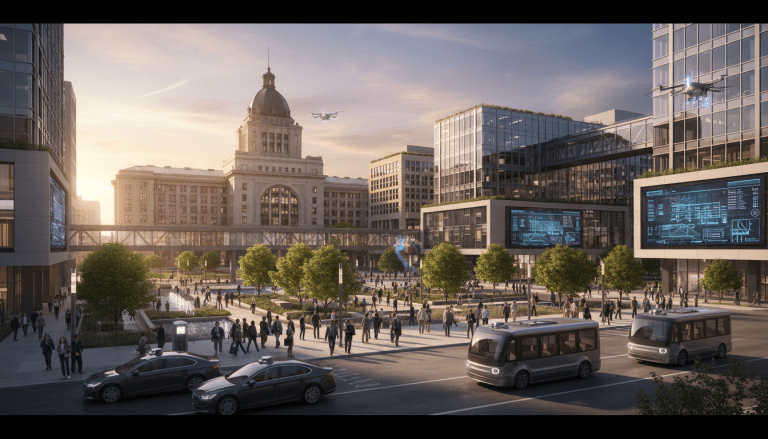
As we look toward 2025 and beyond, Detroit is rebranding itself from the “Motor City” to a leader in global mobility. This distinction is subtle but important. It encompasses autonomous driving, public transit integration, and electrification.
Investments in the Corktown neighborhood, anchored by the Michigan Central innovation district, are attracting startups focused on mobility solutions. Furthermore, the Detroit Regional Partnership reports that Michigan remains the top state for automotive R&D spending, ensuring that the intellectual capital remains centered here.
While the smokestacks of the 1920s are gone or dormant, the drive that created them remains. Detroit’s automotive history provides the blueprint for resilience and reinvention. As the world watches the transition to green energy, Detroit is once again positioning itself at the steering wheel, ready to define movement for the next century.