
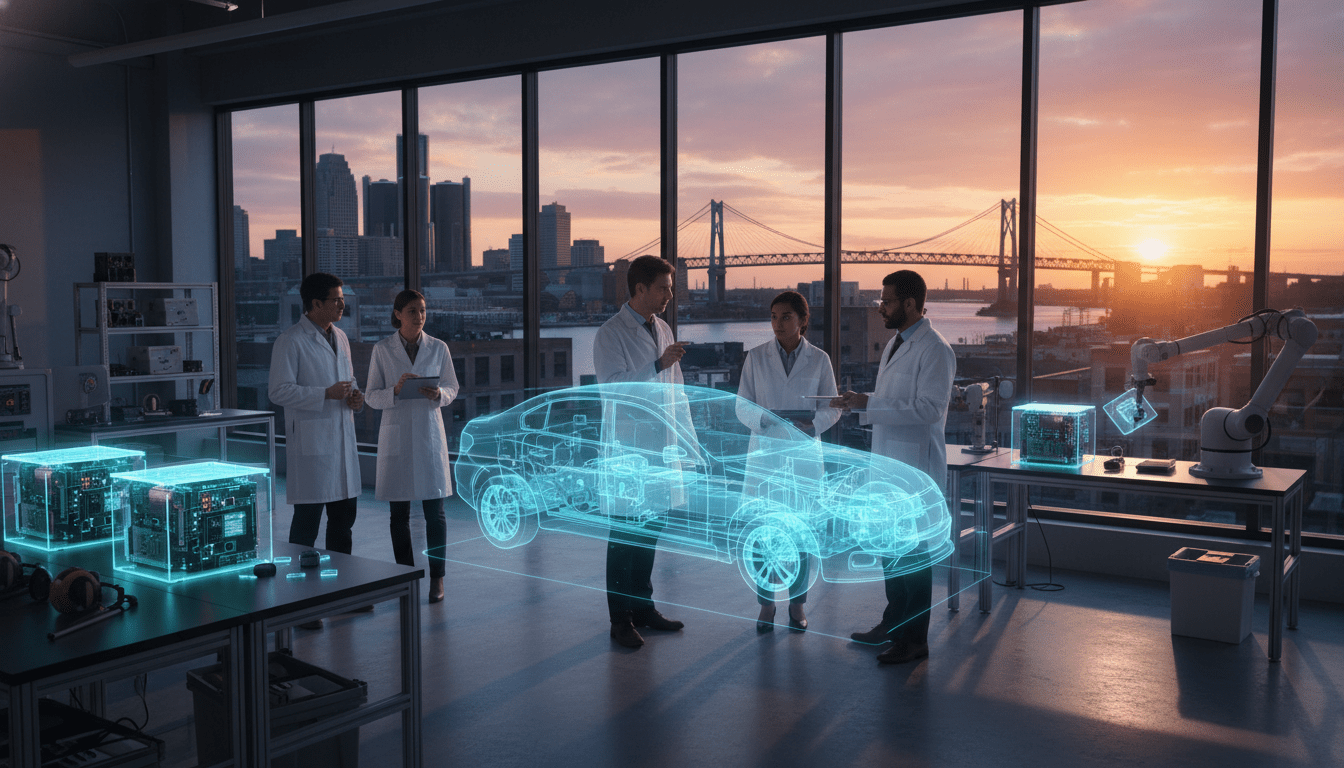
Detroit, long hailed as the Motor City, is undergoing a profound transformation that is redefining its identity on the global stage. While the region remains a manufacturing powerhouse, a subtle yet significant shift is occurring: the center of gravity is moving from the assembly line to the laboratory. Detroit automotive research institutions are rapidly becoming the primary engines of economic growth, spearheading innovations in electric vehicles (EVs), autonomous driving systems, and connected infrastructure.
As the automotive industry pivots toward a software-defined future, Detroit is leveraging its century of industrial expertise to compete directly with Silicon Valley. From the revitalization of Michigan Central to the advanced laboratories at Wayne State University, the city is building a dense ecosystem of R&D facilities designed to solve the most complex challenges of modern mobility.
The New Hubs of Innovation
The landscape of Detroit automotive research is anchored by a mix of historic institutions and cutting-edge startups. Perhaps the most visible symbol of this evolution is the Michigan Central innovation district. Spearheaded by Ford Motor Company, the restored train station and surrounding campus in Corktown have been designated as a mobility innovation district. Here, researchers, startups, and established tech giants collaborate on real-world solutions for urban transportation.
“What we are seeing in Corktown is the convergence of public policy, private investment, and academic research,” said a spokesperson for the Detroit Regional Chamber. “It is no longer just about building cars; it is about designing the entire ecosystem in which those cars operate.”
Meanwhile, Wayne State University plays a critical role in the academic sector of Detroit automotive research. The university’s College of Engineering has expanded its focus on cyber-physical systems and battery technology. Their researchers are working on critical safety protocols for autonomous vehicles, ensuring that self-driving cars can navigate Detroit’s unique weather conditions and urban layout safely.
Furthermore, the Detroit Smart Parking Lab, located in the Bedrock-owned Assembly Garage, serves as a prime example of public-private partnership. This open innovation platform allows mobility companies to test parking-related technologies, automated valet parking, and EV charging in a real-world environment.
Focusing on Electrification and Autonomy
The primary thrust of current research is twofold: electrification and autonomy. According to data from the Michigan Economic Development Corporation (MEDC), the state has attracted billions in investment specifically for EV battery manufacturing and R&D. However, the intellectual property—the chemistry of the batteries and the code for the battery management systems—is largely being developed within the metro Detroit area.
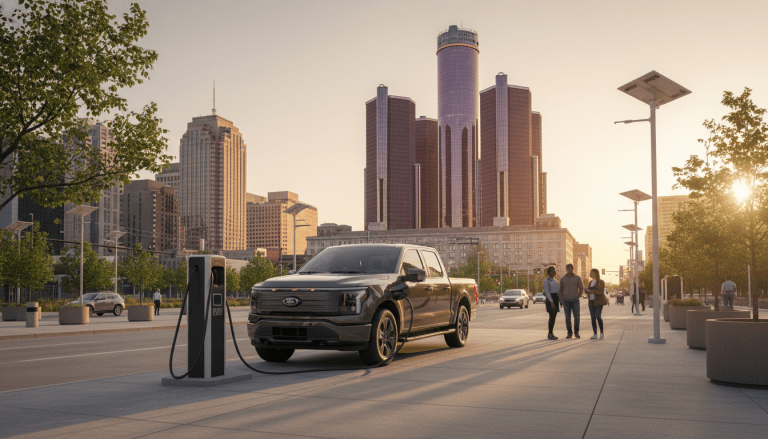
Local research institutions are tackling the “range anxiety” problem by developing solid-state batteries that promise faster charging times and longer life spans. Simultaneously, safety remains a top priority. Researchers are utilizing the American Center for Mobility (ACM) in nearby Ypsilanti, a facility closely tied to Detroit’s engineering firms, to simulate edge-case driving scenarios that are too dangerous to test on public roads.
For more on how this shift impacts the local job market, read our coverage on the growing tech sector in Detroit.
Impact on Detroit Residents
The boom in Detroit automotive research is not just corporate news; it has tangible effects on the daily lives of Detroiters. The most immediate impact is the changing nature of employment. As the industry demands more software engineers, data scientists, and electrical engineers, local universities and workforce development programs are rushing to upskill the local population.
“The days of walking into a factory with a high school diploma and staying for 30 years are fading,” noted a representative from a local workforce development agency. “But they are being replaced by opportunities in high-tech testing, quality assurance, and digital infrastructure maintenance.”
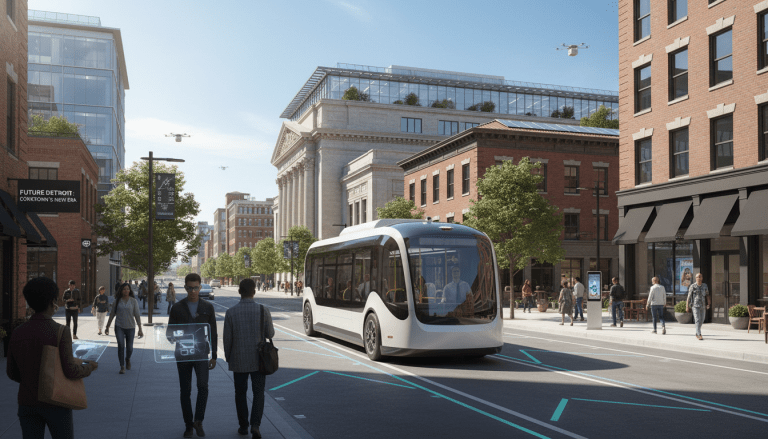
Residents are also serving as the first beneficiaries—and testers—of these technologies. Pilot programs for autonomous shuttles and smart traffic lights are often deployed in Detroit neighborhoods first. This “living lab” approach aims to improve traffic safety and reduce congestion for locals, though it also raises important questions about data privacy and infrastructure equity that city officials continue to debate.
Background & Data: The R&D Boom
To understand the scale of this transition, one must look at the numbers. The automotive sector is the largest investor in research and development in the United States, and a massive portion of that spending happens in Michigan. According to the National Science Foundation, business R&D performance in Michigan is heavily concentrated in the auto industry.
- Investment Volume: Automakers have committed over $10 billion to EV and battery manufacturing in Michigan since 2019, with significant portions dedicated to R&D centers.
- Patent Generation: The Detroit metro area consistently ranks among the top regions in the country for mobility-related patents, particularly in vehicle-to-everything (V2X) communications.
- Talent Density: Michigan has the highest concentration of electrical and mechanical engineers in the country, a statistic that fuels the research capabilities of local institutions.
This data underscores that while manufacturing plants may be spreading to the American South, the “brain trust” of the industry remains firmly rooted in Detroit.
What Happens Next?
Looking ahead, the role of Detroit automotive research institutions will only grow as the 2030 targets for EV adoption approach. The next frontier is the integration of artificial intelligence into vehicle manufacturing and operation. Local institutions are already beginning to explore how AI can optimize traffic flows in real-time to reduce emissions.
However, challenges remain. The region must compete fiercely for talent against coastal tech hubs. To sustain this momentum, Detroit must continue to make itself an attractive place for young researchers to live and work. For insights on the city’s economic forecast, check out our analysis on Detroit’s economic outlook for 2025.
As the definition of “automotive” expands to include software, connectivity, and clean energy, Detroit’s research institutions are ensuring that the city does not just witness the future of mobility, but actively writes the code for it.