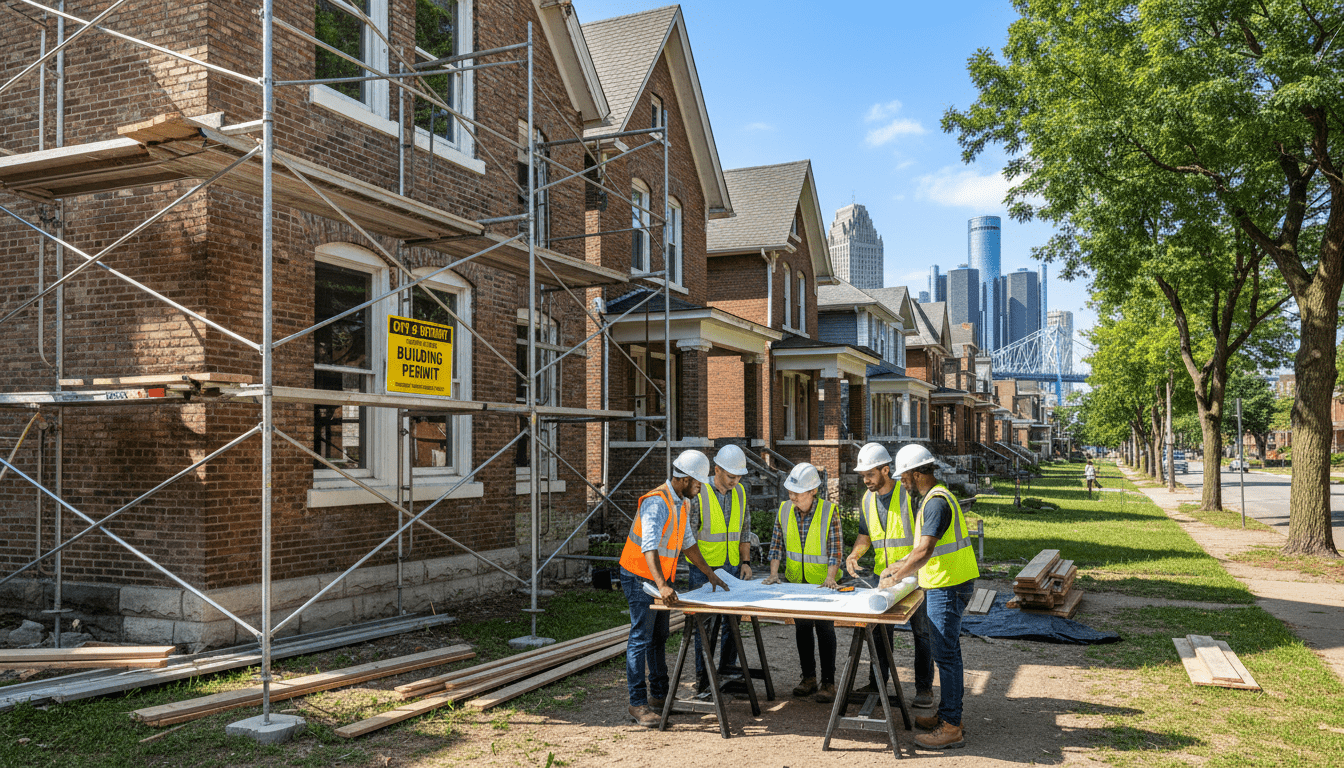
The landscape of Detroit construction is shifting, marked by a measurable increase in the issuance of Detroit building permits across both commercial and residential sectors. As the city continues its trajectory of economic recovery, data from the Buildings, Safety Engineering, and Environmental Department (BSEED) suggests that development is moving beyond the downtown core and firmly planting roots in the city’s historic neighborhoods.
This uptick in permitting activity serves as a critical economic indicator for the region. While headlines often focus on large-scale developments like the Hudson’s site or the Michigan Central Station, the aggregate volume of smaller residential permits indicates a broader trend of stabilization and investment by individual homeowners and small-scale developers. City officials report that the modernization of the permitting process has played a significant role in this increase, removing barriers that previously stalled rapid construction.
The Data Behind the Construction Boom
According to recent reports released by the City of Detroit, there has been a steady year-over-year increase in permit applications. This growth is not limited to new construction; a significant portion of the volume is attributed to renovations and rehabilitation projects. This aligns with the city’s broader strategy to combat blight by renovating existing structures rather than demolishing them.
“We are seeing a diversity in the types of applications coming through,” a spokesperson for BSEED noted in a recent public statement regarding urban planning. “It is no longer just commercial entities. We are seeing a distinct rise in homeowners applying for permits to upgrade roofs, electrical systems, and structural elements. This signals that residents are betting on Detroit’s future.”
Data from the U.S. Census Bureau regarding housing starts in the Midwest supports this local trend. While national housing starts have fluctuated due to interest rate volatility, Detroit has maintained a resilience driven by relatively affordable property acquisition costs and various incentive programs designed to spur Detroit development.
Streamlining the Process: The Shift to Digital
One of the primary catalysts for the rise in Detroit building permits has been the transition to digital systems. Historically, obtaining a permit in Detroit was viewed by contractors and residents as a cumbersome, paper-heavy bureaucratic hurdle. However, the full adoption of the ePLANS system has streamlined the submission and review process.
Local contractors have expressed cautious optimism regarding these changes. “Five years ago, you might wait weeks for a simple approval on a renovation,” said Mark Reynolds, a general contractor operating in the Bagley and University District neighborhoods. “Now, the transparency is better. You can track where your application sits in the queue. It isn’t perfect, but the friction has been reduced significantly, which allows us to get to work faster.”
The City of Detroit’s Buildings, Safety Engineering, and Environmental Department (BSEED) has emphasized that code compliance remains the top priority. The digital shift does not mean a relaxation of standards, but rather a more efficient way to ensure safety regulations are met without unnecessary administrative delays.
Impact on Detroit Residents
For the average Detroiter, the rise in building permits translates to tangible changes in the streetscape. An increase in permitted work means fewer projects are being done “under the table,” which improves the overall safety and quality of the city’s housing stock. Regulated construction ensures that electrical wiring, plumbing, and structural modifications meet safety codes, reducing fire hazards and long-term maintenance issues.
Furthermore, the surge in permits correlates with rising property values. As neighborhoods see more verified, high-quality renovations, comparable home prices tend to stabilize and rise. This is a double-edged sword that the city is monitoring closely; while revitalization is the goal, officials are wary of displacement. To combat this, the city has promoted programs like the 0% Interest Home Repair Loan Program, helping long-time residents secure the necessary Detroit building permits to maintain their homes without facing financial ruin.
Residents in neighborhoods like Jefferson Chalmers and the Villages have reported seeing a visible difference. “There are dumpsters in driveways and permit signs in windows on blocks that were quiet for a decade,” said Sarah Jenkins, a resident of the Islandview neighborhood. “It feels like the neighborhood is waking up, but we want to make sure the improvements remain accessible to everyone living here.”
Compliance and Safety Challenges
Despite the positive trends, challenges remain. Unauthorized construction continues to be an issue in certain pockets of the city. Operating without a permit can lead to stop-work orders, heavy fines, and the potential need to tear down completed work. The city has ramped up enforcement, deploying inspectors to identify active construction sites that lack the proper documentation.
This enforcement is particularly crucial for Detroit housing safety. With many of Detroit’s homes being over a century old, proper remediation of lead paint and asbestos is a requirement often checked during the permitting process. Unpermitted work bypasses these environmental safeguards, posing health risks to occupants.
Local advocacy groups have urged the city to continue providing educational workshops for DIY homeowners. Navigating zoning laws and historic district requirements can be daunting for residents who are not professional developers. The Historic District Commission, for example, requires specific approvals for exterior work in designated areas, adding a layer of complexity to the standard building permit application.
Commercial Development and Future Outlook
On the commercial side, permit data shows a pivot toward mixed-use developments. The trend of converting industrial spaces into residential lofts with ground-floor retail continues to drive permit volume. These complex projects require multi-layered approvals, involving zoning changes, fire safety reviews, and utility assessments.
Looking ahead to the next fiscal year, experts predict the volume of Detroit building permits will continue to grow, provided that interest rates stabilize. The demand for housing, coupled with the city’s incentives for blight removal, creates a favorable environment for construction.
However, the labor market remains a bottleneck. While permits grant the legal right to build, finding skilled labor—electricians, plumbers, and carpenters—to execute the work is an ongoing challenge in Southeast Michigan. Local trade schools and workforce development programs are racing to fill this gap, ensuring that the physical capacity to build matches the administrative permission to do so.
As Detroit moves forward, the humble building permit remains a powerful symbol of progress. It represents a legal commitment to the city’s future, a standard of safety for its residents, and a measurable sign that the Motor City is rebuilding itself, one approved application at a time.