
By Sarah Jenkins
Published: October 24, 2025
Location: Detroit, Michigan
Resilience and Reinvention: The State of the Detroit Business Climate in 2025
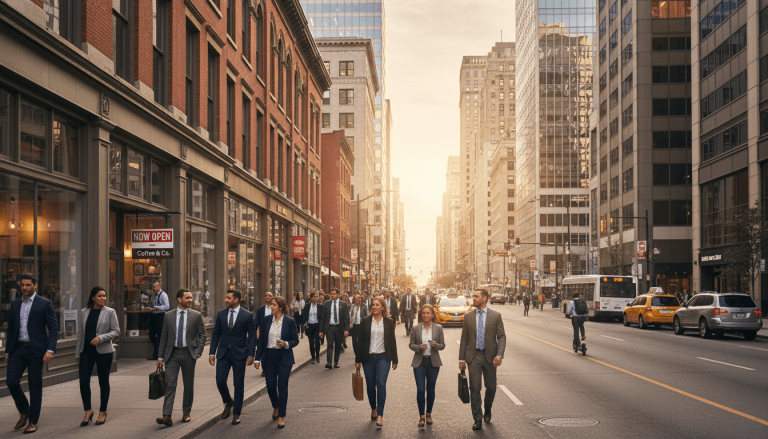
Detroit’s economic narrative has long been synonymous with the automotive industry, but the Detroit business climate of 2025 tells a more nuanced story of diversification, neighborhood resilience, and cautious optimism. As the city continues its post-bankruptcy trajectory, local stakeholders are seeing a shift from heavy industrial reliance to a burgeoning hub for fintech, green technology, and small business entrepreneurship.
While downtown continues to attract major corporate investments, the focus has increasingly widened to the city’s neighborhoods, where grant programs and local initiatives are attempting to bridge the gap between corporate success and community wealth.
Shifting Away from Auto-Dependency
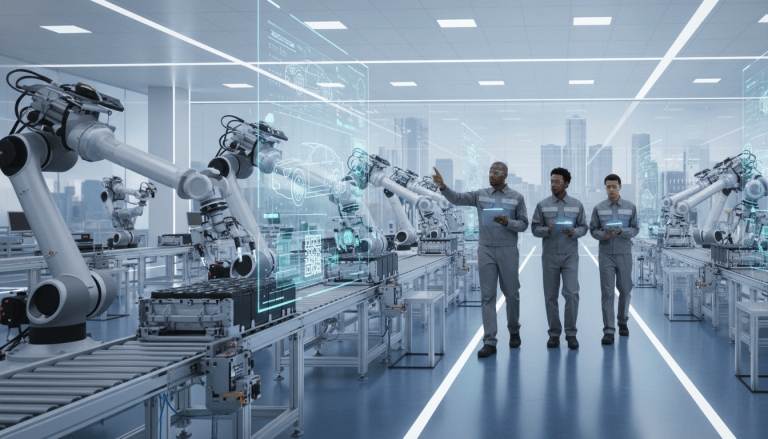
For decades, the pulse of the local economy was dictated entirely by the Big Three. However, 2025 marks a turning point where the sector is stabilizing rather than dominating to the exclusion of others. According to the Detroit Regional Chamber, while automotive manufacturing remains a pillar, the most significant job growth in the last 12 months has come from the technology and healthcare sectors.
“We are seeing a maturation of the startup ecosystem in Detroit,” said Marcus Hill, a local economic analyst. “It is no longer just about Ford’s mobility district in Corktown; it is about the logistics software companies and green energy startups that are setting up shop in the Milwaukee Junction and New Center areas.”
This diversification is essential for a stable Detroit business climate, insulating the city from the cyclical downturns of the manufacturing industry. You can read more about specific developments in our coverage of Detroit’s emerging tech sector.
Impact on Detroit Residents
For the average Detroiter, these macroeconomic shifts translate into a changing job market. The demand for skilled tradespeople remains high, but there is an increasing demand for digital literacy and administrative skills.
Local business owners are expressing both enthusiasm and concern regarding the labor market. “Finding staff is easier than it was two years ago, but finding staff with the right specialized skills is harder,” explained Tanya Roberts, owner of a boutique logistics firm in Southwest Detroit. “The cost of doing business has risen, but so has the customer base.”
The impact is also felt in wages. Data from the U.S. Bureau of Labor Statistics indicates a 3.4% rise in average hourly wages in the Detroit metro area over the last year, slightly outpacing the national average for similar mid-sized cities. However, inflation continues to put pressure on profit margins for small businesses, forcing many to innovate to keep prices accessible for residents.
Neighborhood Development and Small Business
A critical component of the current business environment is the emphasis on neighborhood corridors. The Detroit Economic Growth Corporation (DEGC) has reported that their Motor City Match program has reached a new milestone, assisting over 2,000 businesses since its inception, with a heavy concentration in 2024 and 2025.
These programs are vital for decentralizing economic success. By revitalizing commercial corridors like the Avenue of Fashion and West Vernor Highway, the city aims to keep spending within local communities. For more on how commercial property is changing in these areas, see our report on neighborhood real estate trends.
Background & Data
Understanding the current landscape requires looking at the numbers provided by city and federal agencies:
- Unemployment: Detroit’s unemployment rate has stabilized at approximately 6.2%, a significant improvement from the double digits of the previous decade.
- Small Business Growth: There has been a 12% increase in minority-owned business applications in Wayne County compared to 2023 figures.
- Commercial Vacancy: Downtown Class A office vacancy remains a challenge, hovering around 18%, prompting developers to consider residential conversions.
What Happens Next
Looking ahead to 2026, the Detroit business climate faces the dual challenge of sustaining growth while ensuring equity. Infrastructure projects, specifically the expansion of high-speed internet access across all residential zones, are cited by experts as the next necessary step to support home-based businesses and remote workers.
Local government officials have signaled that the upcoming budget will prioritize workforce development programs designed to upskill residents for the green economy. As Detroit continues to redefine itself, the integration of legacy manufacturing with modern innovation will determine the city’s economic health for the next decade.