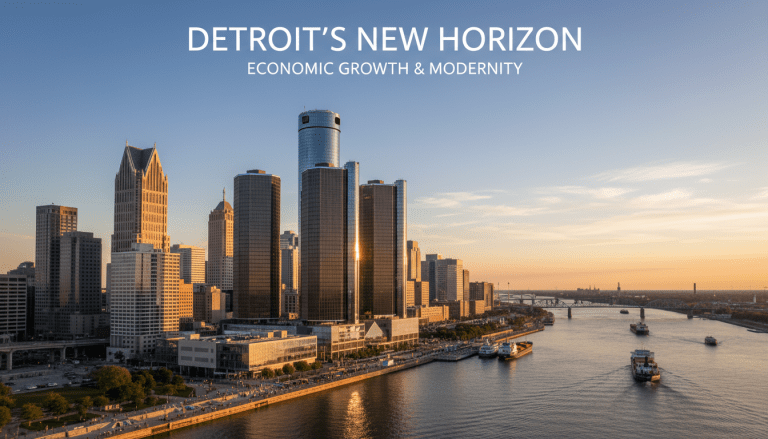


Detroit’s economic landscape is undergoing a significant transformation, moving beyond its historic moniker as the Motor City to embrace a diverse array of commercial avenues. From the revitalization of neighborhood commercial corridors to the burgeoning tech sector in Corktown and Midtown, Detroit business opportunities are expanding in scope and accessibility for both local entrepreneurs and outside investors.
While the automotive industry remains a foundational pillar, recent data from the Detroit Regional Chamber and the Detroit Economic Growth Corporation (DEGC) suggests a pivotal shift toward small business sustainability, green technology, and service-based industries. As the city moves further into the mid-2020s, the focus has sharpened on creating an ecosystem where startups can survive and thrive alongside established corporate giants.
The Shift Beyond Automotive
For decades, Detroit’s fortune rose and fell with the assembly line. However, recent economic reports indicate a deliberate diversification strategy. The city is rapidly becoming a hub for mobility innovation—a distinct evolution from traditional manufacturing. Major developments, such as the Michigan Central Station innovation district, are attracting startups focused on autonomous driving, electrification, and logistics software.
According to the Detroit Regional Chamber, the region has seen a steady increase in venture capital interest, particularly in the fintech and mobility sectors. This influx of capital is creating a fertile ground for tech-savvy entrepreneurs looking for a lower cost of entry compared to coastal hubs like San Francisco or New York.
“The narrative is changing from recovery to innovation,” said a representative from a local business incubator during a recent roundtable on economic growth. “We are seeing founders who want to solve complex urban problems using Detroit as their laboratory, particularly in logistics and clean energy.”
For those seeking Detroit tech news and startup insights, the current climate suggests that business-to-business (B2B) services supporting these major hubs offer some of the most stable entry points for new companies.
Revitalizing Neighborhood Corridors
Perhaps the most immediate Detroit business opportunities for local residents lie within the city’s neighborhood commercial corridors. The City of Detroit, through initiatives like Motor City Match, has prioritized the filling of vacant storefronts in areas outside of the downtown core, such as the Avenue of Fashion on Livernois and the villages of West Village.
Data from the City of Detroit indicates that small business grants and technical assistance programs have lowered the barrier to entry for retail and hospitality ventures. There is a specific demand for:
- Full-service grocery stores and fresh food markets: Many neighborhoods remain underserved regarding fresh produce options.
- Sit-down restaurants: While fast food is prevalent, residents have expressed a strong desire for community-focused dining experiences.
- Service-based retail: Dry cleaners, hardware stores, and childcare centers are consistently cited in community master plans as high-need businesses.
Local real estate developers have noted that mixed-use developments are performing well, where ground-floor retail supports upper-level residential units. This density is crucial for sustaining local coffee shops and boutiques that rely on foot traffic.
Impact on Detroit Residents
The expansion of business opportunities has a direct ripple effect on Detroit residents, though the results are complex. On one hand, the growth of small businesses creates local jobs. According to the DEGC, small businesses are the largest employer of Detroit residents within the city limits. When a local entrepreneur opens a bakery or a tech consultancy, the likelihood of hiring from the surrounding neighborhood is statistically higher than with national chains.
However, the rapid pace of development also brings concerns regarding equitable access. Community organizers have emphasized the need to ensure that long-time Detroiters have access to the capital and training required to seize these opportunities, rather than being priced out by external investors.
“It is vital that the capital flows to the people who stayed,” mentioned a local community development advocate. “The opportunity must be accessible to the family that has lived here for three generations, not just the newcomer.”
Programs like Detroit at Work are attempting to bridge the skills gap, training residents for roles in these emerging industries to ensure the economic uplift remains local.
Incentives and Institutional Support
Understanding the regulatory environment is critical for navigating Detroit business opportunities. The city offers several incentive structures designed to mitigate risk for new ventures. The Detroit Economic Growth Corporation manages various tools, including:
- Tax Abatements: For significant renovations of obsolete properties.
- Façade Improvement Grants: Aimed at beautifying streetscapes and helping business owners upgrade building exteriors.
- NEZ (Neighborhood Enterprise Zones): Encouraging residential development which, in turn, fuels the customer base for local businesses.
Furthermore, the designation of various Opportunity Zones in Detroit continues to attract long-term investment by offering federal tax deferrals on capital gains. While this program attracts larger institutional investors, it often catalyzes the infrastructure improvements necessary for smaller businesses to operate effectively.
Future Outlook for 2025 and Beyond
Looking ahead, the trajectory for business in Detroit appears cautiously optimistic. The stabilization of the automotive supply chain and the continued investment in the riverfront and greenways are enhancing the city’s livability—a key factor in attracting talent.
Analysts predict that the next wave of opportunity will likely center on the green economy. With federal funding aimed at climate resilience, businesses specializing in weatherization, sustainable construction materials, and energy-efficient retrofitting are expected to see increased demand. For contractors and tradespeople, this represents a significant sector for expansion.
For more coverage on local infrastructure projects, readers can view our reports on Detroit real estate development.
While challenges regarding insurance rates and property taxes remain topics of fervent discussion in City Council, the consensus among economic planners is that Detroit is open for business. The combination of relatively affordable commercial real estate, strong municipal support programs, and a resilient consumer base creates a unique environment for those willing to invest in the city’s future.