

By Sarah Jenkins
Published: October 24, 2025
Location: Detroit, Michigan
Detroit Center for Innovation: Rising Tech Hub Set to Transform The District Detroit
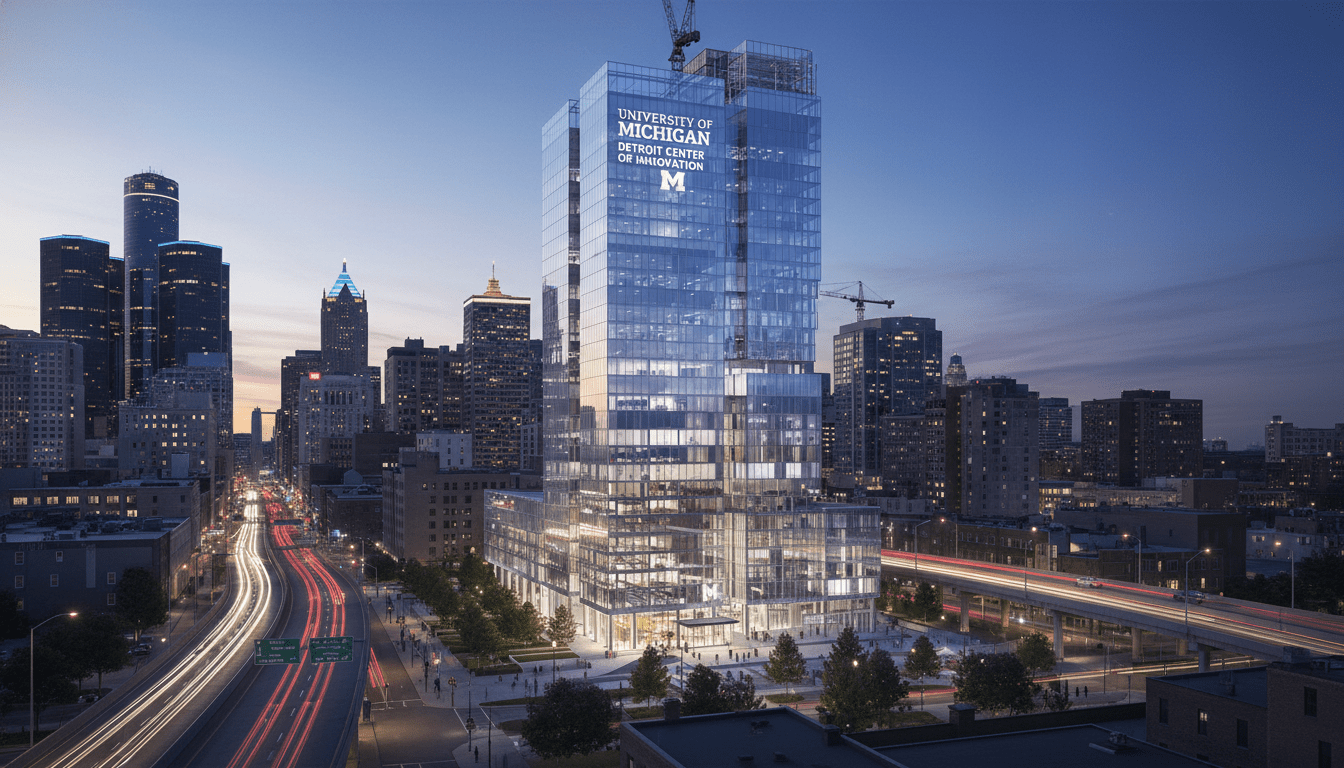
As construction cranes continue to dot the skyline of The District Detroit, the outline of the much-anticipated Detroit Center for Innovation (DCI) is becoming a tangible reality. Anchored by the University of Michigan, this $250 million research and education center represents more than just new architecture; it signifies a pivotal shift in the city’s economic trajectory toward technology and advanced manufacturing.
Located between Cass and Grand River, the DCI is designed to be a catalyst for high-tech job creation, aiming to bridge the gap between academic research and real-world business application. With structural steel now visible, city officials and developers are optimistic about the timeline for the center’s grand opening, slated for 2027.
A Partnership for Progress
The Detroit Center for Innovation is the result of a high-profile partnership between the University of Michigan, Bedrock, and the City of Detroit. The facility is expected to serve as a world-class research, education, and entrepreneurship center.
According to the University of Michigan, the academic programs at the DCI will focus heavily on high-demand fields such as artificial intelligence, climate technology, and data science. The goal is to create a pipeline of talent that encourages graduates to stay in Michigan rather than departing for coastal tech hubs.
“This is about creating a density of talent,” said a representative from the Detroit Economic Growth Corporation during a recent site tour. “When you put students, researchers, and startups in the same room, innovation happens naturally. This building is the physical manifestation of Detroit’s future economy.”
Impact on Detroit Residents
For local residents, the rise of the Detroit Center for Innovation promises both opportunities and changes to the neighborhood dynamics. The project is expected to generate significant economic activity, not only through high-tech jobs but also via the service and support roles required to maintain such a large facility.
Local business owners in the Cass Corridor have expressed cautious optimism. “We are looking forward to the foot traffic,” said the manager of a nearby coffee shop. “More students and researchers mean more customers, but we also want to ensure that the development remains accessible to the community that has been here for decades.”
To address these concerns, the developers have committed to community benefits agreements, ensuring that a portion of the construction jobs and permanent facility roles go to Detroit residents. For more on local housing and community shifts, read our coverage on Detroit neighborhood development updates.
Background & Data
The journey to the DCI’s current location has been winding. Originally proposed for the site of the unfinished Wayne County Jail on Gratiot Avenue, the project shifted focus to The District Detroit to better integrate with existing entertainment and business infrastructures. This move places it in close proximity to the Fox Theatre and Little Caesars Arena, creating a dense, walkable district.
Data from the U.S. Census Bureau and local economic reports indicate that Detroit’s tech sector has been growing steadily, though it still trails behind major hubs like Austin or Boston. The DCI is viewed as the accelerator needed to close that gap. By providing a dedicated space for innovation, the city hopes to attract venture capital that has historically overlooked the Midwest.
Furthermore, the project is part of a larger $1.5 billion development plan for The District Detroit, which includes new office towers, residential units, and hotels. You can learn more about the broader scope of these projects in our article on The District Detroit real estate boom.
What Happens Next
With the foundation laid and the structure rising, the next 18 months will be critical. The focus will soon shift from heavy construction to interior fit-outs and the recruitment of faculty and corporate partners. The University of Michigan has already begun outlining the curriculum, ensuring it aligns with the needs of major Michigan employers, particularly in the automotive and mobility sectors.
As the Detroit Center for Innovation nears completion, it stands as a testament to the city’s resilience and its ambition to reclaim its title as a global center of invention.