When Americans reflect on the Civil Rights Movement, images of Birmingham, Selma, and Washington D.C. often dominate the collective memory. However, historians and local leaders argue that the movement’s industrial engine and ideological testing ground was, in fact, the Motor City. Detroit civil rights history is not merely a footnote to the struggles in the Jim Crow South; it is a distinct, powerful narrative of labor organization, housing battles, and the largest pre-Washington demonstration in the nation’s history.
According to the Detroit Historical Society, the city’s unique combination of a booming automotive industry and a rapidly growing African American population during the Great Migration created a specific crucible for social change. From the pulpit of Rev. C.L. Franklin to the assembly lines organized by the United Auto Workers (UAW), Detroit provided the financial and logistical support that fueled activists across the country.
The 1963 Walk to Freedom: A Precursor to History
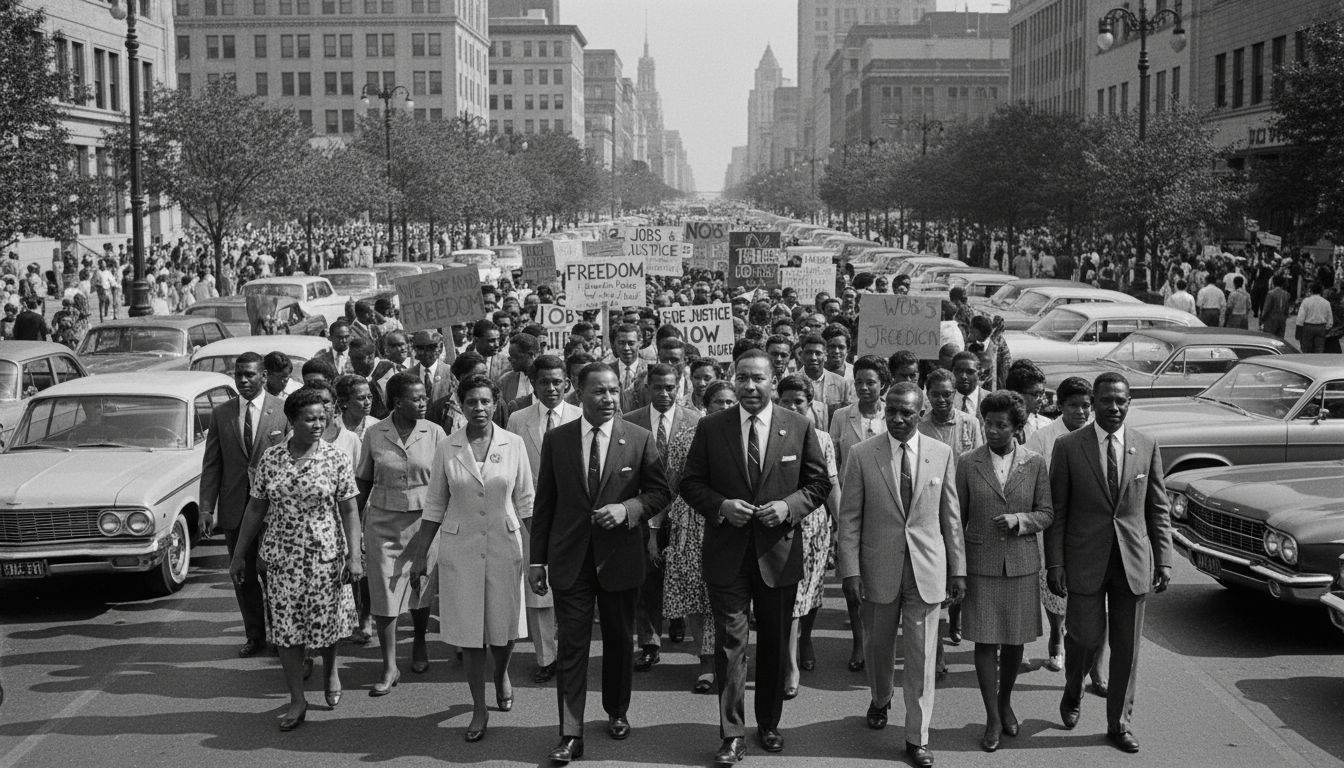
Two months before Dr. Martin Luther King Jr. delivered his famous “I Have a Dream” speech at the Lincoln Memorial, he debuted a version of that very address in downtown Detroit. On June 23, 1963, an estimated 125,000 people filled Woodward Avenue for the “Walk to Freedom.” It remains one of the most significant events in Detroit civil rights history.
Organized by the Detroit Council for Human Rights, the march was a massive display of unity against brutality and segregation. Local historians note that the event was not just a rally, but a fundraiser and a show of strength. “Detroit was the money bag for the movement,” said Dr. Roy Finkenbine, a history professor at the University of Detroit Mercy, in an archival interview regarding the era’s dynamics. The UAW, led by Walter Reuther, played a critical role, bridging the gap between labor rights and civil rights—a convergence that defined Detroit’s political landscape.
Dr. King’s speech at Cobo Hall that day echoed themes he would later broadcast to the world, but the Detroit address was arguably more raw, tailored to a city teeming with industrial promise yet plagued by de facto segregation.
Housing, Segregation, and the Northern Struggle
While the South battled “Whites Only” signs, Detroit fought a different, often more insidious battle: redlining and restrictive covenants. Throughout the mid-20th century, African American residents were systematically confined to overcrowded neighborhoods like Black Bottom and Paradise Valley.
Data from the U.S. Census Bureau during the 1940s and 50s illustrates the severe density in these districts compared to the expanding, white-only suburbs. When the construction of I-375 decimated Black Bottom, it wasn’t just a loss of homes; it was the erasure of a thriving black economic center. This displacement fueled decades of tension that are critical to understanding the city’s modern layout.
The fight for open housing became a central pillar of Detroit neighborhoods activism. The eventual tragedy of the Ossian Sweet trials in the 1920s had already set a precedent, but the struggle continued well into the 1960s, creating a pressure cooker environment that city leaders struggled to manage.
The 1967 Rebellion: A Turning Point
No discussion of Detroit civil rights history is complete without addressing the summer of 1967. Often characterized in national media as a “riot,” many locals and historians refer to it as an “uprising” or “rebellion” against systemic police brutality and economic inequality.
Sparked by a police raid on an unlicensed bar (blind pig) on 12th Street, the five days of unrest resulted in 43 deaths and thousands of arrests. However, to view this solely as violence is to miss the context. The Kerner Commission, appointed by President Lyndon B. Johnson to investigate the causes of urban unrest, famously concluded that America was moving toward two societies: “one black, one white—separate and unequal.”
The aftermath of 1967 fundamentally changed the city’s demographics and governance. It accelerated “white flight” to the suburbs but also paved the way for the election of Coleman A. Young in 1974, Detroit’s first black mayor. Young’s administration focused heavily on integrating the police department and opening city contracts to minority-owned businesses, reshaping the local economy.
Impact on Detroit Residents Today
For current residents, this history is not just academic; it is tangible. The legacy of the civil rights era influences everything from local politics to the current resurgence of development in areas previously neglected due to redlining.
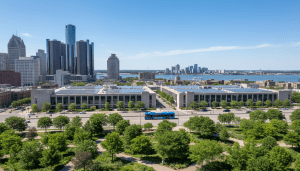
The physical landmarks of this struggle serve as daily reminders of the city’s resilience. The Charles H. Wright Museum of African American History, one of the largest institutions of its kind in the world, stands in Midtown as a testament to this legacy. Furthermore, the recent designation of Detroit sites to the National Register of Historic Places helps protect the homes of civil rights icons like Sarah Elizabeth Ray.
“Understanding our past is the only way we navigate the current changes in the city,” says Jamila Martin, a local community organizer working in the Virginia Park district. “When we talk about gentrification today, we are really talking about the unfinished business of the 1960s housing policies.”
Rosa Parks: The Detroit Years
While Rosa Parks is forever linked to Montgomery, Alabama, she spent the second half of her life in Detroit. Moving to the city in 1957 following death threats in the South, Parks worked for Congressman John Conyers and remained an active figure in Detroit civil rights history until her death in 2005.
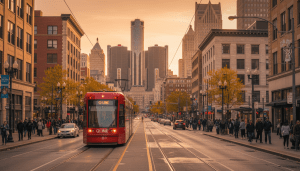
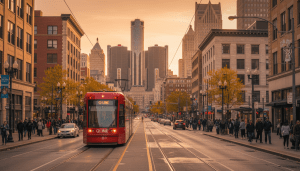
Her presence in the city underscored Detroit’s status as a sanctuary and a headquarters for the movement. Today, the Rosa Parks Transit Center downtown honors her legacy, reminding commuters daily of the connection between transit equity and human rights.
Background & Data Sources
The significance of Detroit’s role is backed by extensive archival data. The Detroit Historical Society maintains thousands of oral histories documenting the era. Their records indicate that Detroit had the highest percentage of home ownership among African Americans of any major city in 1960, despite the restrictive covenants, showcasing the economic power that underpinned the local movement.
Key Historical Figures in Detroit
- Rev. C.L. Franklin: Father of Aretha Franklin and a primary organizer of the Walk to Freedom.
- Walter Reuther: UAW President who marched with MLK and provided critical funding.
- Viola Liuzzo: A Detroit housewife and activist murdered by the Klan in Alabama after the Selma to Montgomery marches.
- Albert Cleage Jr.: A prominent religious leader and founder of the Shrine of the Black Madonna, advocating for black self-determination.
Looking Forward
As Detroit continues its 21st-century revitalization, the preservation of civil rights sites has become a priority for both the city government and private foundations. Efforts are underway to restore the historic King Solomon Baptist Church, where Malcolm X delivered his “Message to the Grassroots.”
For the people of Detroit, the fight for civil rights is viewed not as a closed chapter, but as a continuous journey. The city remains a hub for social justice activism, drawing a direct line from the union halls of the 1930s and the marchers of 1963 to today’s community leaders.