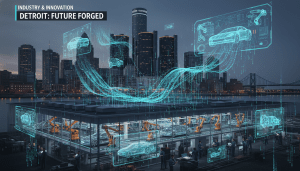
Detroit has long been defined by steel, assembly lines, and the rhythmic hum of automotive manufacturing. However, a quiet but powerful revolution is currently reshaping the city’s economic landscape. As the region pivots from strictly hardware-focused manufacturing to advanced mobility and tech-forward services, Detroit cloud solutions have emerged as the critical backbone supporting this transition. From the revitalization of Corktown to the tech hubs emerging in downtown, cloud computing is no longer just an IT concern—it is a central pillar of Detroit’s modern infrastructure.
The adoption of cloud technologies in Southeast Michigan is accelerating at a pace that mirrors national trends, yet with a distinctly local flavor. Businesses ranging from Tier 1 automotive suppliers to burgeoning fintech startups are leveraging remote infrastructure to scale operations, secure data, and facilitate the hybrid work models that have become permanent fixtures in the post-pandemic economy.
The Automotive Industry: The Primary Driver
While the concept of “cloud computing” often evokes images of Silicon Valley, the application of high-level cloud architecture is aggressively happening within Detroit city limits. The automotive industry is, without question, the primary catalyst for the surge in local demand for robust cloud infrastructure.
As Ford, General Motors, and Stellantis shift resources toward electric vehicles (EVs) and autonomous driving technologies, the data requirements have skyrocketed. Autonomous vehicles generate terabytes of data daily, requiring low-latency edge computing and massive storage capabilities that traditional on-premise servers cannot handle efficiently.
According to reports from the Detroit Regional Chamber, the region’s ability to attract tech talent is directly tied to the modernization of this industrial base. Local managed service providers (MSPs) are stepping up to offer specialized Detroit cloud solutions that cater to these specific compliance and latency needs. These providers are not just hosting websites; they are managing the complex data streams that allow vehicles to communicate with city infrastructure.
Impact on Detroit Residents and the Local Workforce
For the average resident, the shift toward a cloud-centric economy brings tangible changes to the local job market. The demand for cloud architects, cybersecurity analysts, and network engineers is creating a new tier of employment opportunities within the city.
Data from the Michigan Economic Development Corporation (MEDC) suggests that the tech sector in Michigan is growing, with a specific emphasis on cybersecurity and information technology services. For Detroiters, this means that workforce development programs are increasingly focusing on digital certifications—such as AWS or Azure architecture—rather than purely mechanical skills.
“The conversation has shifted from ‘how do we build this part’ to ‘how do we manage the data this part produces,'” said a representative from a Detroit-based workforce development non-profit. “This opens up pathways for residents to enter high-paying tech careers without necessarily needing to leave the state or the city.”
Furthermore, local small businesses are benefiting from democratized access to enterprise-grade technology. In neighborhoods like Midtown and New Center, small business owners are utilizing cloud-based point-of-sale systems, inventory management, and customer relationship tools that were previously too expensive for non-corporate entities. This leveling of the playing field is vital for the city’s entrepreneurial ecosystem.
Managed Service Providers (MSPs) and Local Infrastructure
The rise in demand has led to a proliferation of local IT firms offering Detroit cloud solutions tailored to the Midwest market. Unlike coastal tech giants, these local MSPs understand the specific challenges of the Detroit market, including the need for redundant connectivity in areas where internet infrastructure has historically been uneven.
These firms are crucial for the city’s local business continuity. In an era where ransomware attacks are increasingly common, local cloud providers offer disaster recovery as a service (DRaaS), ensuring that Detroit law firms, hospitals, and logistics companies can recover data instantly in the event of a breach or outage.
Moreover, the physical footprint of the cloud is becoming visible. Data centers are expanding in the Metro Detroit area to reduce latency for industrial applications. By processing data closer to where it is created (the “edge”), manufacturers can utilize real-time analytics to monitor assembly line health, predicting machine failures before they happen.
Connectivity and the Digital Divide
Despite the rapid corporate adoption, challenges remain regarding equitable access. The City of Detroit has been actively working to bridge the digital divide, a move that is essential if the benefits of cloud-based education and remote work are to reach all neighborhoods.
Connect 313 and other local initiatives are working to ensure that as Detroit becomes a hub for cloud innovation, the residents in neighborhoods like Dexter-Linwood or Southwest Detroit have the high-speed internet access required to participate in this economy. Cloud solutions are only effective if the end-user has the bandwidth to access them. The city’s push for fiber optic expansion is a critical component of this ecosystem.
Future Outlook: Detroit as a Tech Hub
Looking ahead to 2025 and beyond, the trajectory for Detroit cloud solutions appears steep and upward. The renovation of Michigan Central Station into a mobility innovation district is a testament to the city’s commitment to a high-tech future. This district is expected to be a testing ground for smart city technologies, all of which rely heavily on cloud infrastructure.
As the tech landscape in Detroit evolves, we can expect to see a hybrid approach where legacy manufacturing prowess merges with cloud agility. This “Industrial Cloud” could become Detroit’s unique value proposition to the world—a place where code meets concrete.
For investors and business leaders, the message is clear: Detroit is open for digital business. The infrastructure is being laid, the talent is being trained, and the cloud is descending on the Motor City, not as a fog, but as a clear path forward for economic revitalization.