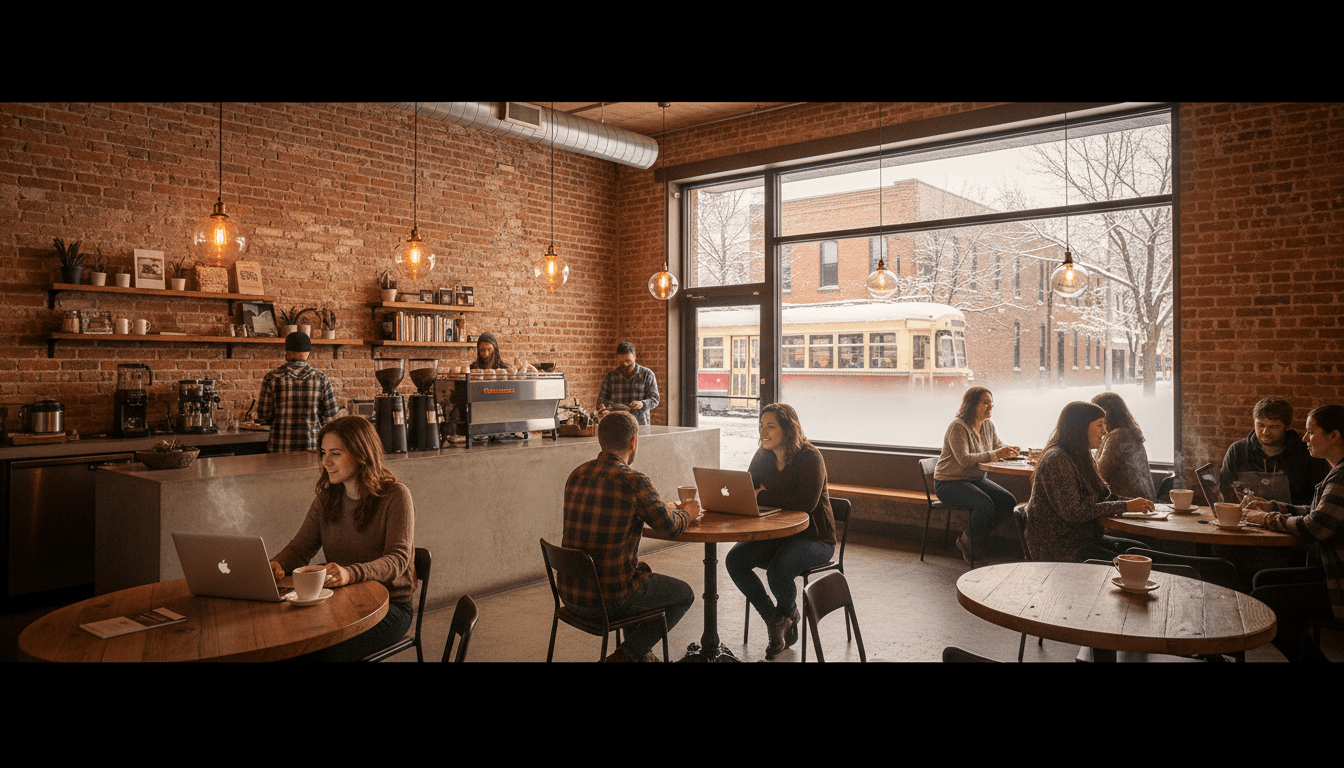
In the quiet corners of Corktown and the bustling avenues of the Avenue of Fashion, a subtle but significant economic shift is taking place. While the automotive industry and large-scale manufacturing have long defined the Motor City’s macroeconomic narrative, a different kind of engine is driving neighborhood stability: the independent, cozy coffee shop.
Post-pandemic shifts in work culture have transformed how Detroit residents interact with their local commercial corridors. With hybrid work models persisting, the demand for “third places”—social environments distinct from home and the office—has surged. Detroit coffee shops, particularly those emphasizing cozy atmospheres and community engagement, have transitioned from simple caffeine stops to essential infrastructure for neighborhood revitalization.
According to data from the Detroit Economic Growth Corporation (DEGC), small businesses, including food and beverage establishments, remain a primary driver of commercial corridor density. The rise of these establishments suggests that the atmosphere—specifically the “cozy” factor—is becoming a tangible economic asset for the city.
The Economics of ‘Cozy’ in Detroit
The concept of “cozy” is often relegated to lifestyle blogs, but for Detroit urban planners and business owners, it is a strategic design choice that influences retention and revenue. In neighborhoods like West Village and Southwest Detroit, coffee shops are utilizing design elements—exposed brick, warm lighting, and comfortable seating—to encourage longer dwell times. This shift contradicts the high-turnover model of national chains.
Local business owners report that customers are no longer just buying a product; they are renting space and community. “The revenue model has shifted,” explained a café owner in the New Center area, speaking on condition of anonymity regarding financial specifics. “People aren’t just grabbing a cup and leaving. They are setting up laptops for three hours. If we don’t make the space comfortable and inviting, they don’t come back. The ‘cozy’ aesthetic is actually a retention strategy.”
This trend aligns with national findings. A report by the National Coffee Association indicated that out-of-home coffee consumption has reached record highs, with a marked preference for experiential consumption over utility. For Detroit, a city working to fill retail vacancies, these businesses serve as anchor tenants that attract foot traffic to adjacent retailers.
Impact on Detroit Residents
For locals, the proliferation of these spaces addresses a critical need for social infrastructure. Sociologists have long argued that third places are vital for civic engagement and combating social isolation. In Detroit, where winter months can limit outdoor gathering, indoor community hubs become even more critical.
Residents in revitalizing neighborhoods often cite the arrival of a sit-down coffee shop as a turning point for the area’s walkability and perception of safety. “It changes the block,” said Marcus Turner, a resident of the Bagley neighborhood. “When you have a place with lights on in the evening, where people are sitting inside reading or talking, it makes the whole street feel safer. It stops being just a place you drive through and becomes a place you live in.”
Furthermore, these shops often serve as informal incubators. It is not uncommon to find freelancers, creatives, and startup founders conducting business meetings in local commercial spaces. This decentralizes economic activity from the downtown core, spreading capital circulation into the neighborhoods.
Background & Data on Neighborhood Development
The growth of independent coffee shops is not entirely organic; it is supported by specific policy initiatives. The Motor City Match program, a partnership between the City of Detroit and the DEGC, has been instrumental in funding brick-and-mortar locations for entrepreneurs. Since its inception, the program has awarded millions in grants, with a significant portion going to food and beverage businesses that activate vacant storefronts.
According to U.S. Census Bureau business formation statistics, Wayne County has seen a resilient rate of new business applications post-2020. However, the success rate depends heavily on location and community integration. Shops that focus on the “grab-and-go” model often face stiffer competition from fast-food chains, whereas those creating a specific, comfortable atmosphere command a loyal customer base that protects them from market volatility.
However, challenges remain. Rising rents in developing neighborhoods can threaten the very businesses that made those neighborhoods desirable. As property values increase, maintaining the low overhead necessary to run a “cozy” establishment with lower table turnover becomes difficult. This economic tension is a focal point for city planners trying to balance development with displacement concerns.
Looking Ahead: The Future of Detroit’s Café Culture
As Detroit continues its trajectory of development, the role of the neighborhood coffee shop is likely to expand. Urban planners are increasingly viewing these spaces as essential amenities, similar to parks or libraries. Future developments in areas like the Michigan Central innovation district are integrating social gathering spaces directly into their blueprints, acknowledging that the workforce of the future demands environments that bridge the gap between home and office.
The demand for Detroit coffee shops that offer a cozy, community-centric environment shows no signs of slowing. As long as remote work remains a fixture of the modern economy, these spaces will continue to serve as the living rooms of the city, fostering connection and anchoring the local economy one cup at a time.