
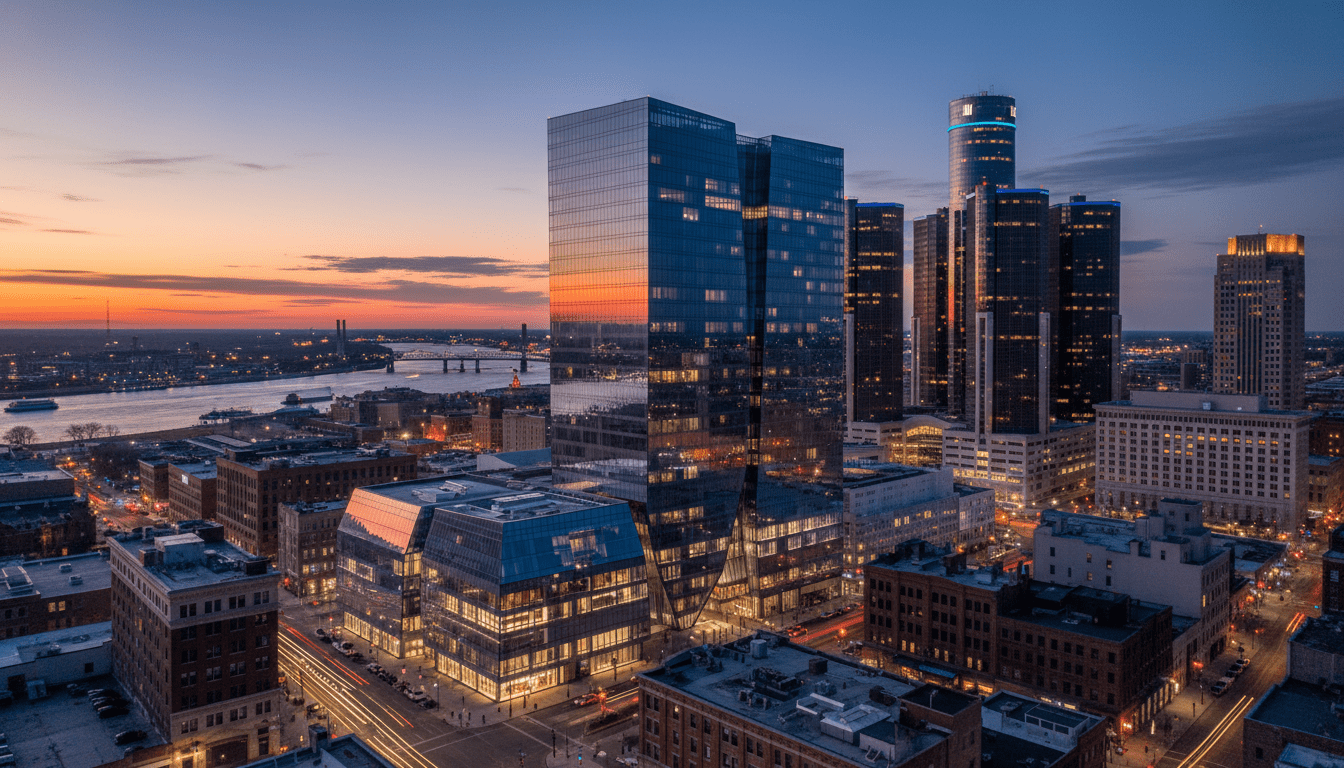
The skyline of the Motor City is in the midst of a significant transformation, driven not by new skyscrapers alone, but by a fundamental shift in how major companies utilize office space. The recent strategic moves regarding Detroit corporate headquarters—most notably General Motors’ decision to relocate from the Renaissance Center to the new Hudson’s Detroit development—signal a new era for downtown business.
This evolution represents more than just a change of address; it reflects a broader trend known in the commercial real estate industry as the “flight to quality.” As legacy corporations rightsizing their footprints and tech startups scale up, the demand for modern, amenity-rich workspaces is reshaping the economic geography of Detroit.
The Shift to Woodward Avenue
For decades, the Renaissance Center has stood as the monolithic symbol of Detroit business. However, the announcement that General Motors (GM) would move its global headquarters to the new Hudson’s Detroit site on Woodward Avenue marks a pivot back to the city’s historic commercial core.
According to statements released by General Motors, the move is designed to foster a more collaborative environment. The automaker is expected to occupy the top floors of the office component of the Hudson’s development, a project spearheaded by Bedrock. This relocation keeps a Fortune 500 company firmly planted within the city limits, a crucial win for local tax revenue and prestige.
“We are proud to remain in the city of Detroit in a modern office building that fits the evolving needs of our workforce,” said GM Chair and CEO Mary Barra during the initial announcement. The decision highlights a trend where Detroit corporate headquarters are prioritizing flexibility and location over massive square footage. The Hudson’s site offers proximity to other businesses, transit options like the QLine, and the vibrancy of a walkable downtown, contrasting with the fortress-like isolation of the RenCen.
Impact on Detroit Residents and Local Economy
The relocation of major corporate hubs has a ripple effect on the daily lives of Detroit residents and small business owners. When a major employer consolidates its workforce into the dense urban core along Woodward, it concentrates foot traffic, which is a lifeline for local restaurants, cafes, and retail shops.
Local business owners in the Campus Martius area have expressed optimism about the density. An increase in high-income workers walking the streets for lunch, happy hour, and corporate events translates directly to revenue for the service industry. Conversely, there is valid concern regarding the riverfront area. As the center of gravity shifts north, businesses reliant on the Renaissance Center’s daily population may face challenges.
Furthermore, this shift impacts the Detroit real estate market. As prime office space attracts top-tier tenants, it incentivizes further development of residential and mixed-use projects nearby, potentially raising property values and spurring infrastructure improvements in the central business district.
Market Trends: The “Flight to Quality”
Real estate analysts point out that Detroit is not unique in this transition, but the local stakes are high. Data from global real estate services firm CBRE Detroit indicates that while overall office vacancy rates fluctuate, “Class A” buildings—those with top-tier amenities, modern HVAC systems, and prime locations—continue to outperform older stock.
The concept of the corporate headquarters is changing from a place where employees must go, to a place where they want to go. Features now considered standard for attracting talent include:
- Collaborative open spaces versus private offices.
- On-site wellness centers and gyms.
- Proximity to parking and public transit.
- Touchless technology and LEED certification.
Companies headquartered in Detroit, including Rocket Companies and DTE Energy, have continuously adapted their campuses to meet these expectations. The move by GM creates a competitive pressure for other large regional employers to upgrade their facilities to retain top talent.
The Future of the Renaissance Center
With the departure of its anchor tenant, the future of the Renaissance Center remains one of the biggest questions in Detroit auto and business news. The complex, which dominates the riverfront skyline, faces a potential redevelopment challenge. City officials and Bedrock have discussed brainstorming sessions to reimagine the space, potentially converting towers into residential units or hotels, though the architectural structure of the buildings presents logistical difficulties.
According to the City of Detroit, maintaining the vitality of the Riverfront is a priority. The redevelopment of the RenCen is viewed as a long-term project that will require public-private partnership to ensure the massive complex does not become a hollow shell, but rather adapts to the new mixed-use reality of urban living.
What Happens Next?
As 2025 progresses, all eyes will be on the completion of the Hudson’s Detroit site and the subsequent migration of workers. For the city, the successful transition of Detroit corporate headquarters into modern, integrated spaces is vital for sustaining the momentum of downtown’s recovery.
The consolidation of corporate power along the Woodward corridor suggests a denser, more connected downtown Detroit. However, stakeholders warn that the city must balance this corporate growth with support for the neighborhoods and small businesses that form the cultural backbone of the city.