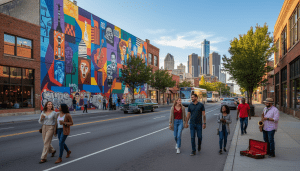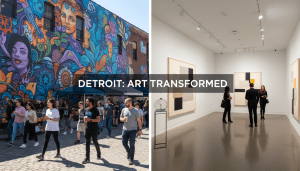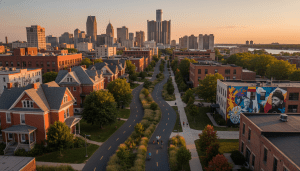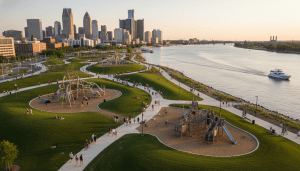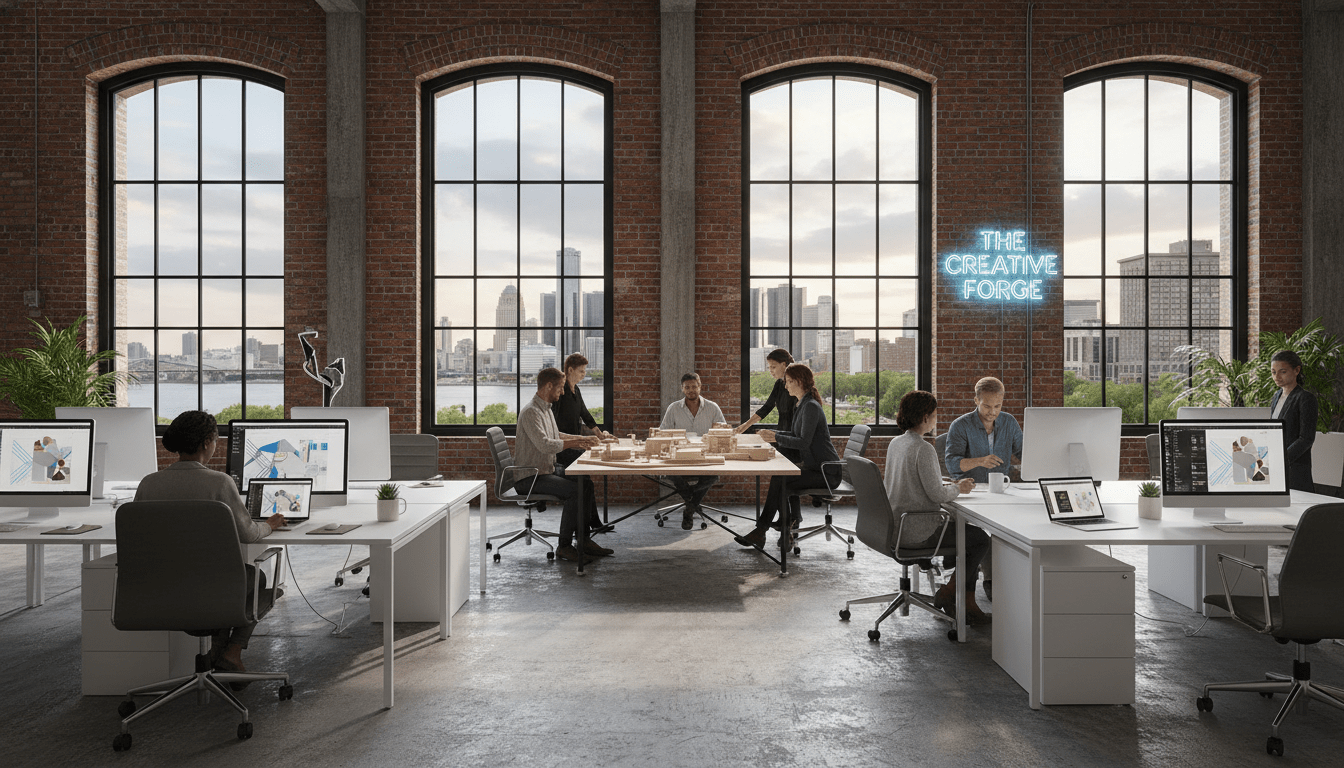
For decades, Detroit was synonymous with a single industry: automotive manufacturing. While the “Motor City” legacy remains a pillar of the region’s identity, a quiet transformation has been taking place in the studios, renovated warehouses, and co-working spaces across the metropolitan area. The Detroit creative economy is emerging as a formidable engine of growth, diversifying the local job market and reshaping the city’s financial landscape.
Since becoming the first and only U.S. city to receive the UNESCO City of Design designation in 2015, Detroit has leveraged its design heritage to foster a sector that now employs tens of thousands of residents. From industrial design and architecture to digital media and fashion, the creative sector is no longer just a cultural asset—it is a critical component of Detroit’s economic resilience strategy.
The Rise of Detroit’s Design Sector
The shift from an industrial monoeconomy to a diversified hub of innovation has been intentional. Organizations like Design Core Detroit have championed the idea that design is an economic driver, not merely an aesthetic pursuit. According to recent reports analyzing the local ecosystem, the creative industries in Southeast Michigan generate billions of dollars in annual wages, proving that creativity is a viable and lucrative career path in the region.
Local urban planners and economic developers point to the adaptive reuse of Detroit’s historic infrastructure as a catalyst for this growth. Old automotive plants and assembly lines are being converted into studios for graphic designers, architects, and software developers. This physical transformation mirrors the economic one: the same spaces that once built cars are now generating intellectual property.
“The narrative of Detroit is changing from purely manufacturing to innovation in design,” stated a representative from the Detroit Economic Growth Corporation during a recent workforce development panel. “We are seeing startups and established agencies alike choosing Detroit because of its rich history of making things, whether that’s a vehicle, a building, or a brand identity.”
Impact on Detroit Residents
For the average Detroiter, the surging Detroit creative economy translates into new employment opportunities that do not necessarily require working on a factory floor. The definition of the “creative class” in Detroit has expanded to include a wide range of skill sets, offering pathways for residents with backgrounds in technology, communications, and fine arts.
This economic shift is also impacting Detroit neighborhoods beyond the downtown core. Small creative businesses are opening in commercial corridors along Livernois, Grand River, and Jefferson, bringing foot traffic and spending power back to these communities. As creative professionals seek affordable spaces to live and work, the demand helps stabilize housing markets and encourages the rehabilitation of vacant commercial properties.
However, community leaders emphasize the need for inclusive growth. There is a concerted effort among local nonprofits to ensure that long-time residents have access to the training and education required to enter these high-growth fields. Programs at institutions like the College for Creative Studies (CCS) and various high school vocational initiatives are increasingly focused on preparing Detroit youth for careers in digital design and creative technology.
Economic Data and Growth Trends
Data supports the visibility of this sector’s growth. Reports from the U.S. Bureau of Labor Statistics and local economic analysis firms indicate that while manufacturing jobs have seen fluctuations, employment in the professional, scientific, and technical services sectors—which house much of the creative economy—has seen a steady upward trajectory in the Detroit Metropolitan Statistical Area (MSA).
Key statistics highlight the sector’s robust nature:
- Employment Density: Detroit has a higher concentration of commercial and industrial designers than most other U.S. metropolitan areas, driven largely by the automotive industry’s need for constant innovation.
- Wage Growth: Jobs within the Detroit creative economy often pay wages significantly higher than the regional median, contributing to increased purchasing power for local families.
- Business Formation: The rate of new business applications in the creative services sector has outpaced traditional retail in several Detroit zip codes over the last five years.
Furthermore, the convergence of technology and art is creating a sub-sector of “creative tech.” This includes user experience (UX) designers working for fintech companies and virtual reality (VR) developers creating training simulations for the healthcare and manufacturing industries. This cross-pollination ensures that the creative economy is deeply integrated into the broader business ecosystem.
Challenges and Sustainability
Despite the optimism, the sector faces challenges. Access to capital remains a hurdle for minority-owned creative startups. While downtown Detroit attracts venture capital, smaller studios in the neighborhoods often rely on grants and smaller loans. Additionally, the local business environment must continue to adapt to support freelancers and gig workers, who make up a significant portion of the creative workforce.
Retention of talent is another priority. For years, Detroit experienced a “brain drain,” losing talented graduates to coastal cities. Today, the trend is reversing, but retaining top-tier creative talent requires maintaining a vibrant cultural scene, affordable cost of living, and robust public transportation—issues that city officials continue to address.
What Happens Next
Looking ahead, the trajectory for the Detroit creative economy appears positive. The city’s continued status as a UNESCO City of Design provides a global platform to attract international conferences, festivals, and businesses. Events like the Detroit Month of Design continue to draw global attention, showcasing local talent to the world.
As the automotive industry transitions to electric and autonomous vehicles, the demand for creative problem solvers—specifically in interface design and mobility experience—will only increase. Detroit is uniquely positioned to lead this intersection of hardware and software design.
For Detroiters, the message is clear: the city’s economic future is being designed today, quite literally. By fostering an environment where creativity can thrive alongside industry, Detroit is securing its place not just as a center of production, but as a global capital of imagination and innovation.