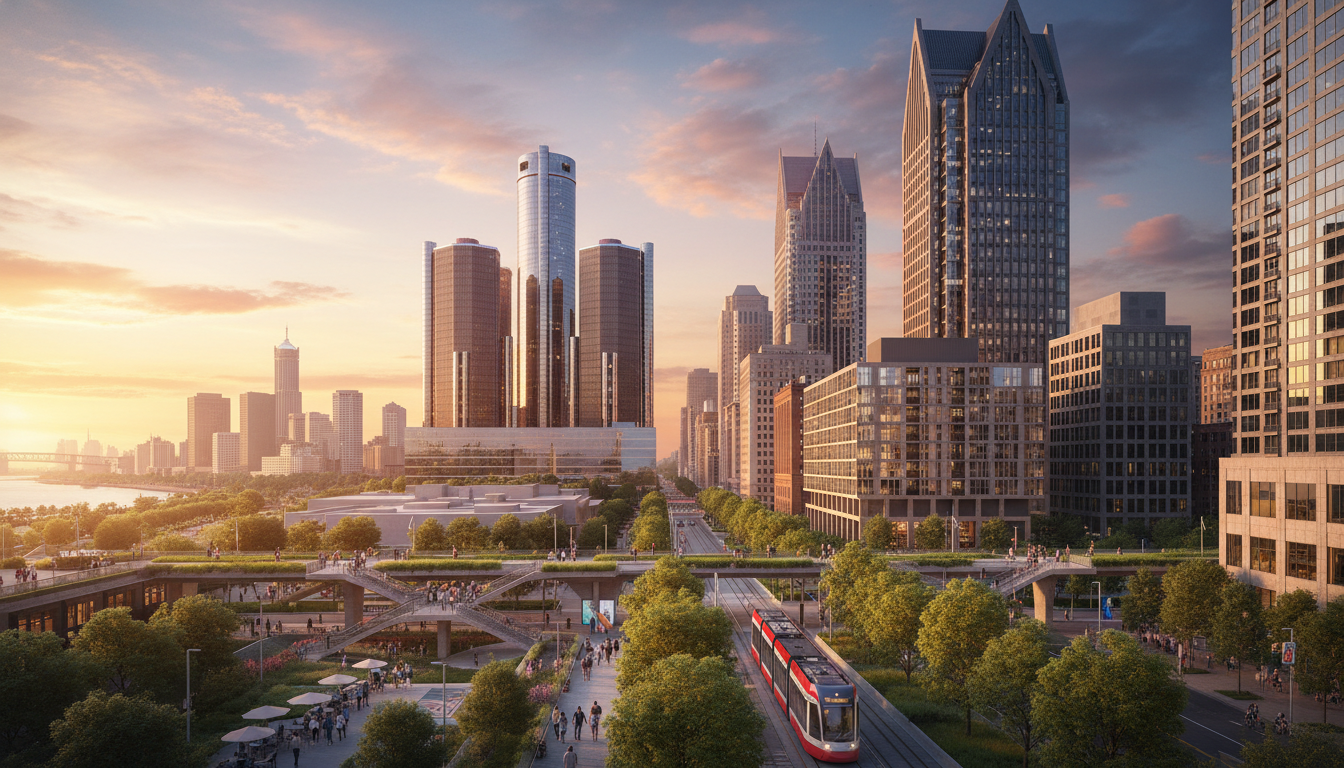
The skyline of Detroit is once again at the center of a multibillion-dollar conversation as the ambitious District Detroit development project moves into a critical phase of planning and early construction. This $1.5 billion initiative, a joint venture between the Ilitch family’s Olympia Development of Michigan and Stephen Ross’s Related Companies, aims to transform several blocks of underutilized land into a vibrant, mixed-use destination connecting Downtown and Midtown.
For longtime residents, the project represents more than just new glass and steel; it is a test of the city’s ability to balance massive private investment with the needs of its existing communities. The development, which includes 10 separate projects consisting of residential, office, and retail spaces, has been a cornerstone of the city’s long-term economic strategy. According to the City of Detroit Planning and Development Department, these projects are designed to bridge the gap between two of the city’s fastest-growing hubs, creating a contiguous urban experience that has been missing for decades.
The Scope of the District Detroit Development
The current iteration of the District Detroit development focuses on a dense cluster of properties surrounding Little Caesars Arena. The proposal includes nearly 1.2 million square feet of commercial office space, 146,000 square feet of retail space, and 467 hotel rooms. Perhaps most significantly for a city facing a tightening housing market, the plan calls for 695 residential units.
Data from the Michigan Economic Development Corporation (MEDC) indicates that the project is expected to create thousands of temporary construction jobs and over 6,000 permanent positions once the facilities are fully operational. The centerpiece of this expansion is the University of Michigan Center for Innovation (UMCI), which broke ground in late 2023. The UMCI is expected to serve as a talent pipeline, drawing students and researchers into the city core and fostering a new tech ecosystem in the heart of Detroit.
However, the scale of the project has necessitated significant public-private partnership. In 2023, the Detroit City Council and various state-level boards approved nearly $800 million in tax incentives and captures to support the infrastructure. These incentives have sparked debate among local activists who argue that such funds could be redirected toward neighborhood services, while proponents argue the long-term tax revenue generated by the completed projects will far outweigh the initial public cost.
Impact on Detroit Residents
The impact of the District Detroit development on local residents is a multifaceted issue involving housing affordability, employment access, and neighborhood character. As part of the Community Benefits Agreement (CBA) negotiated with the city, the developers have committed to several stipulations aimed at ensuring the project benefits the local population.
One of the most critical aspects of the CBA is the requirement for affordable housing. Of the nearly 700 residential units planned, at least 20% must be reserved for residents earning 50% or less of the Area Median Income (AMI). This is a crucial metric for Detroiters, as rising rents in the Midtown area have forced some residents to look toward the city’s outer edges. Local housing advocates have noted that maintaining these affordability standards is essential to preventing further displacement in the Greater Downtown area. You can read more about local housing initiatives currently underway in other parts of the city to see how this compares.
Beyond housing, the project promises to improve the physical connectivity of the city. For years, the area between the Fox Theatre and the QLINE terminus was characterized by vast surface parking lots. The proposed development aims to replace these gaps with pedestrian-friendly streetscapes, new green spaces, and enhanced lighting. For residents who rely on public transit or walking, this transition from “parking lot desert” to an active urban corridor represents a significant improvement in quality of life and safety.
Background and Economic Data
To understand the current momentum, one must look at the historical data regarding Detroit’s recovery. According to reports from the U.S. Census Bureau and the Bureau of Labor Statistics, Detroit has seen a steady, albeit gradual, increase in private-sector job growth over the last five years. Large-scale developments like the District Detroit development are seen by economists as necessary anchors to sustain this growth.
The financial structure of the project relies heavily on the Transformational Brownfield Plan, a state tool designed to help developers offset the high costs of rehabilitating urban land. Critics often point to previous promises made during the construction of Little Caesars Arena that did not fully materialize as quickly as expected. However, city officials emphasize that the current agreements include more stringent oversight and specific milestones that the developers must meet to retain their tax benefits. This level of accountability is a shift in how the City of Detroit handles large-scale developer agreements compared to previous decades.
Furthermore, the integration of the UMCI suggests a shift toward a “knowledge economy.” By anchoring the development with an educational institution rather than just sports and entertainment, the city hopes to insulate the area from the volatility of the retail market. This strategy mirrors successful urban revitalizations in cities like Pittsburgh and Columbus, where university partnerships have led to sustained neighborhood stabilization. This aligns with broader Midtown economic growth patterns observed since the early 2010s.
What Happens Next
The timeline for the District Detroit development is long-term, with various phases expected to be completed over the next decade. The immediate focus remains on the UMCI and the initial residential buildings planned for the area along Woodward Avenue and Cass Avenue. Construction activity is expected to ramp up significantly throughout 2024 and 2025.
Community meetings remain a vital part of the process. The Neighborhood Advisory Committee (NAC) continues to meet regularly to monitor the developers’ compliance with the Community Benefits Agreement. Residents are encouraged to attend these sessions to provide feedback on everything from construction noise to the types of retail businesses they would like to see in the new spaces.
As the cranes continue to dot the Detroit skyline, the success of the District Detroit development will ultimately be measured not just by the height of its buildings, but by its ability to create a truly inclusive environment. Whether it becomes a playground for the wealthy or a genuine engine for middle-class growth remains the most pressing question for the people of Detroit.