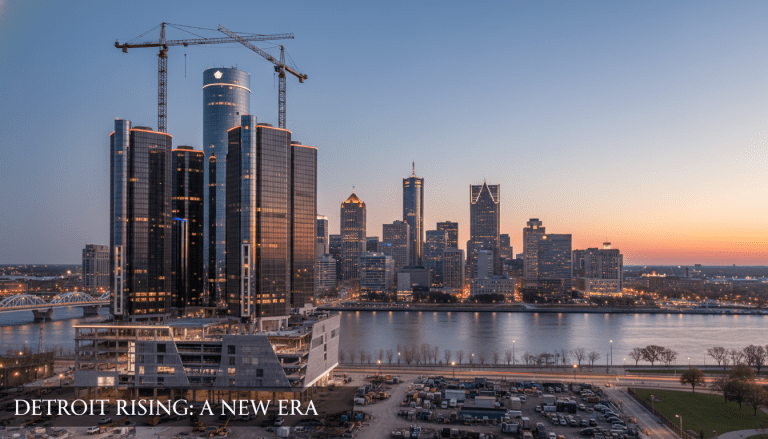

Detroit’s economic landscape is undergoing a significant transformation as the city enters the second half of the decade. While the past ten years were defined by headline-grabbing mega-projects in the downtown core—such as the restoration of Michigan Central Station and the rise of the Hudson’s site tower—2025 marks a pivotal shift in Detroit economic development strategy. City officials and the Detroit Economic Growth Corporation (DEGC) are increasingly directing resources toward neighborhood corridors, aiming to ensure that the resurgence witnessed in the central business district reaches residents across the city’s 139 square miles.
This strategic pivot comes as the city celebrates recent successes in stabilizing the population and achieving some of the lowest unemployment rates seen in decades. However, the challenge remains to create equitable growth that supports long-term residents while attracting new investment. According to data from the City of Detroit, the focus is now on density, walkability, and small business sustainability in areas that have historically seen underinvestment.
The New Era of Detroit Economic Development
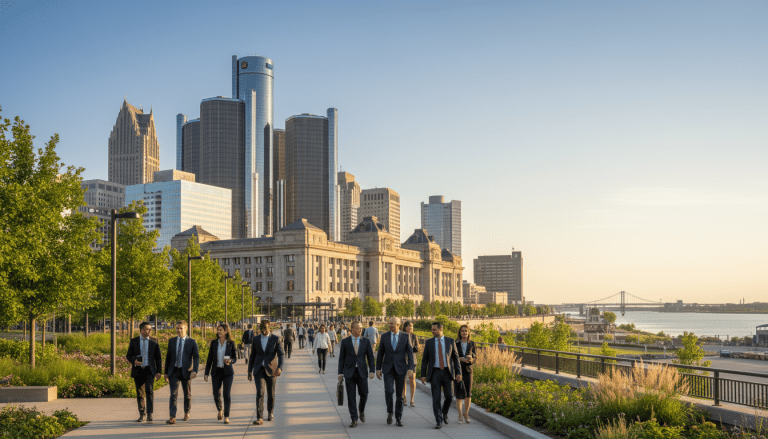
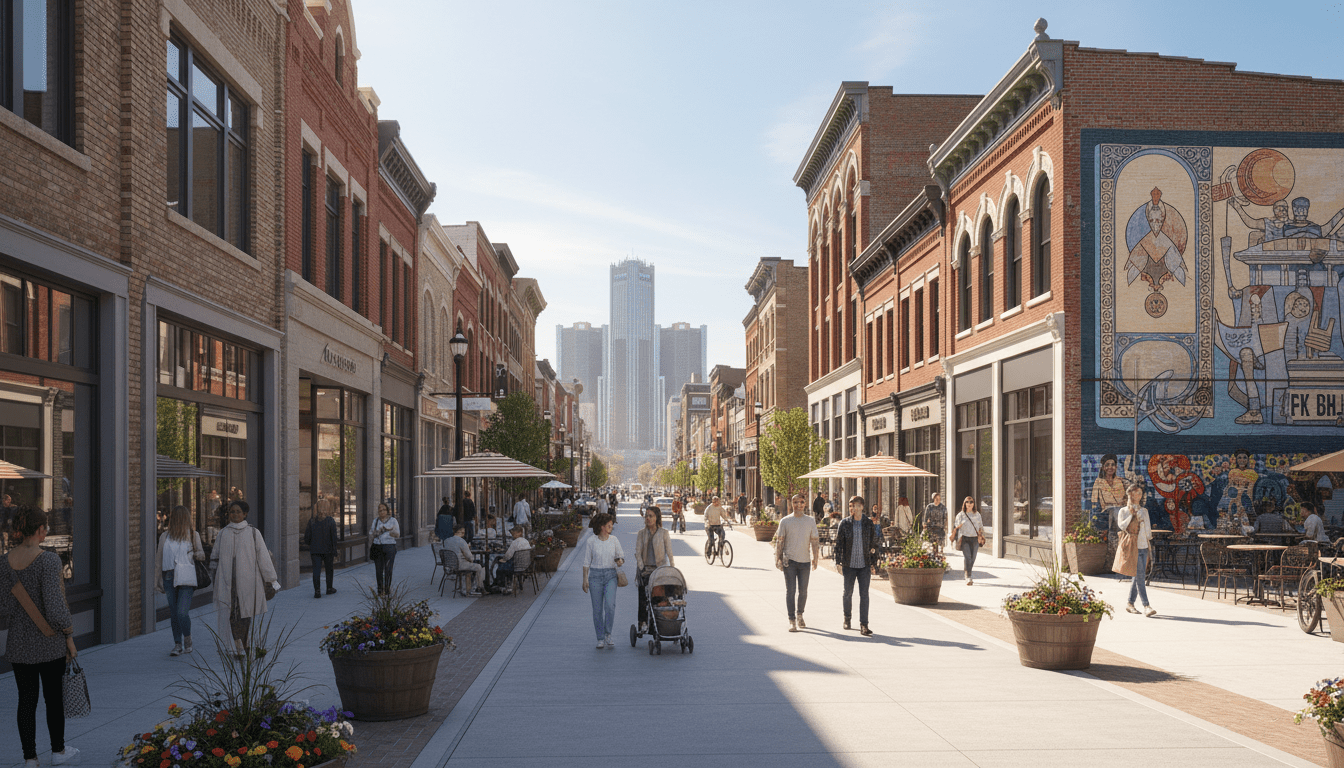
For years, the narrative of Detroit’s comeback was centered on a few square miles downtown. Today, the scope of Detroit economic development has widened. The completion of Ford’s Michigan Central innovation district in Corktown has served as a catalyst, proving that large-scale corporate investment can anchor broader community revitalization. Yet, the current administration and local development agencies are prioritizing the “20-minute neighborhood” concept—where residents can access most of their needs within a short walk or bike ride.
Recent reports from the Detroit Economic Growth Corporation (DEGC) highlight a surge in small business grants and technical assistance programs. The goal is to fill vacant storefronts along key commercial corridors like Livernois, McNichols, and Grand River Avenue. By focusing on these arteries, the city hopes to create micro-economies that sustain themselves independent of the downtown flow.
“We are moving from a phase of stabilization to a phase of strategic expansion,” said a spokesperson for the city’s planning department in a recent press briefing. “The next wave of development isn’t just about skyscrapers; it’s about the grocery store on the corner, the local tech startup, and the rehabilitation of multi-family housing units.”
Impact on Detroit Residents
For the average Detroiter, this shift in Detroit economic development has tangible implications. The expansion of programs like Motor City Match means that local entrepreneurs have better access to capital to open brick-and-mortar locations. This directly impacts the job market, as small businesses are often the largest employers of local residents.
Furthermore, the emphasis on neighborhood development addresses a long-standing grievance regarding the “two Detroits”—one for the wealthy newcomers downtown and another for long-time residents in the neighborhoods. By channeling funds into streetscapes, parks, and local commercial hubs, property values in these areas are stabilizing. However, this also brings valid concerns regarding gentrification and housing affordability.
Local housing advocates have pointed out that while development is welcome, it must be paired with robust affordable housing mandates. In response, the city has leveraged the Affordable Housing Leverage Fund to preserve and create thousands of units. Residents can read more about these housing initiatives in our coverage of Detroit real estate trends to understand how these policies might affect their rent or property taxes.
Background & Data: Employment and Investment
Understanding the trajectory of Detroit economic development requires looking at the hard numbers. According to the U.S. Bureau of Labor Statistics, Detroit’s unemployment rate has hovered near historic lows over the past year, a stark contrast to the double-digit figures seen a decade ago. This employment growth is driven not only by the automotive sector but by a diversifying economy that includes fintech, green energy, and logistics.
Key statistics driving the current optimism include:
- Small Business Growth: Since its inception, Motor City Match has distributed millions in grants, resulting in the opening of over 150 new businesses.
- Construction Pipeline: Billions of dollars in construction projects are currently active or in the pipeline, with a significant portion allocated to mixed-use developments outside the downtown core.
- Population Stabilization: Recent Census estimates suggest the decades-long population decline has plateaued, a critical metric for investor confidence.
This data suggests a resilient economy, though risks remain. Global economic headwinds and high interest rates have slowed some commercial lending, prompting the DEGC and other local CDFIs (Community Development Financial Institutions) to step in with gap financing to keep projects moving.
Future Outlook for the Motor City
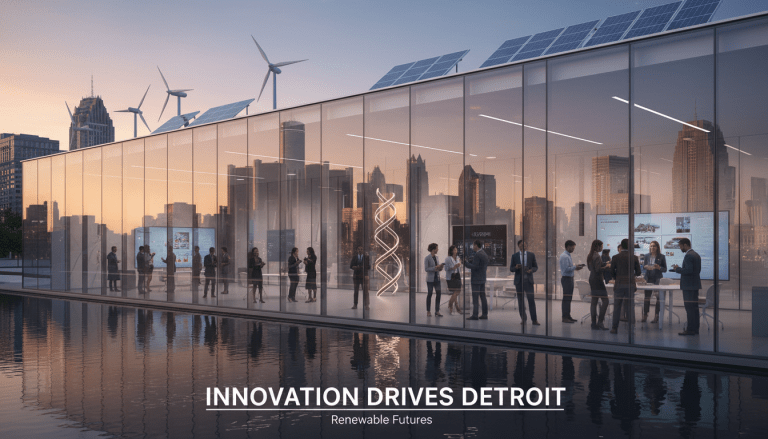
Looking ahead, the future of Detroit economic development appears to be tethered to innovation and infrastructure. The city is positioning itself as a hub for mobility technology, leveraging its automotive heritage to attract startups working on electrification and autonomous systems. The Michigan Central district is the flagship of this effort, but the ripple effects are expected to reach industrial parks across the city where manufacturing and logistics companies are expanding.
Additionally, the completion of the Gordie Howe International Bridge is poised to transform Detroit into an even more critical logistics hub for North American trade. This infrastructure project alone is expected to generate long-term employment and attract logistics-heavy businesses to Southwest Detroit.
However, for this growth to be sustainable, workforce development remains a priority. As noted in our recent article on Detroit job training programs, bridging the skills gap is essential to ensure that Detroiters can fill the high-tech and skilled trades jobs being created. Without a qualified local workforce, the benefits of economic development risk being exported to suburban commuters.
In conclusion, while the skyline continues to change, the most meaningful developments in 2025 may well be happening at the street level. By balancing major corporate attraction with grassroots business support, Detroit is attempting to build an economy that is not only robust but also inclusive.