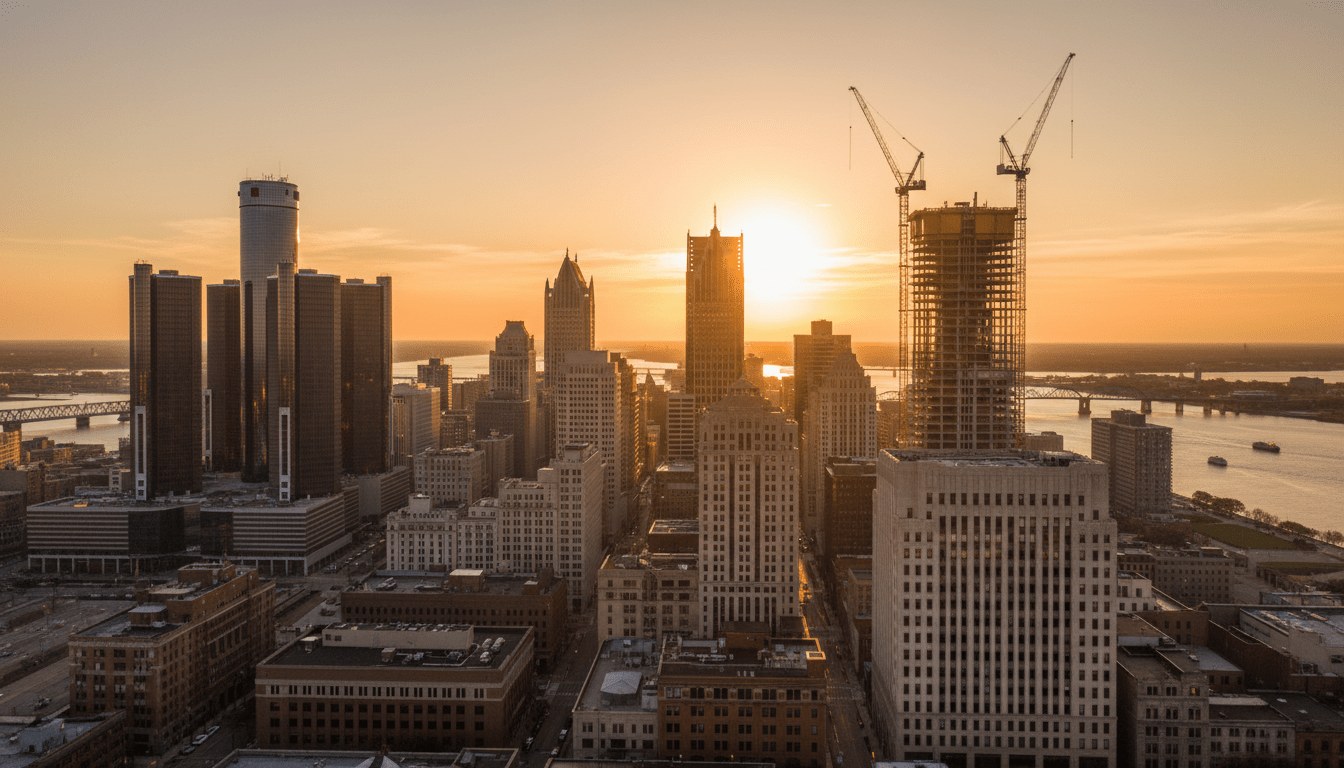
Detroit’s economic narrative is undergoing a significant transformation. Once defined almost exclusively by the automotive industry, the Motor City is now writing a new chapter characterized by fiscal stability, technological diversification, and a revitalized real estate market. As the city moves further away from the financial distress of the past decade, Detroit economic growth has become a focal point for national investors and local policymakers alike.
Recent data indicates that the city is not just recovering but evolving. With unemployment rates reaching historic lows in recent years and the city’s credit rating receiving multiple upgrades from major agencies like Moody’s and S&P Global, the foundation for sustained growth appears stronger than it has been in generations. This shift is not merely statistical; it is visible in the skyline, the neighborhoods, and the burgeoning startup ecosystem taking root downtown.
The Numbers Behind the Surge
To understand the current trajectory, it is essential to look at the data. According to the University of Michigan’s Research Seminar in Quantitative Economics (RSQE), the local economy has shown resilience despite broader national inflationary pressures. The forecast suggests that while the pace of growth may stabilize, the fundamentals remain robust.
The City of Detroit’s Office of the Chief Financial Officer has reported consecutive years of balanced budgets and surpluses, a sharp contrast to the era preceding the 2013 bankruptcy. These surpluses have allowed the administration to reinvest in public services and infrastructure without raising taxes, creating a more attractive environment for business investment.
Key economic indicators include:
- Income Tax Revenue: Consistent growth in income tax collections suggests that more residents are working and wages are gradually rising.
- Property Values: Property values across the city have seen double-digit percentage increases in many neighborhoods, boosting the tax base and homeowner equity.
- Labor Force Participation: While still a challenge, participation rates have ticked upward as workforce development programs expand.
Diversification Beyond the Assembly Line
While the automotive sector remains the heartbeat of the region, Detroit economic growth is increasingly driven by diversification. The opening of Ford’s Michigan Central Station as a mobility innovation hub symbolizes this pivot. It is no longer just about manufacturing cars; it is about software, automation, and green energy technology.
“We are seeing a shift from a monoculture economy to a polyculture economy,” noted a representative from the Detroit Regional Chamber during a recent economic forum. “Fintech, healthcare, and logistics are playing larger roles in the city’s GDP than ever before.”
Startups are finding a welcoming home in Detroit. Venture capital interest has grown, supported by incubators like TechTown Detroit which help local entrepreneurs scale their businesses. This influx of small-to-medium enterprises adds a layer of economic insulation, protecting the city from the boom-and-bust cycles associated with heavy industry.
Impact on Detroit Residents
Macroeconomic success is meaningless if it does not translate to microeconomic benefits for residents. The critical question remains: How does this growth affect the average Detroiter?
One direct impact is the availability of jobs. The abundance of new construction projects—from the Hudson’s site to the riverfront developments—has created a high demand for skilled trades. The mayor’s office has emphasized “Detroit at Work” programs to ensure these positions go to locals, aiming to keep the economic benefits within the city limits.
However, challenges persist. While wages have risen, the cost of living—particularly housing—has also increased. Long-time residents in rapidly gentrifying neighborhoods like Corktown and Midtown face pressure from rising rents and property taxes. The city has responded with affordable housing mandates and property tax exemptions for legacy residents, but the balance between growth and displacement remains delicate.
Neighborhood Investment
Growth is slowly radiating outward from downtown. The Strategic Neighborhood Fund has pumped millions into corridors like Livernois-McNichols and Southwest Detroit, aiming to revitalize commercial strips. Local business owners report increased foot traffic and a renewed sense of community optimism, though they cite access to capital as a continuing hurdle.
Real Estate and Infrastructure Development
Real estate remains a primary driver of Detroit economic growth. The demand for industrial space is skyrocketing, driven by logistics companies and suppliers needing proximity to the U.S.-Canada border. Concurrently, the residential market is seeing inventory move quickly, a sign of returning population confidence.
Infrastructure improvements are also paving the way for commerce. The Gordie Howe International Bridge project is not only a massive construction undertaking employing thousands but will also streamline trade logistics upon completion, further solidifying Detroit’s status as a global trade hub.
For more insights on how development is shaping specific districts, read our coverage on Detroit neighborhood revitalization projects.
Challenges and the Road Ahead
Despite the optimistic outlook, the path forward is not without obstacles. National economic headwinds, such as interest rate fluctuations, impact borrowing costs for developers and homebuyers alike. Additionally, educational outcomes in the city must continue to improve to provide a pipeline of talent for the increasingly technical jobs becoming available.
Furthermore, regional transit remains a sticking point. For the economy to reach its full potential, reliable transportation connecting the city to the suburbs is vital for workforce mobility. Leaders continue to debate funding models for a comprehensive transit plan, but progress has been slow.
Future Outlook
As we move through 2025, the prognosis for Detroit is arguably the healthiest it has been in decades. The diversification of industry, coupled with prudent fiscal management, has created a stable platform for the future. The focus now shifts to inclusive growth—ensuring that the rising tide truly lifts all boats across the city’s 139 square miles.
For investors, residents, and observers, the message is clear: Detroit is open for business, and its economic engine is firing on new cylinders.