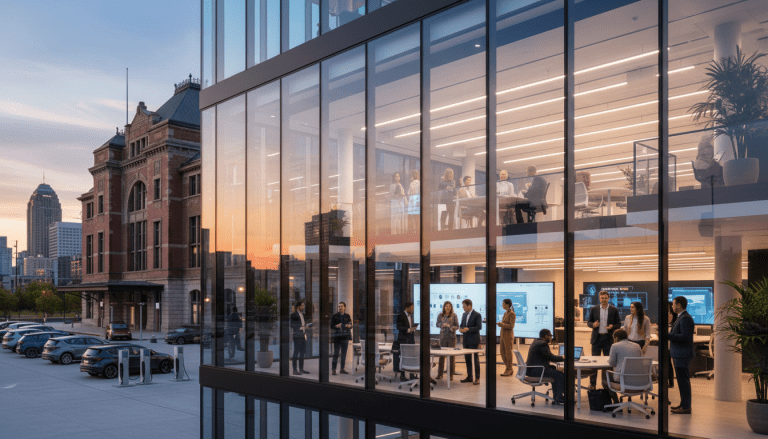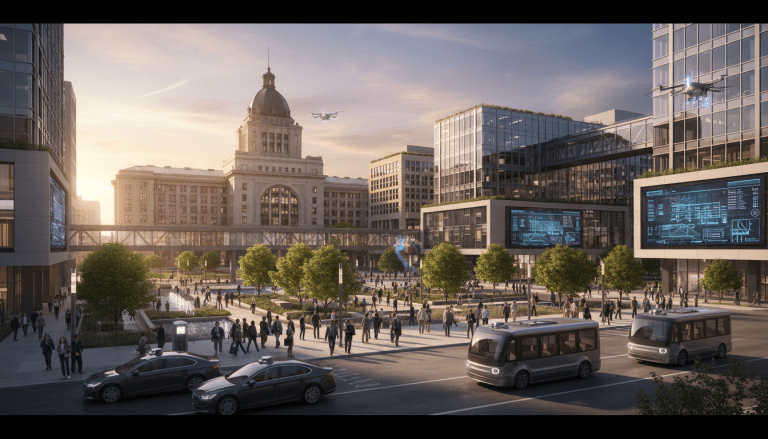


Detroit’s economic narrative has shifted dramatically over the past decade. Once defined by its historic municipal bankruptcy, the city is now garnering national attention for a sustained period of stability and expansion. According to recent forecasts and city data, Detroit economic growth is continuing on a positive trajectory, driven by a diversifying job market, major construction projects, and a stabilizing automotive sector.
While national economic headwinds such as inflation and interest rate fluctuations remain a concern, Detroit has shown remarkable resilience. The latest Detroit Economic Outlook, produced by the University of Michigan, suggests that the city’s economy is not only recovering but evolving, with employment rates reaching milestones not seen in decades.
Labor Market and Employment Trends
The most tangible indicator of Detroit’s economic health is its labor market. For years, double-digit unemployment was the norm. However, recent data paints a different picture. As of late last year, the city’s unemployment rate dipped to historically low levels, hovering around 6-7%—a stark contrast to the nearly 20% unemployment rate seen a decade ago.
“We are seeing more Detroiters working today than we have in many years,” stated a representative from the Detroit Workforce Development Board. “The focus has shifted from simply finding any job to connecting residents with career-pathway employment in healthcare, technology, and skilled trades.”
This growth is not accidental. It is supported by city-led initiatives like the Detroit at Work program, which has been instrumental in training locals for upcoming opportunities. However, economists note that while the quantity of jobs has increased, the focus must now remain on wage growth to ensure that rising incomes keep pace with the cost of living.
The Auto Industry and the EV Transition
It is impossible to discuss Detroit economic growth without addressing the automotive industry. As the traditional backbone of the region, the “Big Three” (General Motors, Ford, and Stellantis) are currently navigating a massive transition toward electric vehicles (EVs).
This transition has brought both volatility and opportunity. While the recent UAW strikes created temporary disruptions, the subsequent contracts resulted in significant wage increases for workers, which is expected to boost local spending power. Furthermore, the push for EV battery manufacturing and assembly has kept Detroit central to the global supply chain.
Local suppliers are also adapting. “The supply chain in Southeast Michigan is retooling,” noted an analyst from the Center for Automotive Research. “We are seeing smaller manufacturing firms in and around Detroit pivoting to produce components for electric drivetrains, securing their place in the future economy.”
Real Estate and Infrastructure Development
Physical signs of economic momentum are visible across the skyline. The completion of the restoration of Michigan Central Station by Ford Motor Company stands as a symbol of innovation returning to the city. Similarly, the development at the historic Hudson’s site is altering the downtown landscape, promising mixed-use spaces that attract both commerce and tourism.
However, development is not limited to the downtown core. The Strategic Neighborhood Fund has channeled millions of dollars into commercial corridors in neighborhoods like Livernois-McNichols and Southwest Detroit. These investments are crucial for creating a more equitable distribution of wealth.
For more on how these developments are affecting housing prices, read our deep dive into Detroit’s shifting real estate market.
Impact on Detroit Residents
How does high-level Detroit economic growth translate to the daily lives of residents? The results are mixed but promising. On one hand, property values in the city have risen for several consecutive years, building wealth for long-time homeowners. On the other hand, rising rents pose a challenge for non-owners.
According to the City of Detroit, income tax revenues have increased, allowing the municipal government to invest more in public services, parks, and safety. Residents are seeing improved streetscapes and more local amenities, such as grocery stores and coffee shops, returning to areas that were previously underserved.
Local business owner Sarah Jenkins, who operates a boutique in the West Village, said, “Five years ago, foot traffic was sparse. Now, we are seeing a steady stream of customers, not just on weekends but during the week. People are living here, working here, and spending money here again.”
Challenges to Equitable Growth
Despite the optimism, challenges remain. The poverty rate in Detroit, while declining, remains high compared to national averages. There is also the issue of the “skills gap”—ensuring that long-term residents have the certifications required to fill the new high-tech and healthcare jobs flooding the market.
Community organizations are vocal about the need for development without displacement. Ensuring that legacy Detroiters can afford to stay in their revitalized neighborhoods is a primary policy concern for the City Council moving into the next fiscal year.
Background & Data
Data from the U.S. Census Bureau and the University of Michigan’s Research Seminar in Quantitative Economics (RSQE) supports the narrative of a rebounding city:
- Unemployment: Dropped from nearly 20% in 2013 to under 7% in 2024.
- Wages: Average resident wages have increased, though inflation has tempered some of these gains.
- Home Value: Detroit home values have appreciated significantly, moving many properties out of “underwater” mortgage status.
What Happens Next?
Looking ahead, the forecast for Detroit economic growth remains “cautiously optimistic.” Experts predict a stabilization of the automotive sector as EV production scales up. Additionally, Detroit is bidding to become a hub for green energy and fintech, sectors that could provide a buffer against the cyclical nature of manufacturing.
For the city to sustain this momentum, continued collaboration between the public sector, private enterprise, and community leaders will be essential. If the current trends hold, Detroit is well on its way to redefining what a post-industrial city can achieve in the 21st century.