
More than a decade after filing for the largest municipal bankruptcy in American history, the narrative of the Motor City has fundamentally shifted. The Detroit economic resurgence is no longer just a hopeful slogan; it is a measurable reality backed by investment-grade credit ratings, historically low unemployment, and a skyline that is rapidly evolving. For residents and investors alike, 2025 marks a pivot point where recovery turns into sustained growth.
Recent data from financial institutions and city officials suggests that Detroit has successfully stabilized its fiscal house. The days of emergency management are long gone, replaced by a period of strategic development that is beginning to ripple outward from the downtown core into the neighborhoods. However, as the city attracts billions in new investments, the focus remains on ensuring that long-time Detroiters participate in this new prosperity.
From Junk Status to Investment Grade
The most significant indicator of the Detroit economic resurgence occurred recently when Moody’s Investors Service upgraded the city’s issuer rating to investment grade. This milestone effectively lowers the cost of borrowing for the city, allowing for more efficient funding of infrastructure projects, parks, and public services.
According to the City of Detroit’s financial reports, this upgrade serves as a signal to global markets that Detroit is a safe harbor for capital. “The restoration of our credit rating is a testament to fiscal discipline and balanced budgets for ten consecutive years,” city officials noted in a recent press briefing. For the average resident, this financial jargon translates to better city services and a more robust safety net against future economic downturns.
Local economists point out that this stability is attracting businesses that previously viewed Detroit as too risky. New business developments downtown are now being funded by traditional financing rather than relying solely on tax incentives, a sign of a maturing market.
Diversifying Beyond the Assembly Line
While the automotive industry remains the beating heart of the region, the Detroit economic resurgence is being fueled by diversification. The city is rapidly becoming a hub for fintech, green energy technology, and mobility innovation. The opening of Ford’s Michigan Central Station in Corktown has acted as a catalyst, drawing startups and tech firms to the area.
Data from the Detroit Regional Chamber indicates a spike in tech-sector employment within the city limits. Companies are leveraging the region’s engineering talent to develop autonomous vehicle software and sustainable energy solutions. “We are seeing a convergence of traditional manufacturing and high-tech software development right here in the city,” said a representative from a local workforce development agency.
Furthermore, the sports and entertainment sector continues to drive revenue. With the NFL Draft recently spotlighting the city and the consistent draw of the Lions, Tigers, Pistons, and Red Wings, the hospitality industry is recording occupancy rates that rival pre-pandemic levels.
Real Estate and Infrastructure Projects
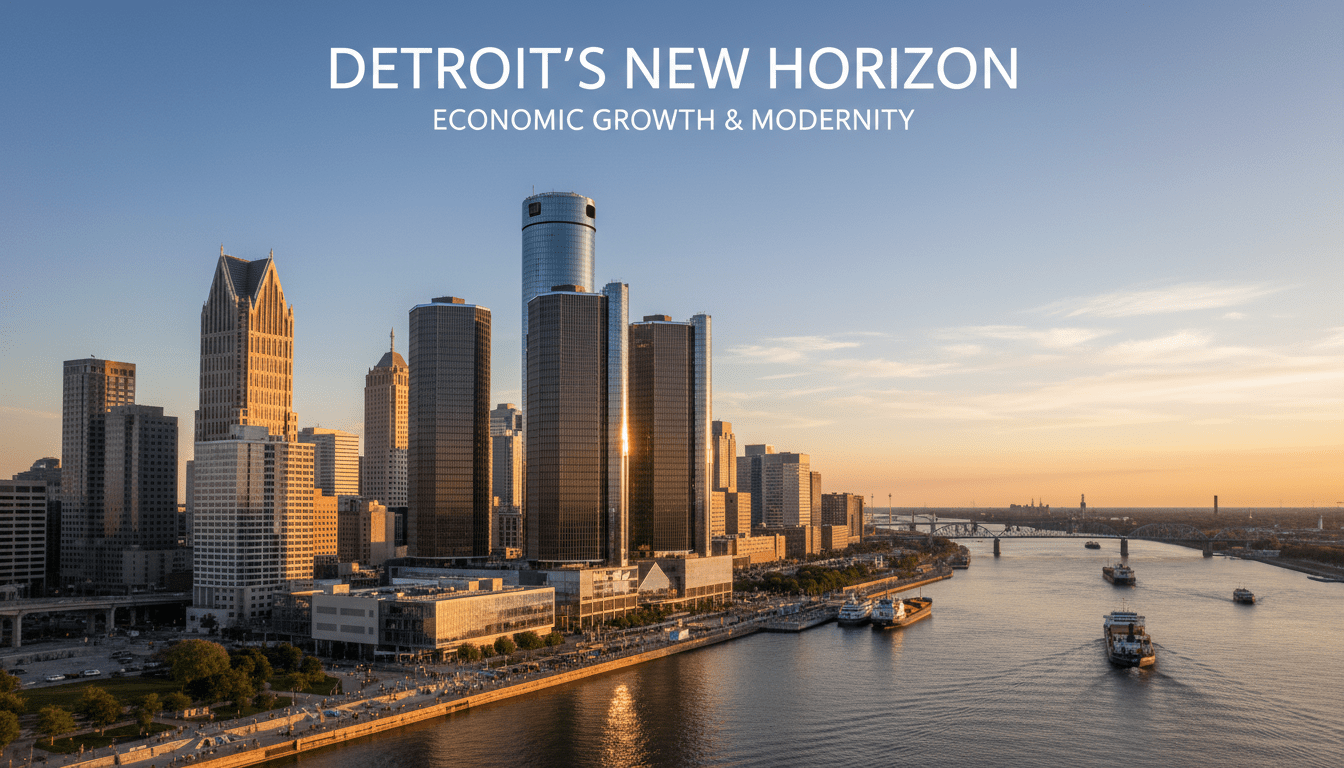
Physical evidence of the economic upturn is visible across the skyline. The completion of the Hudson’s Detroit development has altered the visual landscape, adding office space, luxury hospitality, and retail to Woodward Avenue. But the resurgence isn’t limited to skyscrapers.
The Detroit neighborhood revitalization efforts, specifically through the Strategic Neighborhood Fund, have poured millions into streetscapes and commercial corridors in areas like the Avenue of Fashion and Southwest Detroit. These projects are designed to create walkable, commercially viable districts outside of the immediate downtown area.
According to the U.S. Census Bureau, while population stabilization remains a challenge, the number of occupied housing units in certain key neighborhoods has increased, driven by both rehabilitation of historic homes and new construction.
Impact on Detroit Residents
For the residents who stayed through the hardest times, the Detroit economic resurgence brings both opportunity and anxiety. On one hand, property values have risen significantly, building wealth for homeowners. According to city data, Detroit home values have appreciated more than almost any other major U.S. city over the last five years, lifting thousands of families out of negative equity.
On the other hand, rising rents and the cost of living pose challenges. Local housing advocates argue that while the macro-economic numbers look good, the median income in Detroit must rise to keep pace with development. “We need to ensure that the jobs being created are accessible to Detroiters, not just imported talent,” said a local community organizer during a recent town hall.
To address this, the city has expanded the “Detroit at Work” program, aiming to connect residents with the training required for the new influx of skilled trade and tech jobs. Reducing the poverty rate remains the ultimate metric of success for the current administration.
Background & Future Outlook
The trajectory for 2025 and beyond appears positive, provided the global economy remains stable. The continued integration of the University of Michigan Center for Innovation is expected to further solidify Detroit’s status as a talent pipeline.
Local business owners are expressing cautious optimism. In surveys conducted by local business associations, a majority of small business owners plan to expand or hire in the coming year. The synergy between corporate investment and small business growth is vital for the ecosystem.
Conclusion
The Detroit economic resurgence is a complex, multi-layered story. It is a narrative of fiscal responsibility, architectural ambition, and industrial evolution. While challenges regarding equity and neighborhood inclusion remain, the data confirms that Detroit has exited the era of survival and entered an era of strategic growth. As the city continues to rebuild, the world is watching what is arguably the greatest comeback story in American municipal history.