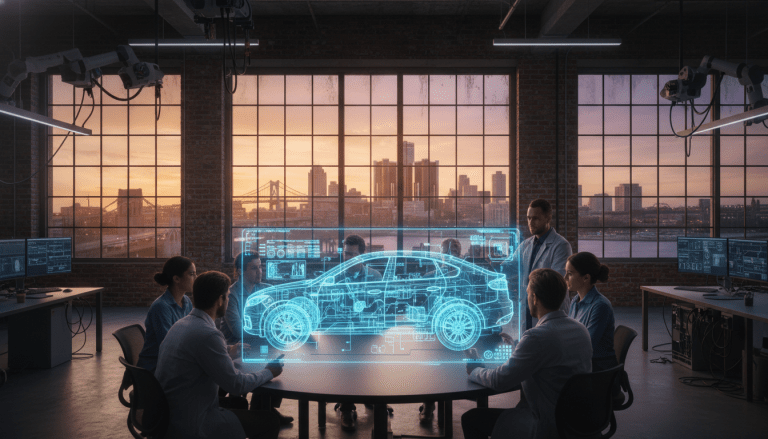


For over a century, Detroit has defined itself by the roar of the internal combustion engine. Today, however, the Motor City is in the midst of a silent revolution. The Detroit electric vehicle transition is no longer a distant futuristic concept; it is a tangible economic and cultural shift reshaping the region’s manufacturing footprint, labor market, and infrastructure. While the path toward full electrification has faced recent speed bumps with fluctuating market demand and strategic pivots by major automakers, the long-term commitment to establishing Detroit as the hub of American EV production remains firm.
General Motors and Ford Motor Company, both headquartered in the metro area, continue to invest billions into converting legacy facilities and building new battery plants. Yet, as the industry navigates this transformation, local stakeholders are raising crucial questions about equitable access to charging infrastructure, the future of the automotive workforce, and how this shift will directly impact the daily lives of Detroiters.
The State of the Industry
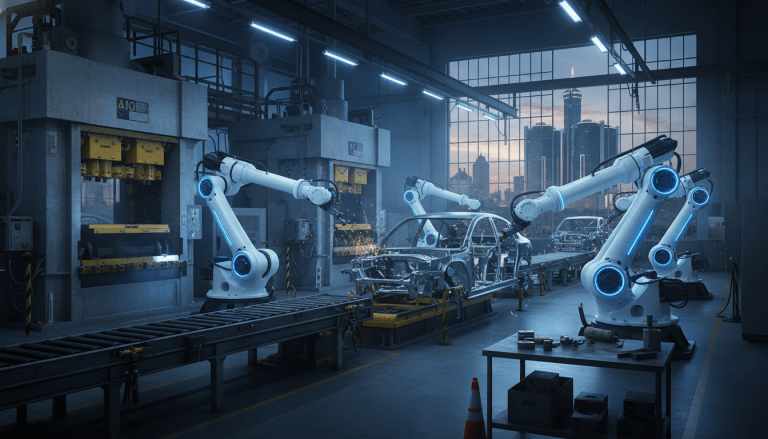
The transformation of Detroit’s automotive landscape is most visible at facilities like General Motors’ Factory ZERO. Formerly the Detroit-Hamtramck Assembly Center, the plant underwent a massive $2.2 billion renovation to become the launchpad for GM’s multi-brand EV strategy. According to reports from the Michigan Economic Development Corporation (MEDC), Michigan has secured more than $16 billion in electric vehicle and battery manufacturing investments since 2015, solidifying the state’s position in the global race for EV dominance.
However, the transition has not been without its recalibrations. In recent months, both Ford and GM have adjusted production targets in response to consumer adoption rates that, while growing, have trailed some aggressive initial projections. This nuanced reality requires a pragmatic approach from city leaders and business executives alike. The focus has shifted from purely volume-based goals to a more sustainable rollout that includes hybrid vehicles as a bridge technology, ensuring profitability while the charging ecosystem matures.
“The transition to electric vehicles is the most significant change to our industry since the assembly line,” said a representative from a local automotive supplier association during a recent town hall on workforce development. “But for Detroit to win, the supply chain must be resilient, and the technology must be accessible to the average consumer, not just the luxury market.”
Impact on Detroit Residents
For the average resident, the Detroit electric vehicle transition presents a mixed bag of opportunities and logistical challenges. One of the primary concerns for locals is charging infrastructure. While suburban areas have seen a steady increase in public charging stations, data suggests that the deployment within Detroit’s city limits—particularly in neighborhoods dominated by multi-family housing and street parking—has lagged behind.
The City of Detroit has acknowledged this disparity. Initiatives are currently underway to utilize federal grant money to expand curbside charging options. This is critical for adoption; without the ability to charge at home, the practicality of owning an EV diminishes significantly for many Detroiters. Furthermore, the promise of cleaner air is a significant factor for communities near major transit corridors like I-75 and I-94, which have historically suffered from higher rates of asthma and pollution-related health issues due to heavy trucking traffic.
On an economic level, the shift impacts local small businesses. Auto repair shops, a staple of the local economy, face an uncertain future as EVs require significantly less mechanical maintenance than gas-powered vehicles. We discuss the broader implications of economic shifts in our coverage of Detroit Auto & Business news, noting that mechanic retraining programs are becoming as vital as engineering degrees.
Workforce and the UAW
The human element of the electrification drive centers on the United Auto Workers (UAW). The union has been vocal about ensuring that the switch to battery power does not result in a reduction of labor standards or job security. Electric vehicles generally have fewer moving parts than internal combustion engines, leading to anxieties about reduced staffing needs on assembly lines.
Recent contract negotiations have secured pathways for workers at battery joint-venture plants to be included in master agreements, a significant win for labor rights in the green energy sector. Local workforce development agencies are also pivoting. Programs at institutions like Wayne County Community College District are increasingly focused on high-voltage safety, battery chemistry, and robotics maintenance to prepare the next generation of Detroit workers.
According to the Bureau of Labor Statistics, Michigan’s automotive manufacturing sector remains a primary employer, but the skill set required is evolving rapidly. The state has launched the “EV Jobs Academy,” a collaborative aimed at upskilling the existing workforce to meet these new demands.
Background & Data
The push for electrification is supported by substantial federal and state incentives. The Bipartisan Infrastructure Law has allocated significant funding toward the National Electric Vehicle Infrastructure (NEVI) Formula Program, with Michigan expected to receive approximately $110 million to build out charging corridors. This funding is designed to alleviate “range anxiety,” one of the top barriers to consumer adoption.
Furthermore, research from the University of Michigan indicates that while EV prices have remained high relative to gas vehicles, the gap is narrowing. As battery technology improves and production scales up within the state, analysts predict price parity could be reached later this decade. For Detroit, this means the vehicles being built in local factories might soon be affordable for the workers building them.
It is also worth noting the role of tech innovation in Detroit beyond the Big Three. Startups focused on battery recycling and software management for charging grids are emerging in neighborhoods like Corktown, centered around the revitalization of Michigan Central Station.
What Happens Next
Looking ahead, the Detroit electric vehicle transition will likely proceed in phases. The immediate future will see a continued coexistence of gas, hybrid, and electric vehicles on the road. For the city, the priority remains attracting supply chain manufacturers to the region to create a dense, integrated ecosystem that supports the assembly plants.
City officials are also focused on the grid. DTE Energy continues to upgrade local substations to handle the increased load anticipated from widespread EV charging. The success of this transition relies not just on the cars themselves, but on the reliability of the power that fuels them.
Detroit has reinvented itself before. From the fires of 1805 to the bankruptcy of 2013, the city has shown resilience. The shift to electrification is the latest chapter in that story—a complex, capital-intensive gamble that aims to keep the Motor City relevant for the next 100 years.