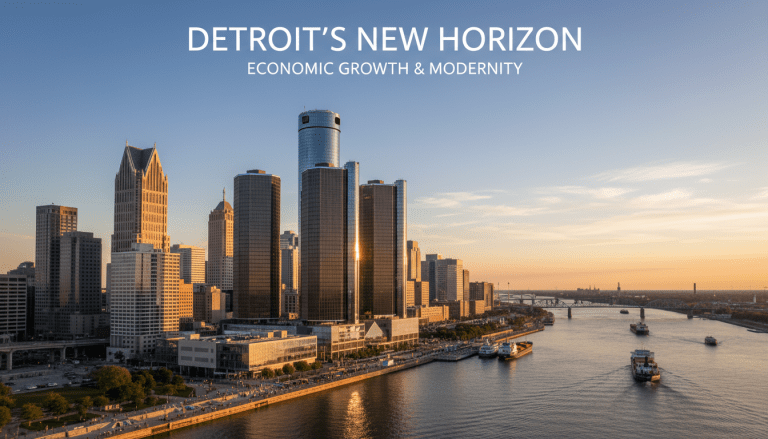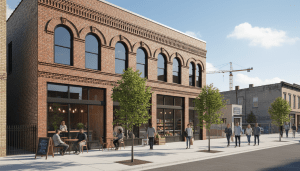


For decades, Detroit’s economic narrative was synonymous with the assembly line. The automotive industry defined the city’s rhythm, its skyline, and its paycheck. However, a significant shift is underway. A diverse wave of Detroit entrepreneurs is rewriting the script, transforming the city from a manufacturing monolith into a vibrant ecosystem of innovation, small business resilience, and tech startups. This evolution is not just about downtown incubators; it is reshaping neighborhoods from Corktown to the Avenue of Fashion.
Recent data indicates a surge in small business filings and startup activity across Wayne County. While the legacy of the Big Three remains vital, the city’s economic future is increasingly being forged by local founders who are turning vacant storefronts into community anchors and coding the next generation of mobility software. Support organizations like TechTown Detroit and the Detroit Economic Growth Corporation (DEGC) report record engagement, signaling that the spirit of innovation is alive and well.
The Rise of a New Business Ecosystem
The landscape for Detroit entrepreneurs has changed dramatically over the last ten years. What was once a fragmented environment for business owners has coalesced into a structured support network. Initiatives such as Motor City Match have become critical lifelines, providing grants and technical assistance to match business owners with real estate opportunities. According to data released by the city, the program has distributed millions in grant funding, leading to the opening of hundreds of brick-and-mortar businesses.
“The energy in the city is palpable,” said a representative from a local business incubator during a recent roundtable on economic development. “We are seeing founders who aren’t just looking for quick exits; they are looking to build generational wealth and solve specifically Detroit problems, whether that’s in food access, mobility, or sustainable housing.”
This ecosystem is distinct because of its focus on inclusivity. Unlike Silicon Valley, where minority representation often lags, Detroit’s startup scene is heavily driven by Black and women founders. Organizations like the New Economy Initiative (NEI) have focused heavily on bridging the capital gap for minority-owned enterprises, recognizing that equitable access to funding is the key to sustainable growth.
Impact on Detroit Residents
The boom in entrepreneurship has tangible benefits for everyday Detroiters. It goes beyond the headline-grabbing tech unicorns; it is about the return of the neighborhood bakery, the local hardware store, and the creative agency down the street. Small businesses employ a significant portion of the local workforce, often hiring from within the neighborhood.
When Detroit neighborhoods thrive commercially, property values tend to stabilize, and walkability improves. Residents in areas like Southwest Detroit and the Livernois corridor have seen how commercial revitalization can improve quality of life. Access to local services reduces the need to travel to the suburbs for basic goods, keeping tax dollars within the city limits.
Furthermore, the tech sector’s growth is creating new educational pathways. Programs connecting Detroit Public Schools Community District students with local tech startups are ensuring that the youth can envision a future in their hometown, rather than feeling compelled to leave for coastal cities to find high-paying careers.
Challenges Remaining for Founders
Despite the optimism, the path for Detroit entrepreneurs is rarely smooth. Access to capital remains the single biggest hurdle. While grant programs are helpful, traditional bank financing can still be difficult to secure for businesses in certain zip codes or for founders with limited credit history. A report by the University of Michigan’s Poverty Solutions highlighted the systemic barriers that still exist in lending practices.
Additionally, talent retention is a pressing issue. While Detroit is attracting talent, it is also in a fierce battle to keep its brightest graduates. Local startups often struggle to compete with the salary packages offered by remote-first coastal companies. However, the cost of living in Detroit remains a competitive advantage, attracting boomerangs—former residents moving back home—who are eager to participate in the city’s renaissance.
Data and Trends: The Numbers Behind the Growth
According to the U.S. Census Bureau, new business applications in Michigan have remained elevated post-pandemic, with Detroit contributing significantly to those numbers. The shift is not just in volume but in variety. Where early 2010s entrepreneurship was heavily skewed toward retail and food service, 2024 and 2025 are seeing a rise in professional services, logistics, and green technology.
Venture capital interest is also ticking upward. While Detroit is not yet a tier-one VC hub, the presence of firms like Detroit Venture Partners and rising interest from out-of-state investors suggests that the market is maturing. The success of homegrown startups achieving exits or significant Series B funding rounds validates the thesis that you can build a scalable company in Michigan.
Looking Ahead: The Future of Detroit Business
As the city looks toward 2026 and beyond, the integration of technology with traditional industry offers the most promise. Detroit is uniquely positioned to lead in mobility innovation—not just manufacturing cars, but developing the software, sensors, and infrastructure that power autonomous transportation. Detroit entrepreneurs are at the forefront of this intersection.
Moreover, the adaptive reuse of Detroit’s industrial heritage offers unique opportunities. Old factories are becoming vertical farms, maker spaces, and co-working hubs. This physical transformation mirrors the economic one: respecting the past while aggressively pursuing a modern, diversified future. For more on how the physical landscape is changing, read our coverage on Detroit real estate development.
Ultimately, the success of the city depends on the continued resilience of its risk-takers. Whether it is a tech CEO in Midtown or a restaurateur in East English Village, these individuals are the engine of Detroit’s recovery.