
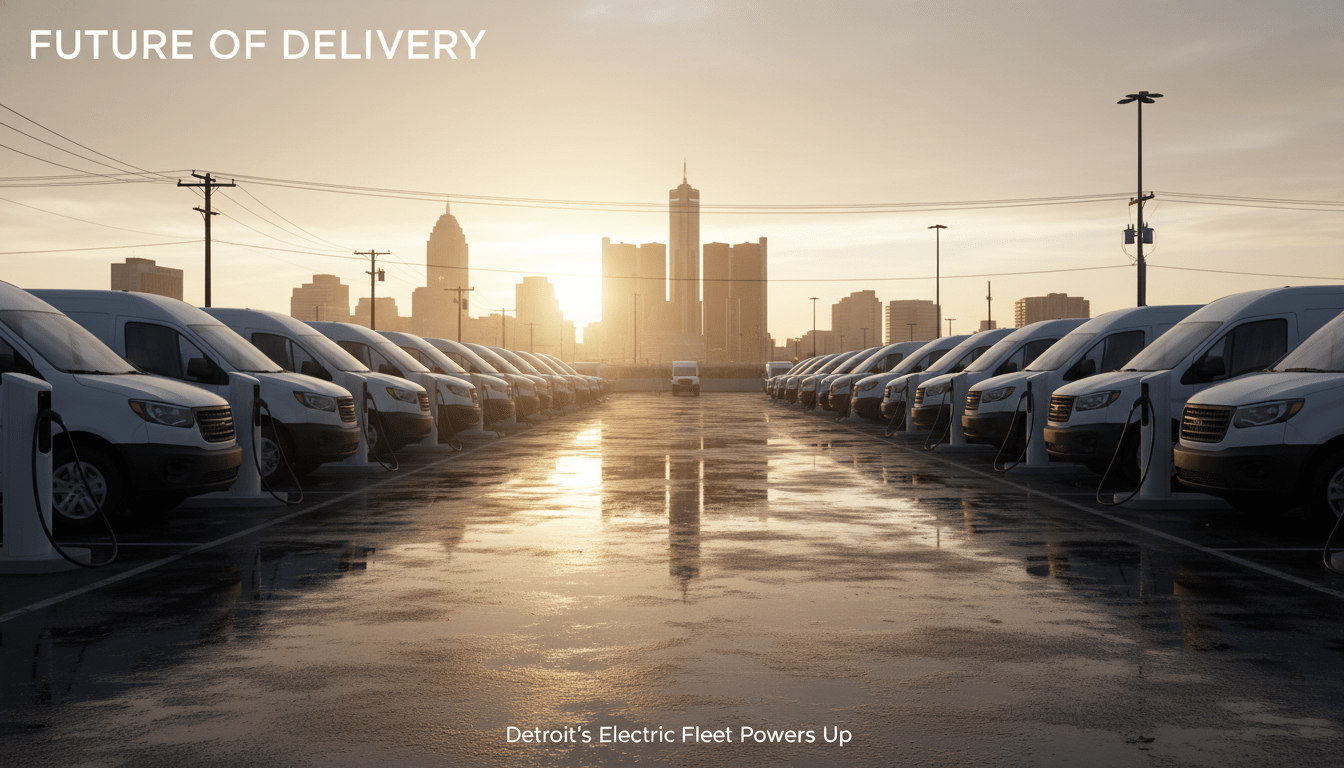
In the historic heart of the American automotive industry, a quiet revolution is taking place on the streets. While consumer electric vehicle adoption often grabs the headlines, the backbone of Detroit’s latest industrial pivot lies in the commercial sector. The EV fleet transition is well underway, moving beyond pilot programs into full-scale implementation across municipal services, delivery logistics, and heavy industry.
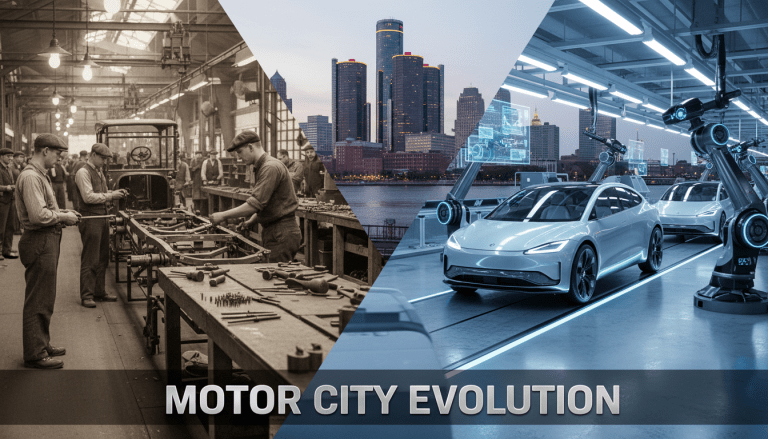
For decades, Detroit has defined how the world moves. Now, as the global market shifts toward sustainability, the city is positioning itself not just as a manufacturer of electric vehicles, but as a living laboratory for fleet electrification. From the delivery vans crisscrossing Corktown to the municipal buses serving the greater downtown area, the internal combustion engine is slowly ceding ground to battery-electric powertrains.
The Commercial Push: Ford Pro and GM Envolve
The driving force behind this shift originates from Detroit’s own “Big Three.” Both Ford and General Motors have established dedicated business units—Ford Pro and GM Envolve—laser-focused on commercial customers. According to recent quarterly reports from Ford, the demand for the E-Transit van has surged, with businesses prioritizing lower operating costs over the initial sticker price shock.
Local logistics companies are the early adopters. With route predictability being a key factor in range anxiety, delivery fleets are the ideal candidates for electrification. “The math works differently for fleets than for individuals,” explains Sarah Jenkins, a logistics analyst based in Metro Detroit. “Fleet managers look at Total Cost of Ownership (TCO). When you remove oil changes, transmission repairs, and volatile gas prices, the EV fleet transition becomes a financial necessity rather than just an environmental goal.”
Data from the Michigan Economic Development Corporation (MEDC) indicates that commercial fleet investments in the state have risen by over 15% in the last two years, driven largely by local businesses upgrading their aging gas-powered vehicles to utilize new state and federal incentives.
Municipal Leadership: The City’s Electric Commitment
It is not just private enterprise driving the change; the public sector is playing a pivotal role. The City of Detroit has been aggressively pursuing federal grants to modernize its aging vehicle infrastructure. The Detroit Department of Transportation (DDOT) has begun the long-term process of integrating electric buses into its fleet, aiming to reduce the city’s carbon footprint and improve air quality in densely populated neighborhoods.
Furthermore, the shift extends to utility vehicles. DTE Energy remains a significant player in this ecosystem, not only by upgrading its own service fleet to electric models but also by laying the groundwork for the necessary grid upgrades. Managing the charging load of hundreds of heavy-duty vehicles simultaneously presents an engineering challenge that local utilities are currently racing to solve.
Impact on Detroit Residents
For the average Detroiter, the EV fleet transition promises tangible changes to daily life, though some may be subtle. The most immediate impact is noise reduction. Electric delivery vans and buses operate almost silently compared to their diesel counterparts, leading to quieter neighborhoods, particularly during early morning delivery hours.
Health benefits are also a significant factor. Diesel exhaust is a known contributor to respiratory issues, which have historically plagued industrial zones in Detroit. By replacing heavy-duty diesel trucks and buses with zero-emission alternatives, the city moves closer to alleviating some of the environmental burdens placed on local communities.
However, the transition also impacts the local labor market. As manufacturing trends in Detroit shift, so too must the skills of the workforce. Mechanics accustomed to working on transmissions and engines are now finding themselves in need of training on high-voltage battery systems and electric drivetrains. Local community colleges and trade schools are beginning to adapt their curriculums to meet this new demand for “green collar” jobs.
The Infrastructure Hurdle
Despite the optimism, the road ahead is not without potholes. The primary bottleneck remains infrastructure. While a homeowner can charge a single car in their garage, a logistics company needs to charge 50 vans overnight. This requires industrial-grade power upgrades that the current grid is straining to support.
According to DTE Energy, significant investments are being funneled into substation upgrades to support fleet depots. The concept of “depot charging” is central to the strategy, requiring close coordination between the city, utility providers, and private businesses. Without a robust charging network, the EV fleet transition risks stalling.
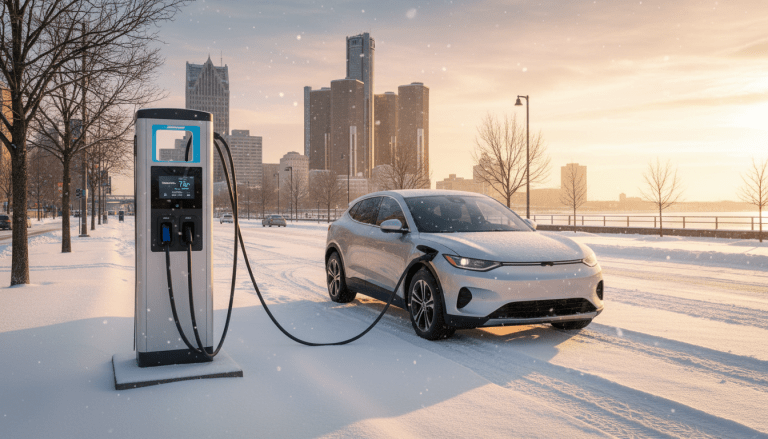
Moreover, range reliability during Michigan’s harsh winters remains a concern for fleet managers. Cold weather can reduce battery efficiency, a variable that logistics planners must account for when designing routes in January and February.
Future Outlook: What Happens Next?
Looking toward 2030, the trajectory is clear. Federal mandates and corporate sustainability goals are pushing the timeline forward. We can expect to see an increase in “Last Mile” delivery hubs springing up around the city—centralized locations where goods are offloaded from long-haul trucks onto smaller electric vans for final delivery.
The Michigan Central innovation hub in Corktown is likely to play a key role in testing these technologies. As automated driving technology matures alongside electrification, Detroit could see the deployment of autonomous electric delivery fleets, further revolutionizing how goods move through the city.
For now, the focus remains on the hard work of infrastructure building and fleet turnover. As reported by local energy analysts, the next five years will be critical in determining whether the grid can keep pace with the ambitions of Detroit’s automakers and city planners. The Motor City is evolving, and the hum of the electric fleet is its new soundtrack.